17 Small Bedroom Ideas That Feel Cozy and Beautiful
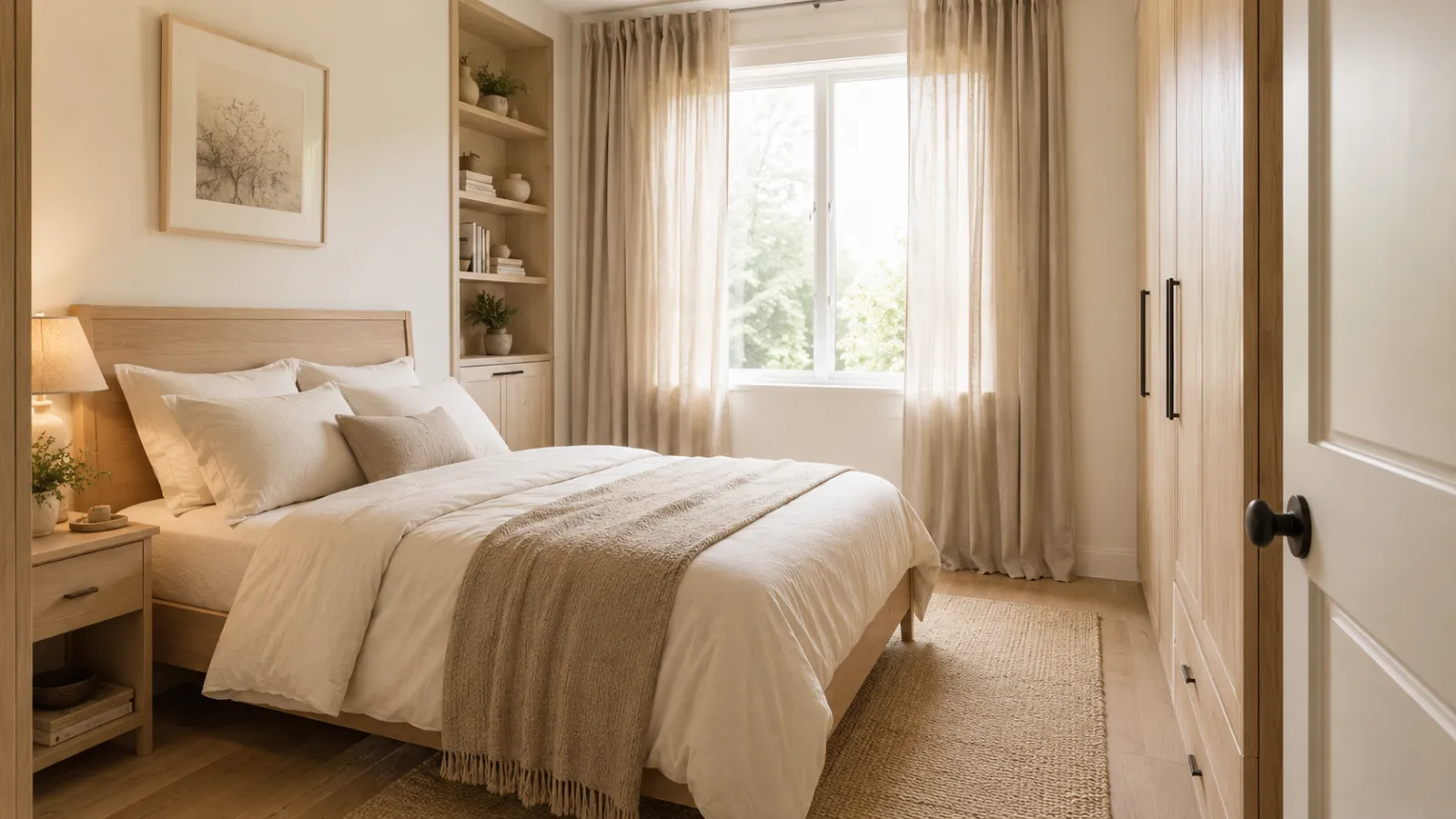
Small bedroom ideas work best when every choice supports comfort without interrupting movement. A limited room can still feel restful, layered, and personal when the bed, storage, lighting, and decor are planned together.
The goal is not to disguise the room’s size. It is to make the available space feel intentional, comfortable, and easy to use.
Start with the largest pieces, protect the clearest walkway, and add softness through bedding, curtains, warm light, and natural texture.
For a broader bedroom foundation, see our cozy bedroom ideas guide.
Small Bedroom Ideas at a Glance
A small bedroom feels cozy and beautiful when the bed, storage, lighting, and main walkway are planned together. Start with correctly scaled furniture, a simple color palette, layered bedding, and one rug that visually grounds the sleeping area.
Use slim nightstands, vertical storage, under-bed containers, and wall-mounted lighting to preserve floor space. Hang curtains high, keep decorative objects limited, and place everyday clutter inside closed storage.
The goal is not to fill every corner. A successful small bedroom should feel comfortable to enter, easy to move through, softly layered, and simple to maintain.
1. How Do You Make a Small Bedroom Feel Calm and Connected?
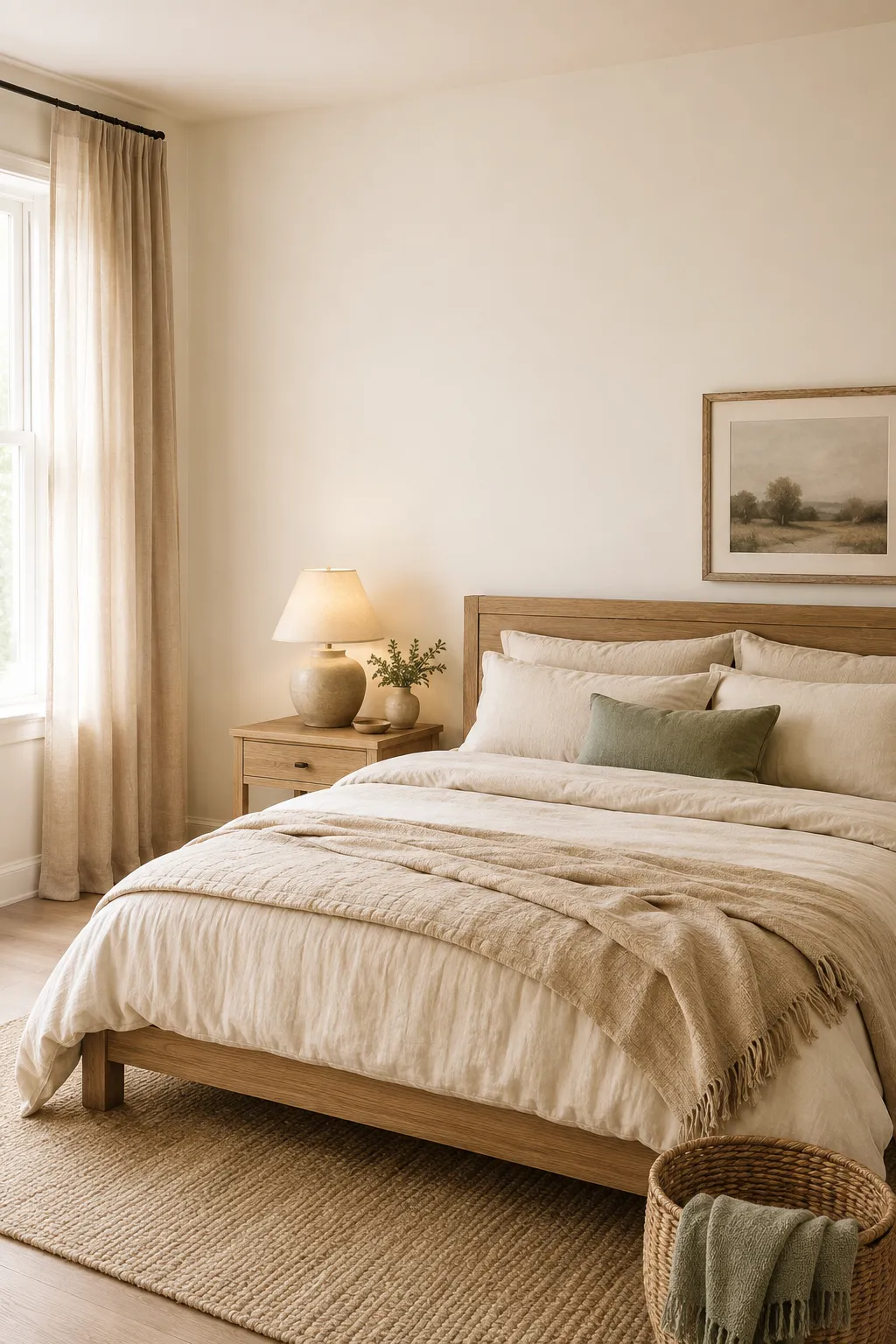
A small bedroom feels calmer and more connected when the bedding, furniture, colors, lighting, and decor follow one clear visual mood.
One clear direction prevents the room from becoming a collection of unrelated items. It also makes it easier to choose bedding, art, curtains, furniture, and storage that look connected.
The room should feel calm when viewed from the doorway.
2. Place the Bed on the Strongest Available Wall
The bed is usually the visual anchor, even in a compact room.
Begin by testing it against the longest uninterrupted wall. Check nearby doors, windows, closet panels, outlets, and heating vents before deciding.
A centered bed can create balance, but perfect symmetry is not always possible. In a narrow room, placing one side closer to the wall may preserve a more useful walkway.
Function matters more than forcing a formal arrangement.
3. Choose a Bed Frame With Visual Breathing Room
A heavy bed frame can make limited floor space feel tighter.
Look for a simple wood or upholstered frame with a restrained headboard. Visible legs can reveal more flooring and help the room appear lighter.
Storage beds are useful when closet space is limited, but the base should still look clean rather than bulky.
Before buying, mark the full bed dimensions on the floor with painter’s tape. Include space for drawers if the frame has built-in storage.
4. Layer Bedding With Soft Contrast
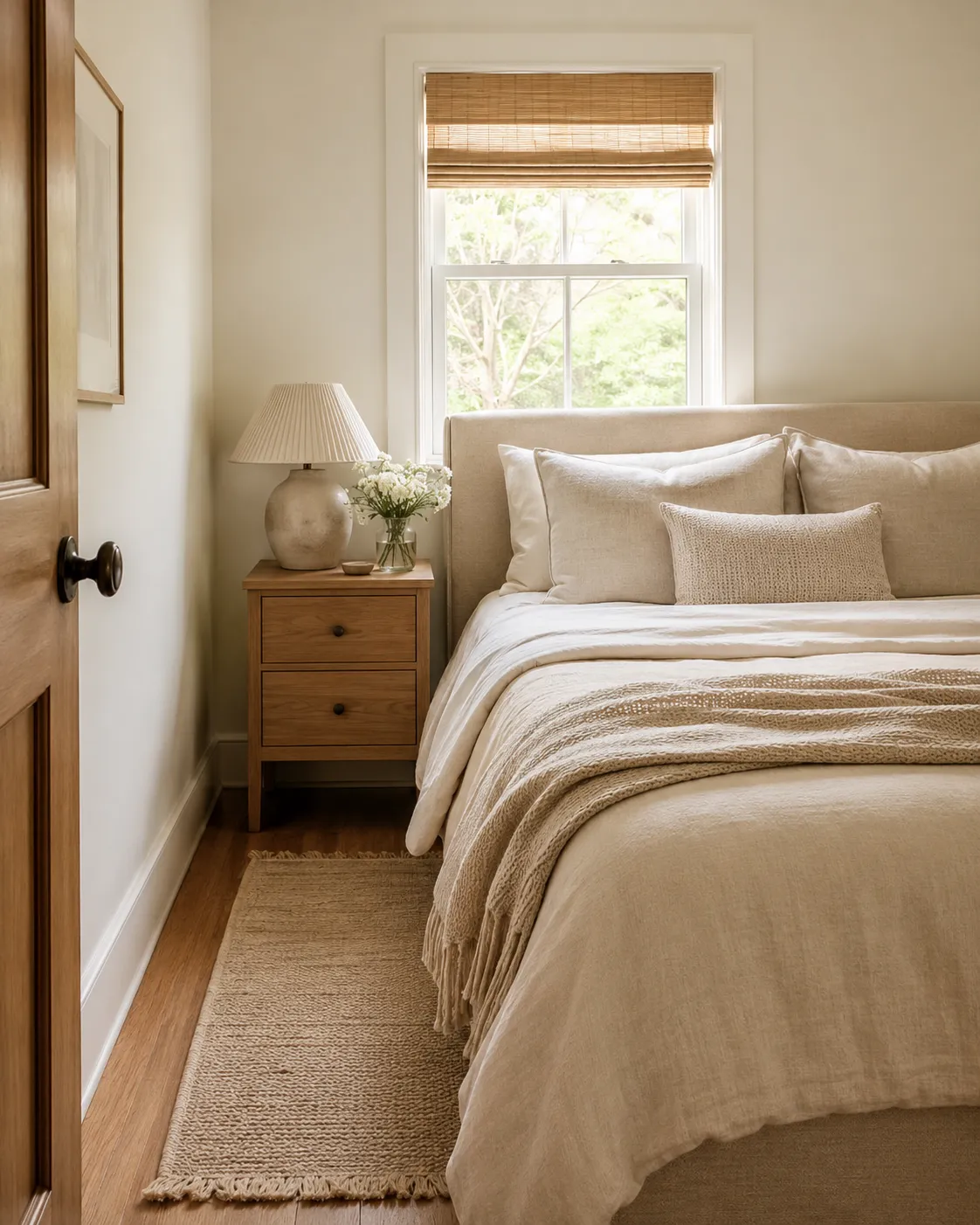
A small bed still deserves enough texture to feel inviting.
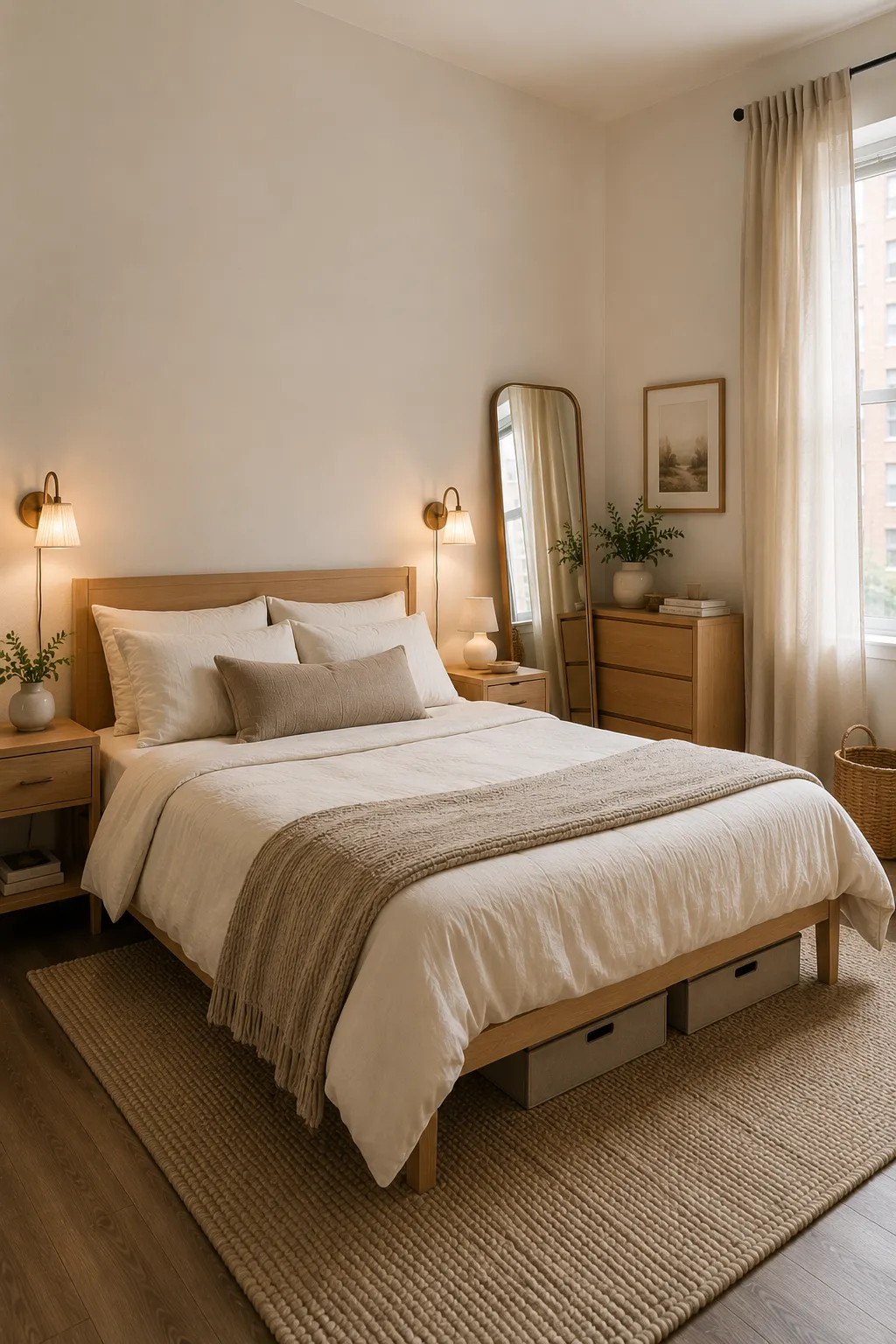
Use comfortable sheets, a duvet or quilt, one folded throw, and a limited number of decorative pillows. Two small accent pillows may be enough.
Create contrast through material rather than many colors. Crisp cotton, washed linen, a lightly quilted cover, and a soft knit throw can make a neutral bed feel layered.
Keep the arrangement simple enough to reset each morning.
5. Use One Rug to Ground the Sleeping Zone
One well-scaled rug can soften sound, add warmth, and visually connect the bed to the rest of the room.
Choose a rug that extends beyond the visible sides and foot of the bed where space allows. As a practical starting point, aim for roughly 18–24 inches of visible rug around the bed.
In a very narrow bedroom, two coordinated bedside runners may work better than one large rug. They provide softness without covering the entire floor.
Avoid placing a tiny rug only at the foot of the bed. It can make the sleeping area feel disconnected and visually smaller.
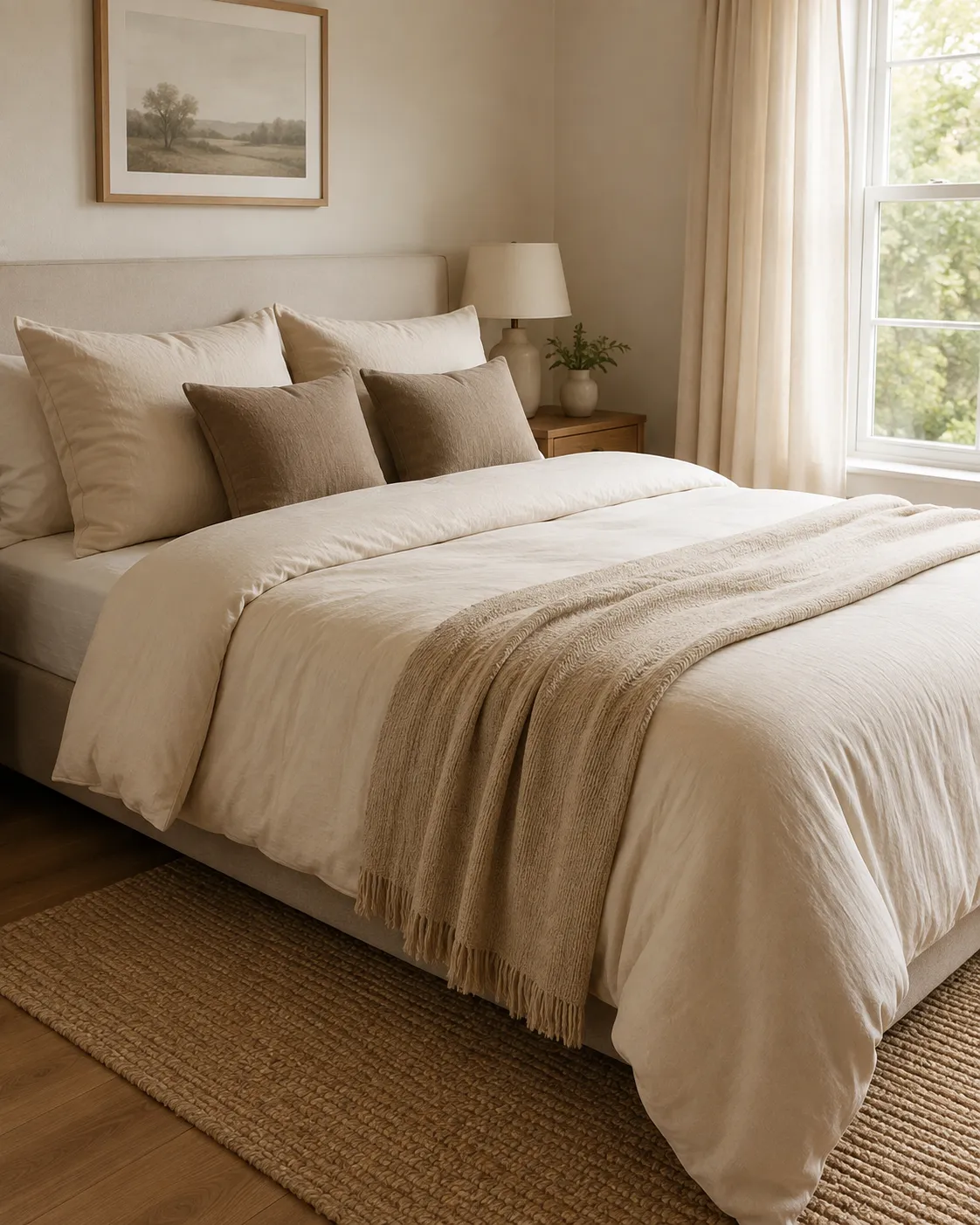
6. Replace Bulky Nightstands With Slim Alternatives
A traditional two-drawer nightstand may take more space than the room can comfortably give.
Consider a narrow table, wall-mounted shelf, compact stool, floating drawer, or small cabinet with vertical storage.
The top should sit reasonably close to the mattress height so a lamp, book, or glass of water remains easy to reach.
One useful surface is better than a larger table filled with decorative objects.
For more compact-home styling, see our small apartment minimalist decor guide.
7. Layer Lighting Without Crowding the Room
A ceiling light alone can make a small bedroom feel flat.
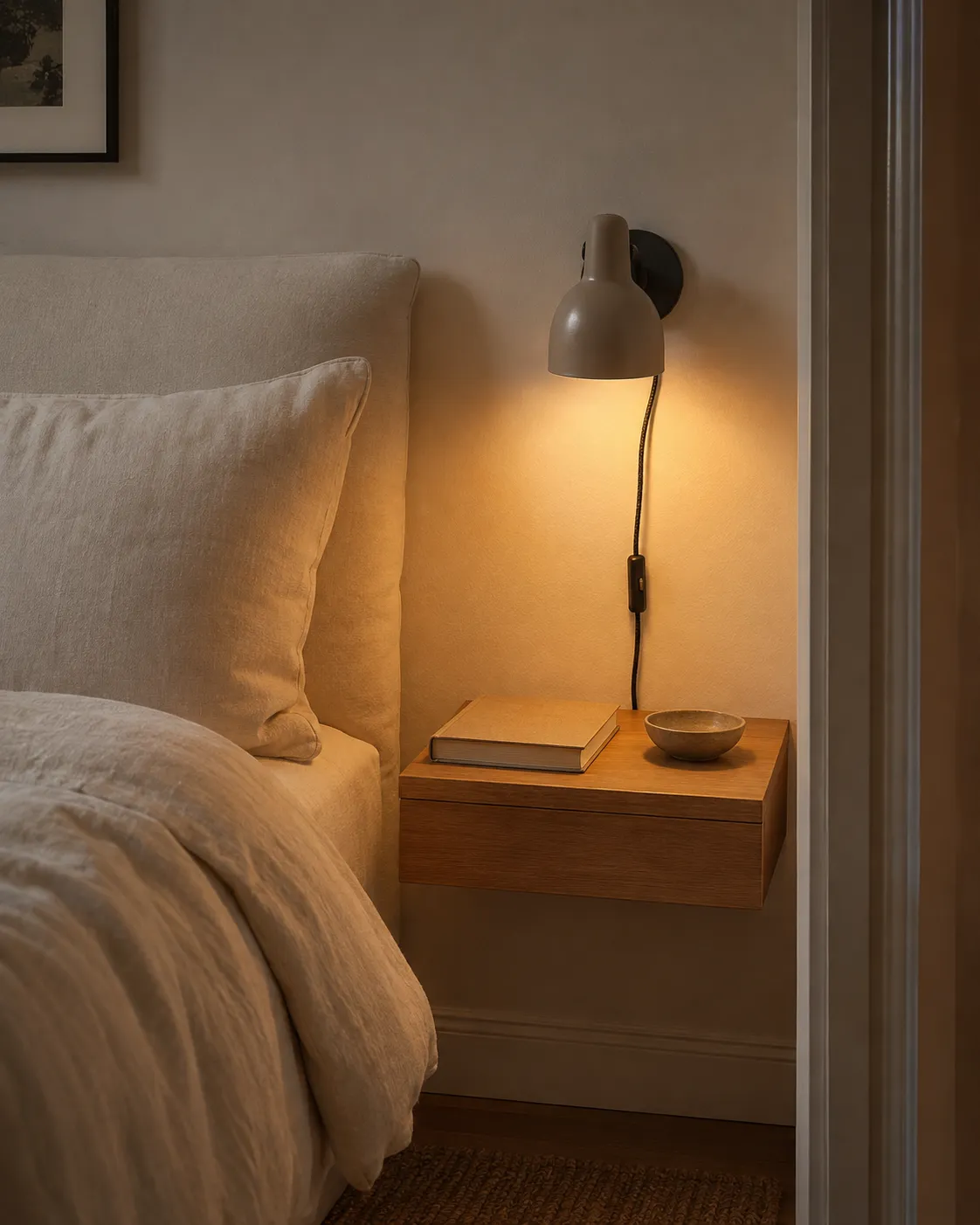
Add a bedside lamp, plug-in wall sconce, pendant, or compact floor lamp according to the available surfaces. Wall-mounted lighting can free the nightstand for daily essentials.
Warm-white light around 2700K–3000K generally creates a gentler appearance beside cream bedding, wood, and linen. ENERGY STAR identifies lower Kelvin values in this range as warmer in tone.
Keep switches easy to reach from the bed.
8. Hang Curtains High and Wider Than the Window
Curtains can make a small room appear taller and more finished.
Position the rod close to the ceiling when practical and allow the panels to open beyond the window frame. This exposes more glass during the day and creates a broader visual line.
Choose floor-length curtains in warm white, cream, beige, or a shade close to the wall.
Blackout lining can control nighttime light without changing the visible softness of the fabric.
9. Use Wall Height for Storage
When floor space is limited, look upward.
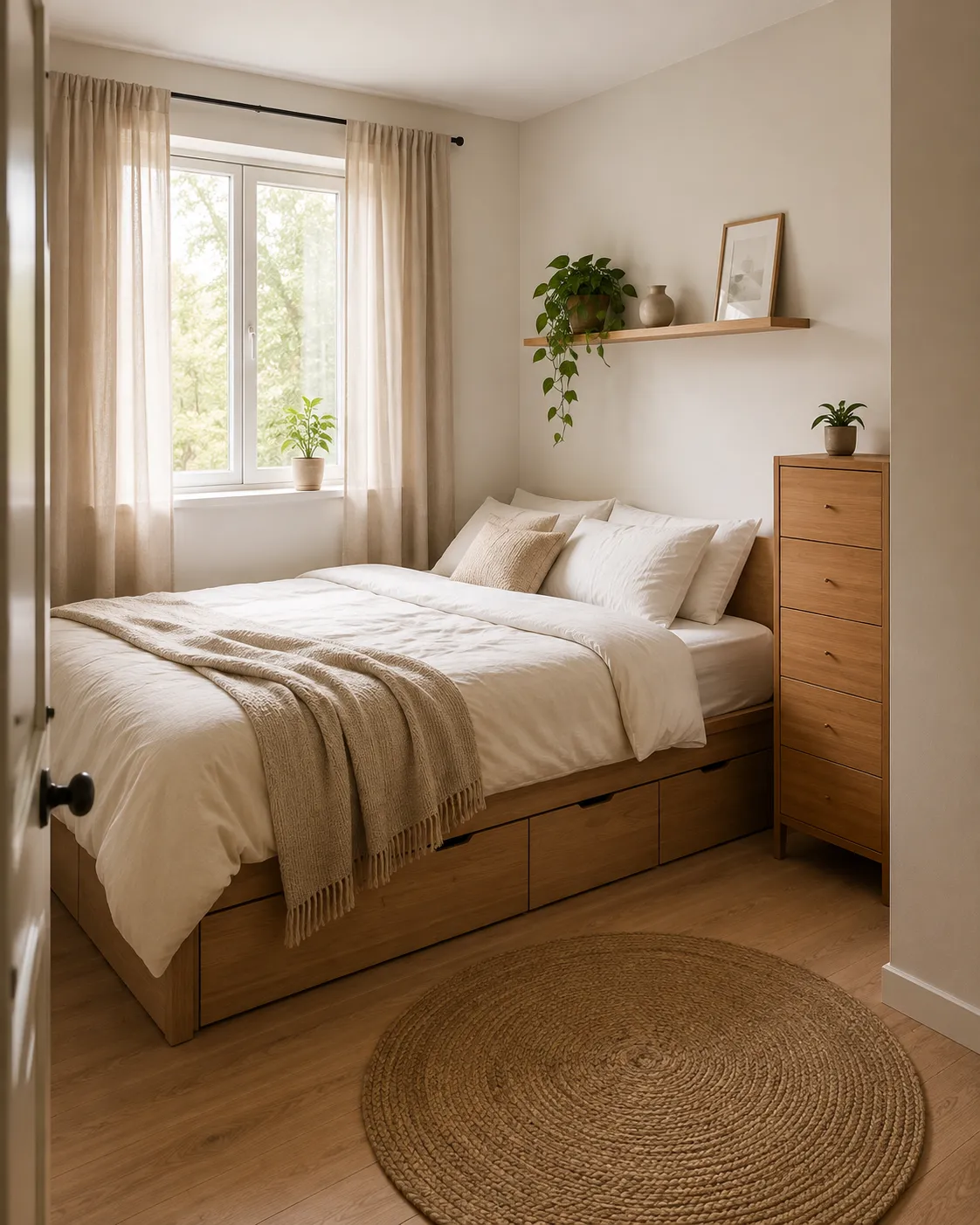
A tall narrow dresser, wall shelf, over-door organizer, or storage cabinet can hold more without taking over the room’s width.
Keep the lower part of the room visually calmer. Store everyday items within easy reach and place occasional objects higher.
Tall furniture should be secured appropriately, especially in homes with children. The CPSC’s Anchor It program provides official furniture tip-over prevention guidance.
10. Keep Under-Bed Storage Hidden and Organized
The area beneath the bed is valuable, but it can quickly become an unplanned storage zone.
Use matching containers, built-in drawers, zipped fabric bags, or lidded boxes. Group items by purpose so they remain easy to retrieve.
Seasonal bedding, extra linens, and less frequently worn clothing are good candidates.
Avoid loose bags and visible clutter beneath an open frame. A clean storage system protects the restful feeling of the room.
11. Create One Simple Focal Wall
A small bedroom does not need decor on every wall.
Choose one wall to carry the strongest visual detail. This might be the headboard wall, one large artwork, a subtle paint color, a restrained wallpaper pattern, or a pair of related prints.
Keep surrounding walls quieter.
One clear focal point gives the eye somewhere to rest and can make the room feel more organized.
For more restrained artwork arrangements, see our minimalist wall decor ideas guide.
12. Use a Mirror Where It Can Reflect Light
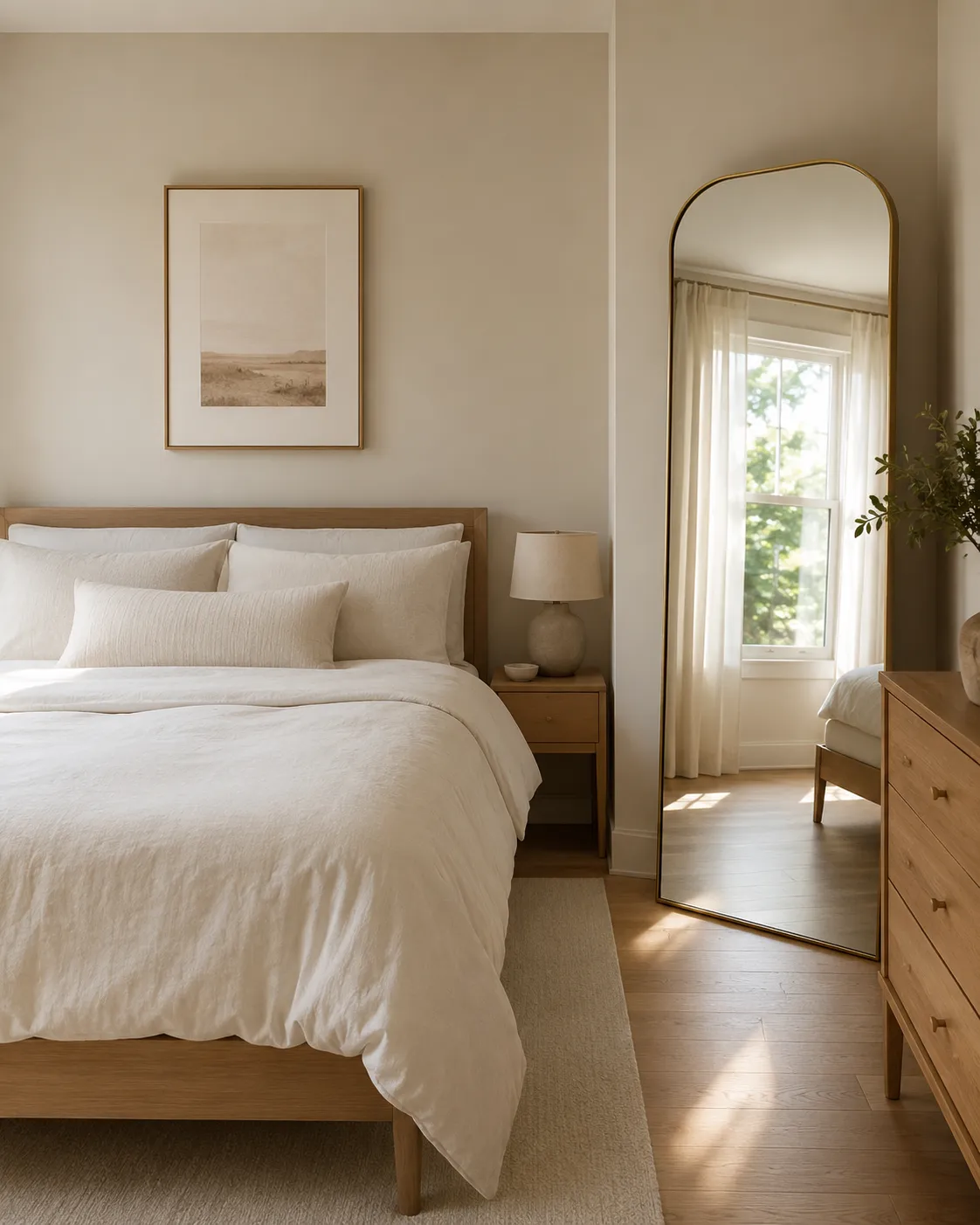
A mirror can brighten a compact room when it reflects a window or softly lit area.
Choose one well-scaled mirror instead of several small pieces. A full-length leaning mirror, wall-mounted mirror, or mirrored closet panel can be useful as well as decorative.
Do not place it only to fill an empty wall.
Check what the mirror reflects from the doorway and the bed. The reflected view should feel clean and intentional.
13. Make the Closet Work Harder
A small bedroom feels more comfortable when clothing storage is under control.
Use matching slim hangers, shelf dividers, drawer organizers, hooks, and labeled boxes. Place frequently used clothing at the easiest height.
Store seasonal pieces higher or beneath the bed.
Keep the closet floor as clear as possible. A clean lower area makes it easier to see what is available and prevents everyday items from forming a pile.
14. Turn One Corner Into a Useful Zone
A leftover corner can become a practical part of the room.
Depending on the available space, use it for a narrow desk, dressing mirror, wall hooks, compact chair, or small reading spot.
Choose one purpose rather than combining several.
A tiny chair that blocks a drawer is not an improvement. The corner should support a real daily routine while preserving movement around the bed.
15. Keep Decorative Objects Edited
Small rooms feel calmer when each visible object has a reason to remain.
Style a nightstand with a lamp, one book, and a small dish. A dresser might need only one tray, framed piece, or ceramic vase.
Group small objects together instead of spreading them around the room.
Softness can come from bedding, curtains, rugs, and lighting. The room does not need many accessories to feel welcoming.
16. Use Renter-Friendly Changes for More Personality
A rental bedroom can feel finished without permanent renovation.
Try plug-in sconces, removable hooks, leaning artwork, washable rugs, peel-and-stick details used carefully, and freestanding storage.
Replacing pillow covers, bedding, lampshades, and curtains can create a bigger visual change than adding many small decorations.
For more renter-friendly lighting, storage, and decor solutions, see our apartment bedroom ideas guide.
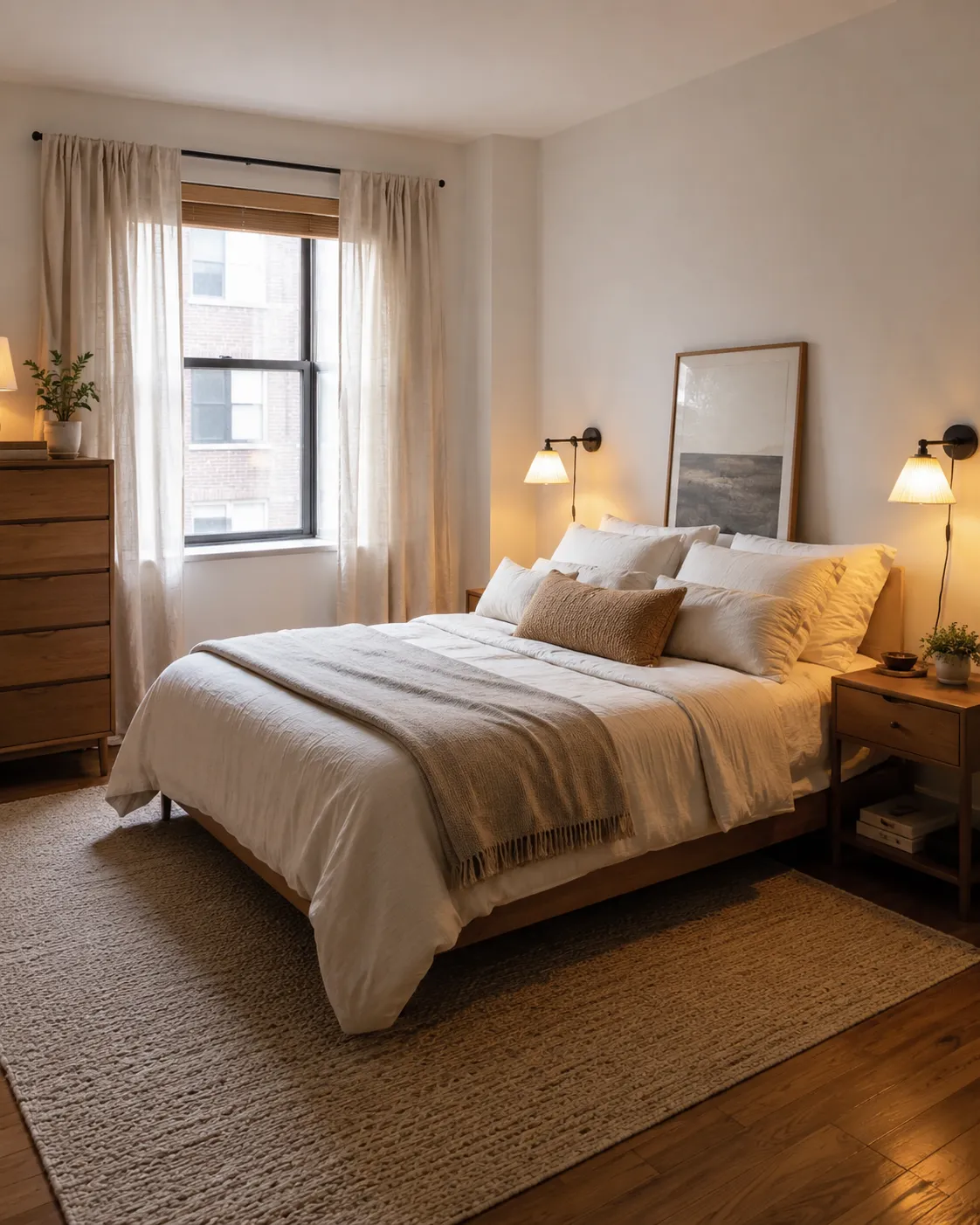
17. Protect a Restful Nighttime Mood
A small bedroom can feel especially peaceful when the evening setup is simple.
Use curtains or shades for light control, keep bright screens away from the bed when practical, and reduce visual clutter before nighttime.
The CDC’s sleep guidance recommends keeping the bedroom quiet, relaxing, and comfortably cool.
Choose lighting that can be dimmed or turned off without crossing the room. The final atmosphere should feel gentle, not dark or crowded.
Common Small Bedroom Mistakes
Buying Furniture Before Measuring
A dresser or bed may fit on paper but still block a door, closet, drawer, or walkway.
Mark each furniture footprint before purchasing and test how the doors will open.
Using Too Many Small Furniture Pieces
Several tiny tables, stools, shelves, and baskets can make the room look fragmented.
Choose fewer pieces that provide more useful storage or surface area.
Pushing Everything Against the Walls
This may create an empty strip in the center without improving how the room functions.
Plan around the strongest bed position and the most important walking route.
Choosing an Undersized Rug
A very small rug can make the bed look disconnected from the room.
Use a larger rug beneath the bed or narrow runners placed intentionally along the sides.
Filling Every Wall
Too many frames, shelves, mirrors, and hooks can create visual pressure.
Choose one focal wall and leave quieter areas around it.
Depending Only on Open Storage
Open shelves and clothing racks expose every item.
Combine a small amount of display with drawers, boxes, baskets, or closet storage.
Blocking Natural Light
Furniture, heavy curtains, or large plants can make a small room feel enclosed.
Keep the window area open and allow curtains to move beyond the glass.
Making the Room Too Pale and Flat
Light colors can support openness, but the room still needs definition.
Use wood, woven texture, a muted accent, or a restrained dark detail to create depth.
The Small Bedroom Formula
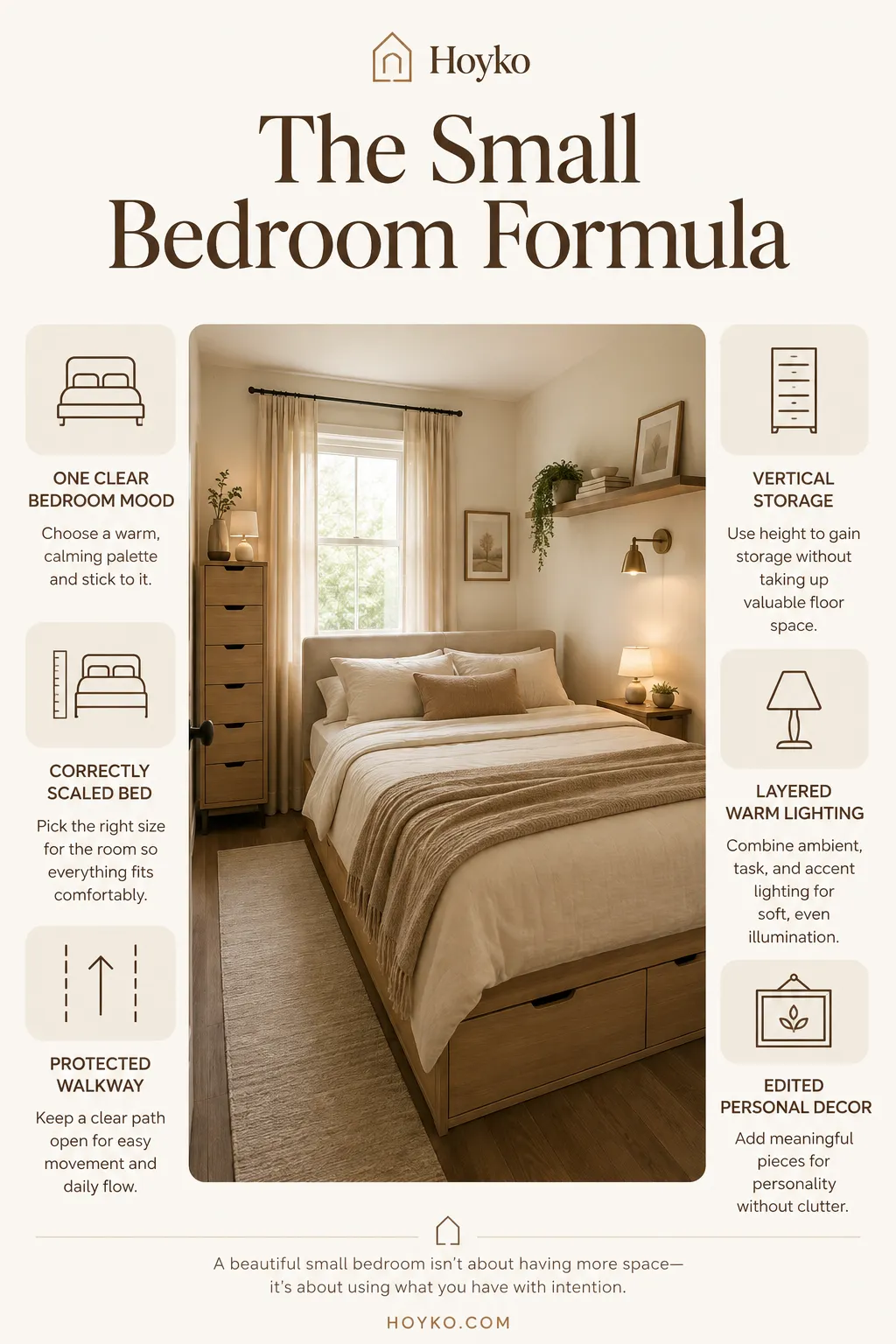
The small bedroom formula brings together six practical choices that keep a limited room comfortable, organized, and visually calm:
-
One Clear Bedroom Mood
-
Correctly Scaled Bed
-
Protected Walkway
-
Vertical Storage
-
Layered Warm Lighting
-
Edited Personal Decor
Small Bedroom Checklist
-
Measure the bed wall and main walkway.
-
Mark furniture dimensions before buying.
-
Choose one connected color palette.
-
Use a visually light bed frame.
-
Keep bedding layered but practical.
-
Add one correctly scaled rug.
-
Select slim or wall-mounted nightstands.
-
Use more than one light source.
-
Hang curtains high and wide.
-
Use vertical wall space carefully.
-
Organize storage beneath the bed.
-
Create one simple focal wall.
-
Position mirrors to reflect light.
-
Improve the closet before adding furniture.
-
Give unused corners a clear purpose.
-
Keep decorative objects edited.
-
Protect a calm nighttime atmosphere.
A small bedroom should feel comfortable to enter, easy to move through, and simple to reset.
FAQ About Small Bedroom Ideas
What colors make a small bedroom feel more open?
Warm white, cream, pale beige, light taupe, muted green, and gentle blue can create a lighter visual base. Add contrast through wood, woven texture, and a small amount of darker detail.
Where should a bed go in a small bedroom?
Begin with the longest uninterrupted wall, then check door movement, closet access, windows, outlets, and the main walking route. The most practical position is more important than perfect symmetry.
Should a small bedroom use a large or small rug?
A rug should relate to the bed rather than float separately. Use one large enough to extend beyond the visible sides or choose two intentional bedside runners in a narrow room.
How can a small bedroom have more storage?
Use under-bed containers, a tall dresser, closet organizers, hooks, wall shelves, and furniture with built-in drawers. Closed storage usually keeps the room calmer than several open displays.
How can a small bedroom feel cozy without feeling crowded?
Add warmth through bedding, curtains, lighting, rugs, and texture. Limit decorative objects, protect the clearest walkway, and choose furniture that fits the room’s actual measurements.
Are dark colors suitable for a small bedroom?
Dark colors can work as a restrained accent or on one carefully selected surface. Balance them with daylight, lighter textiles, and enough visual breathing room.
Final Thoughts on Small Bedroom Ideas
The best small bedroom ideas do not rely on squeezing more items into the room. They improve how the limited space looks, feels, and functions.
Begin with the bed and main walkway. Add useful storage, layered lighting, gentle color, and a small number of personal details.
A beautiful small bedroom should feel soft and welcoming, but it should also remain practical enough for everyday life.