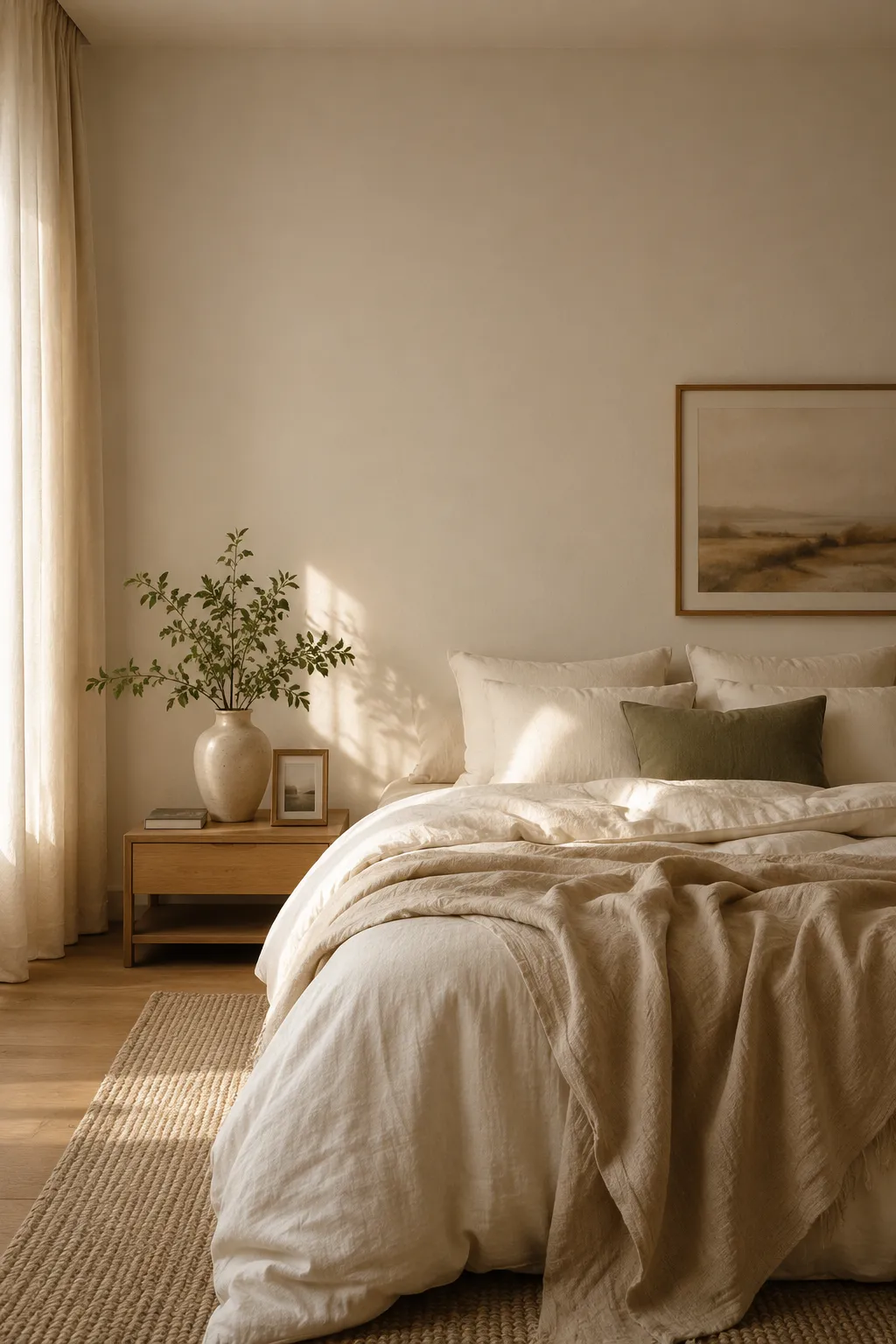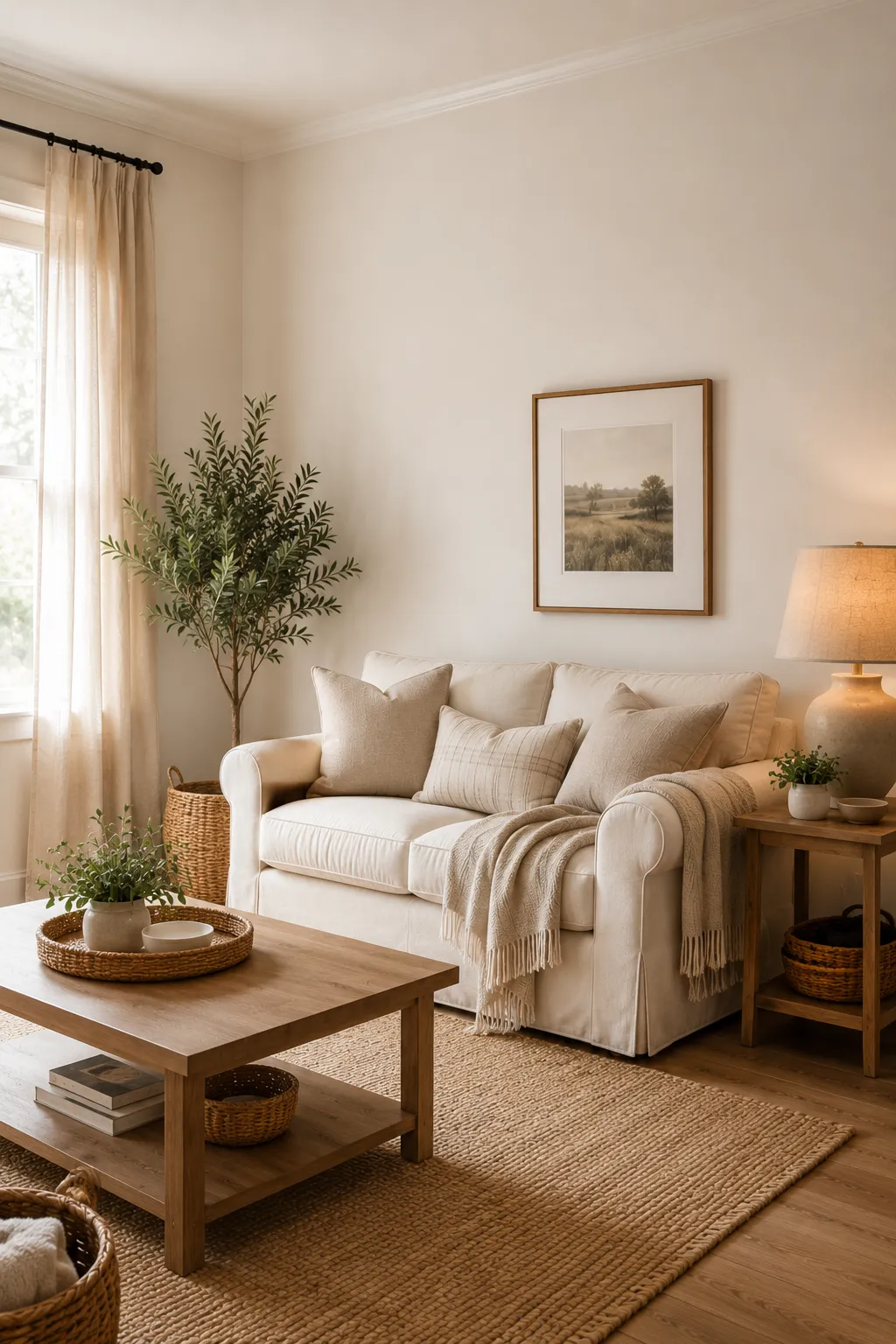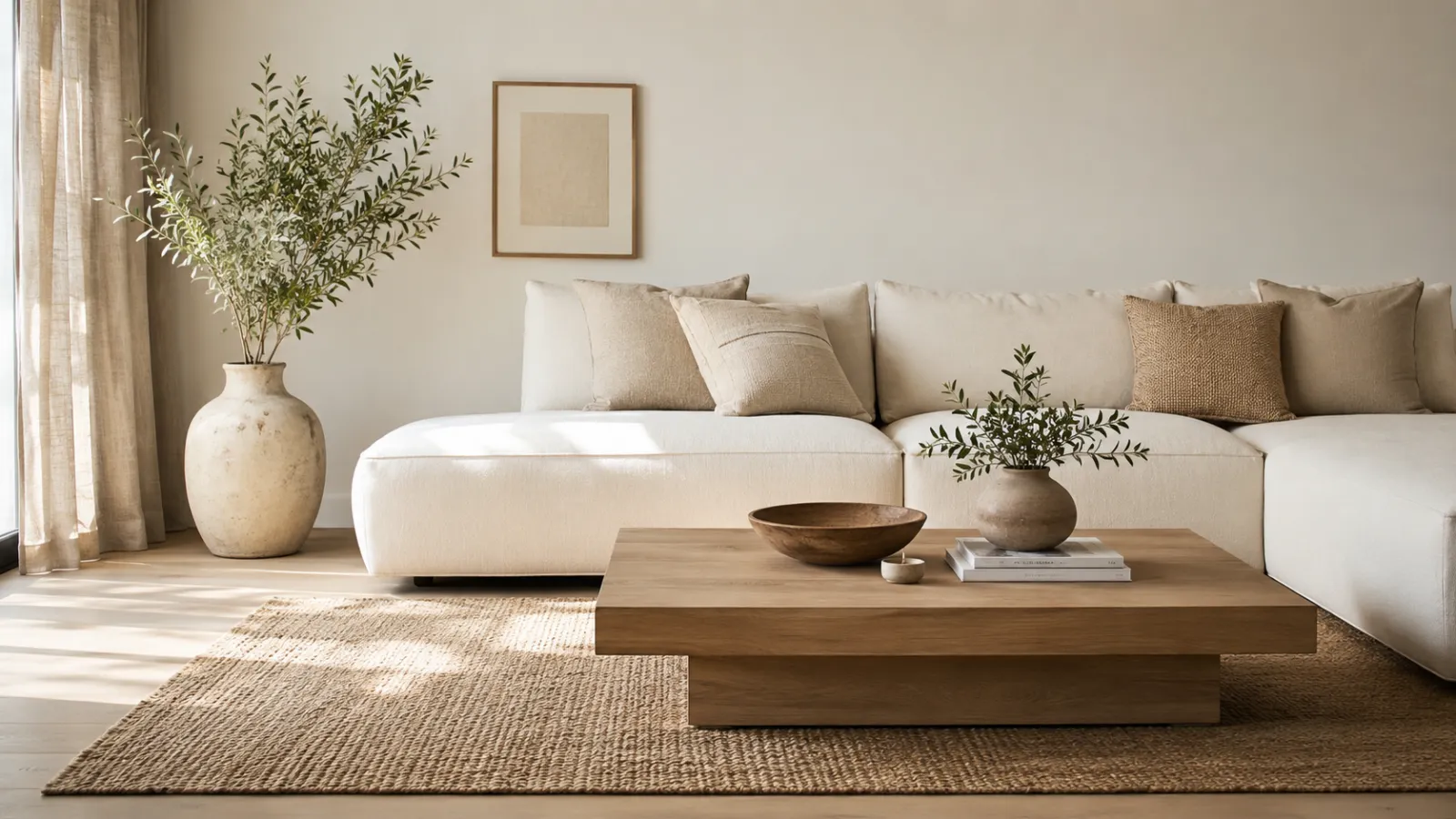
8 Neutral Color Schemes for Minimalist Rooms
Neutral color schemes for minimalist rooms can make a space feel calm, soft, and easy to live in. The right colors help a room look clean without feeling cold. They also make simple furniture, cozy texture, and natural light feel more beautiful.
A minimalist room does not need to be plain white. It can have warmth, depth, and personality while still feeling simple.
I like neutral rooms that feel gentle first. Warm white walls, cream fabrics, beige rugs, light wood, and a little taupe can make a room feel peaceful without needing too much decor.
For the full home styling foundation, you can also read our guide to minimalist room design.
Why Neutral Colors Work So Well in Minimalist Rooms
Neutral colors help a minimalist room feel open and restful. They give the eye fewer things to process, so the room feels calmer right away.
Soft colors also make it easier to style the room. A cream sofa, beige rug, light wood table, and warm white wall can all work together without fighting for attention.
This is why neutral color schemes are so helpful for small rooms, apartments, bedrooms, and cozy living rooms.
The room feels simple, but not empty.
A good neutral minimalist room usually needs:
Soft base color
One warm wood tone
One cozy fabric color
One deeper neutral for contrast
Warm lighting
Natural texture
A little breathing room
The prettiest neutral rooms usually feel layered, not flat.
How to Choose the Right Neutral Palette
Before choosing a color scheme, look at the room’s natural light. A bright room can handle cream, beige, taupe, and warm wood beautifully. A darker room may need more warm white and fewer heavy accents.
Also look at your existing pieces. Your sofa, rug, flooring, curtains, and wood furniture already create the color story.
A simple way to choose:
Pick one wall color.
Pick one main fabric color.
Pick one wood tone.
Pick one texture.
Pick one small accent.
When these colors repeat in more than one place, the room feels intentional.
1. Warm White and Beige
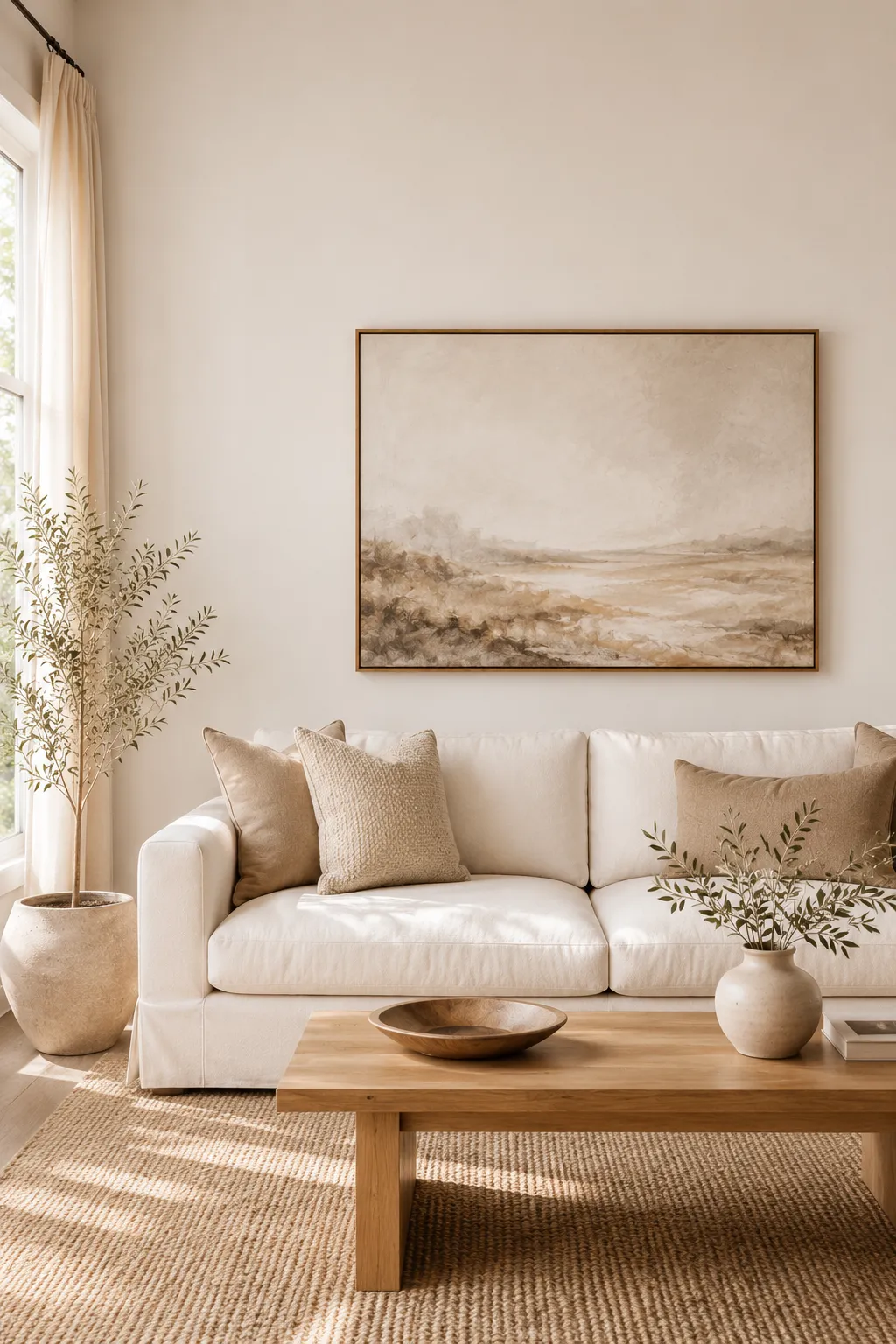
Warm white and beige is one of the easiest minimalist color schemes. It feels soft, clean, and cozy without looking too plain.
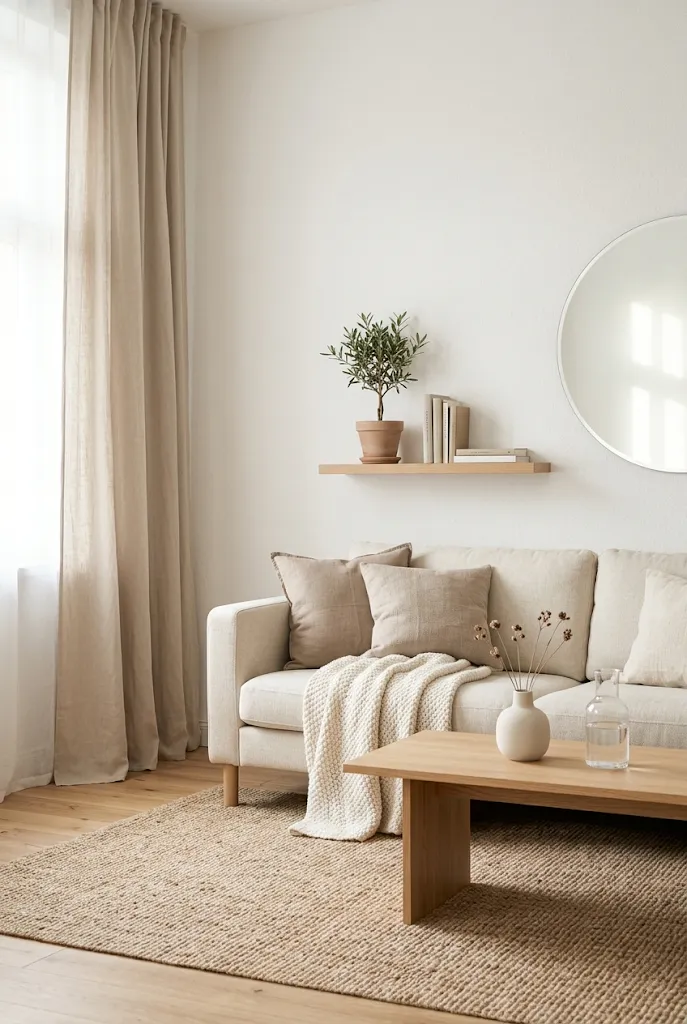
Use warm white on the walls. Then add beige through pillows, a rug, bedding, curtains, or a throw blanket.
This color scheme works beautifully in living rooms and bedrooms because it feels peaceful from morning to night.
Best for
Small rooms
Bedrooms
Living rooms
Apartments
Rooms with natural light
Simple styling idea
Warm white walls
Beige rug
Cream sofa or bedding
Light wood table
Soft linen curtains
This combination is simple, but it still feels warm and finished.
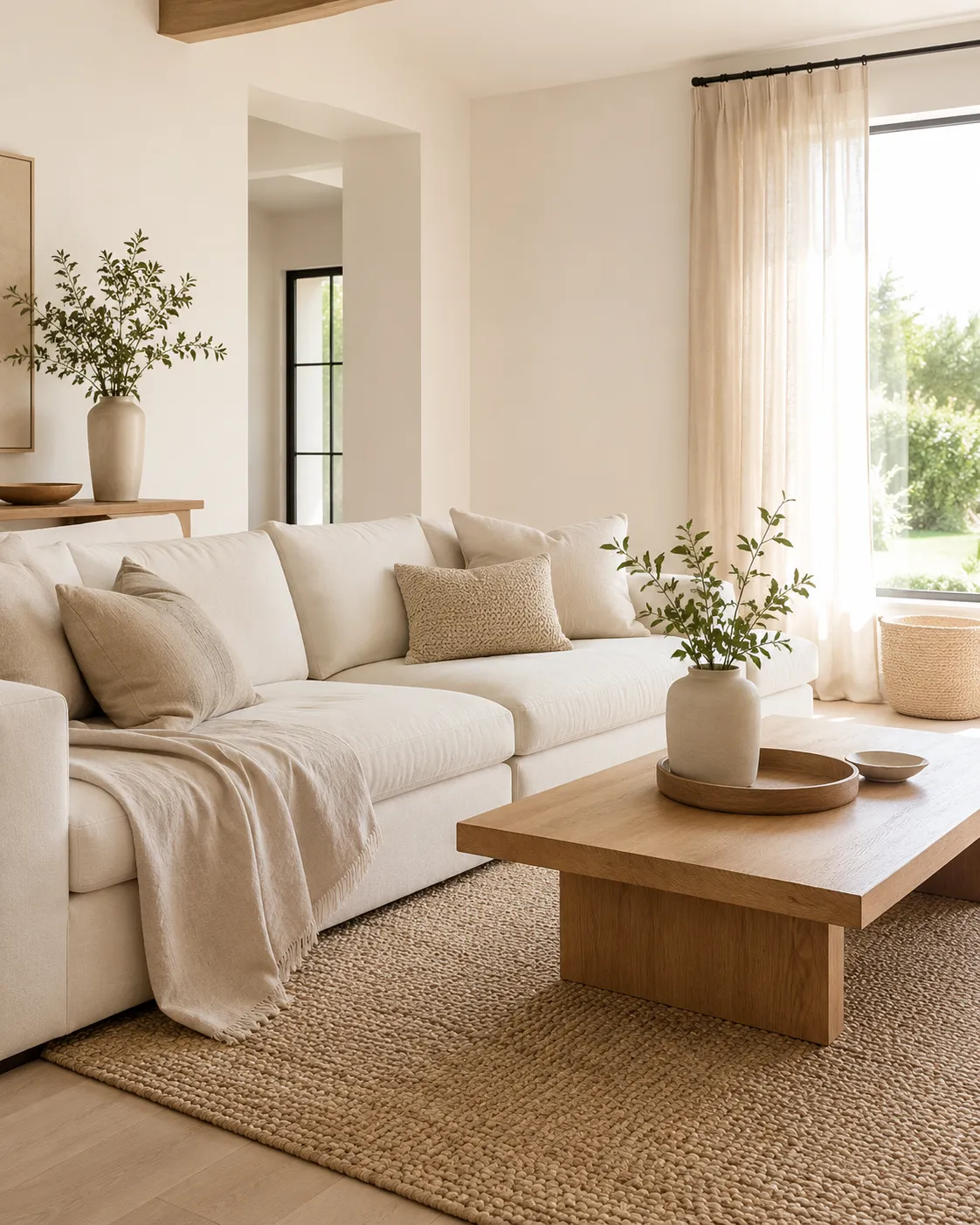
2. Cream and Light Oak Wood
Cream and light oak wood is a soft, natural color scheme for minimalist rooms. It feels warm without being dark.
Cream gives the room a gentle base. Light oak adds natural texture and makes the space feel more grounded.
This palette works well if you want a calm home that still feels cozy and lived in.
Try cream walls or furniture with a light oak coffee table, nightstand, shelf, or picture frame.
I like this palette because it feels clean, but still has warmth from the wood.
For more soft living room styling, you can read our minimalist living room ideas.
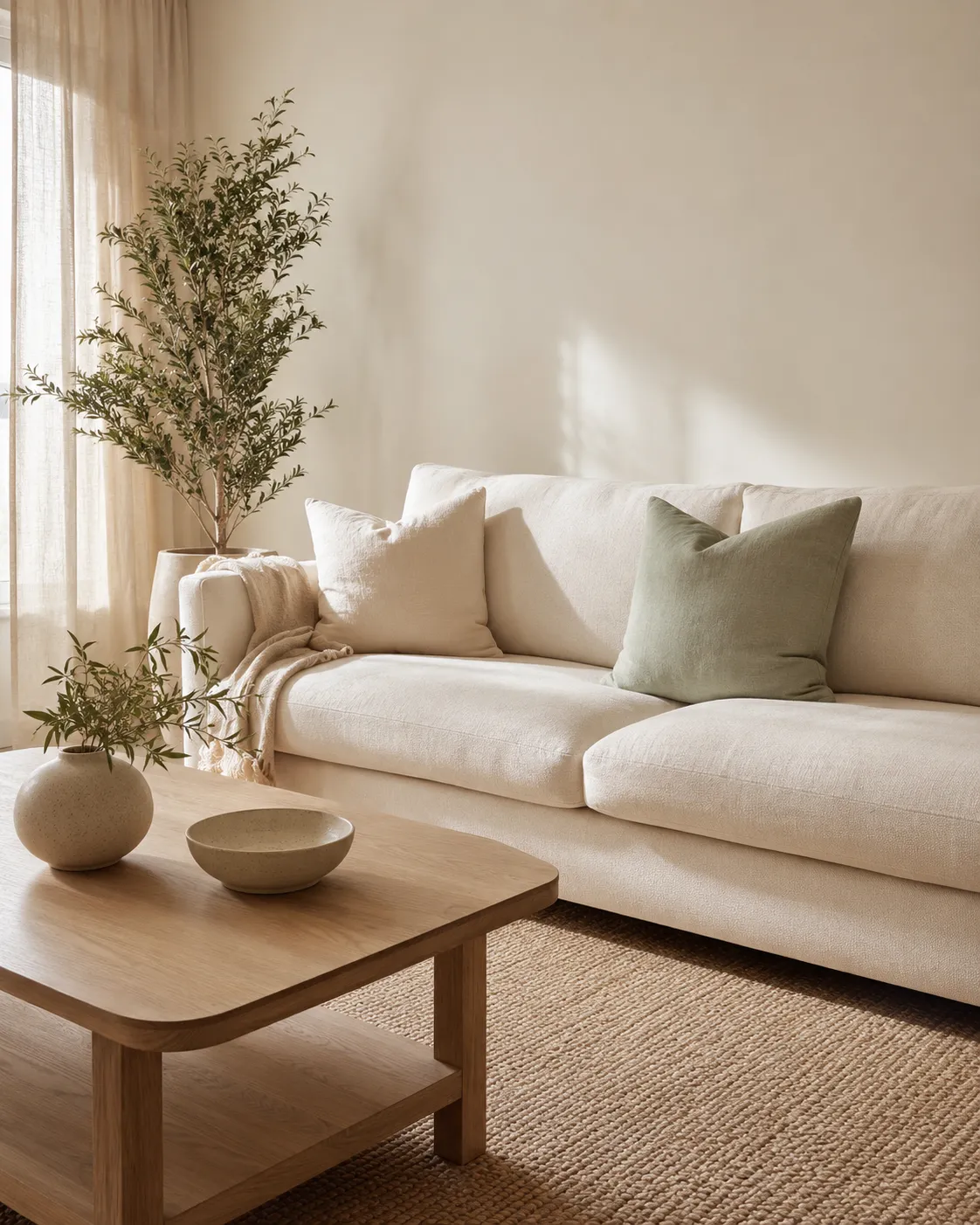
3. Beige and Soft Taupe
Beige and soft taupe create a slightly richer minimalist room. This color scheme feels calm, warm, and a little more layered.
Beige can be the main color. Taupe can come through pillows, rugs, curtains, bedding, or wall art.
Taupe is helpful when a room feels too flat. It adds depth without making the space feel dark.
This palette works especially well with cream furniture and warm lighting.
A beige sofa with taupe pillows and a light wood table can feel simple, soft, and expensive without looking too styled.
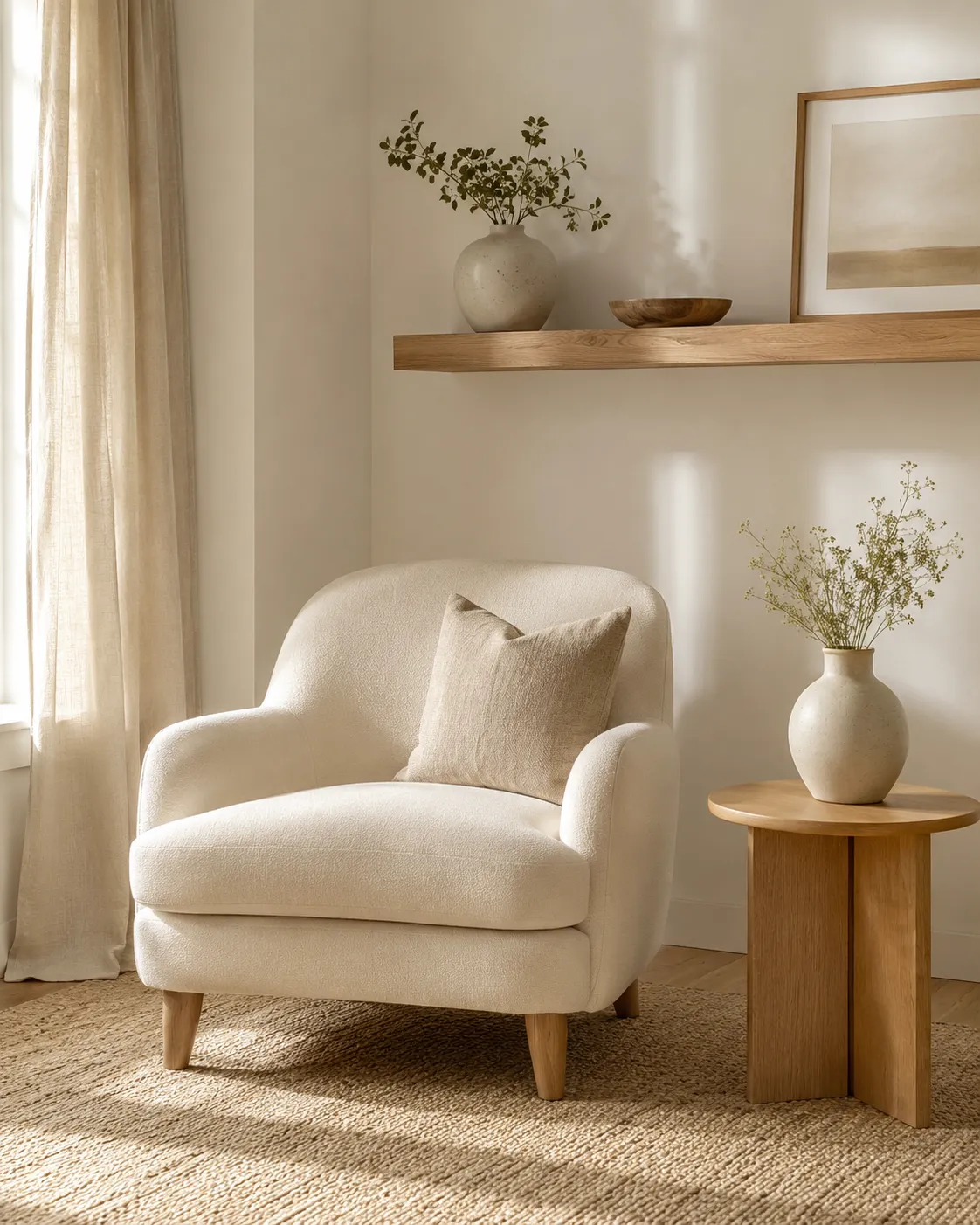
4. Warm White, Cream, and Linen
Warm white, cream, and linen create a soft relaxed room. This color scheme feels simple but very cozy.
Use warm white walls, cream furniture, and linen textures. The colors stay close together, but the materials keep the room interesting.
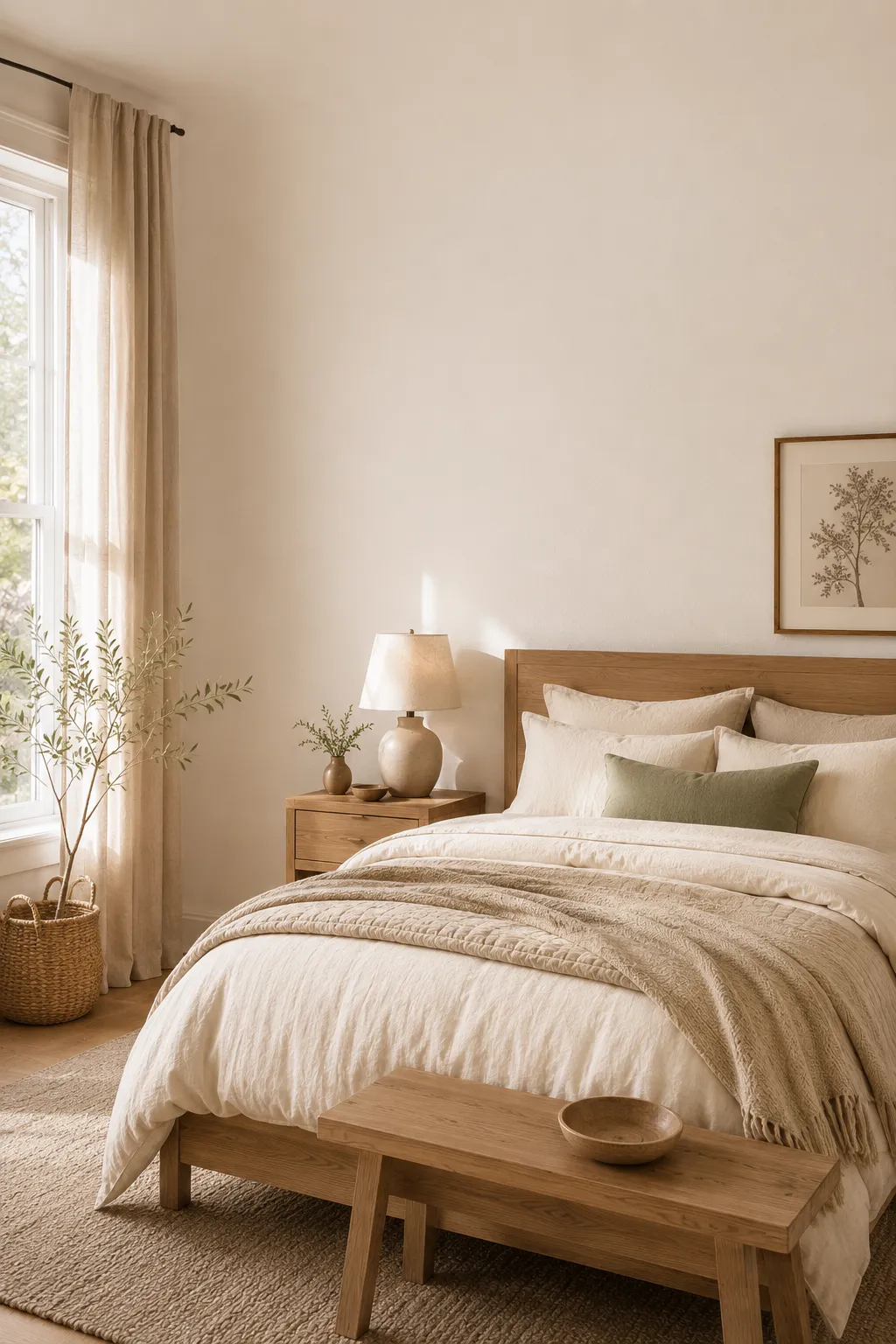
Linen curtains, linen bedding, cotton pillows, and a woven rug can make the room feel gentle.
This is a beautiful choice for a bedroom or calm apartment corner.
For more bedroom styling, save our minimalist bedroom ideas.
5. Soft Gray and Warm Wood
Soft gray can work in minimalist rooms when it is paired with warm wood. The wood keeps the gray from feeling too cool.
Choose a warm gray instead of a blue-gray. Then add light oak, walnut, rattan, or beige fabric to soften the room.
This color scheme works well if you want a modern minimalist room that still feels comfortable.
A soft gray sofa with a light wood coffee table and cream rug can feel clean and calm.
The room should still have warmth through lamps, baskets, wood frames, or beige textiles.
6. Muted Sage and Cream
Muted sage and cream is a lovely neutral-inspired palette when you want a little color. Sage feels natural, soft, and peaceful.
Use sage in small amounts. A pillow, plant, throw blanket, framed print, or accent chair can be enough.
Cream should stay as the main base so the room still feels minimalist.
This color scheme looks beautiful with light wood, beige rugs, and natural woven baskets.
Muted sage works best when it feels dusty and soft, not bright or bold.
 7. Beige, Black, and Warm White
Beige, black, and warm white can make a minimalist room feel more defined. The black gives contrast, but it should be used carefully.
Use black in small details only. A thin picture frame, lamp base, mirror frame, curtain rod, or chair leg can be enough.
Too much black can make the room feel heavy. A little black can make the neutral colors look cleaner.
This palette works well in modern living rooms, entryways, and wall decor setups.
For more wall styling, you can read our minimalist wall decor ideas.
8. Oatmeal, Cream, and Natural Woven Texture
Oatmeal, cream, and woven texture create a cozy minimalist color scheme. It feels warm, soft, and very homey.
Oatmeal is a gentle beige tone that works well for pillows, blankets, rugs, and upholstery.
Add woven texture through baskets, jute rugs, rattan chairs, or natural lampshades. This keeps the room from feeling too flat.
This palette is perfect for cozy corners, small apartments, and budget room decor.
If you are decorating slowly, our minimalist room decor on a budget guide can help you choose simple pieces.
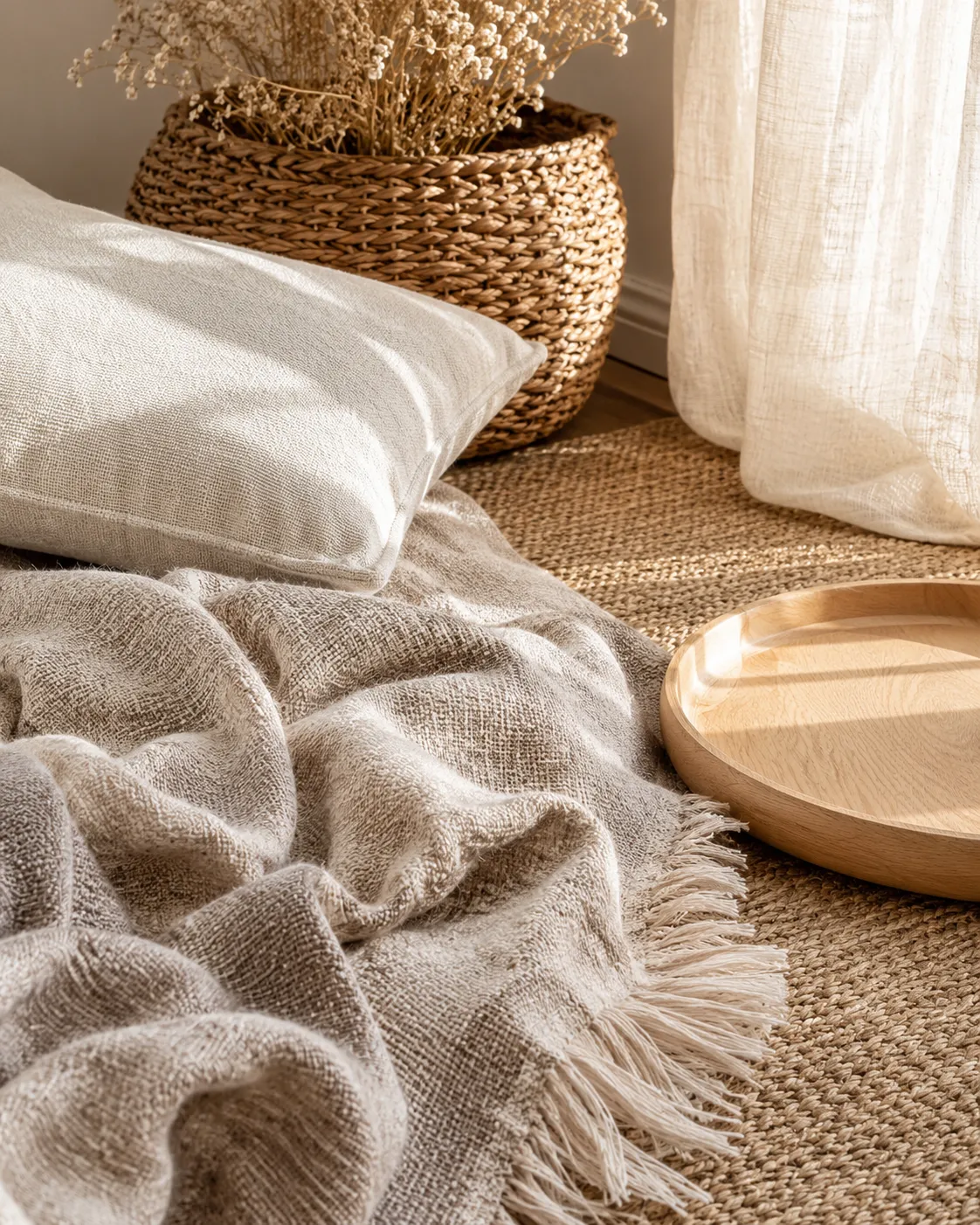
Bonus Palette: White, Beige, and Muted Brown
White, beige, and muted brown is a warm neutral palette with a little more depth. It feels calm but not too pale.
Use white or warm white for the walls. Add beige through fabrics. Then bring muted brown through wood, leather, frames, or decor accents.
This palette works well if you want your room to feel earthy and grounded.
Muted brown should feel soft, not too dark or shiny.
This is a good choice for fall styling, cozy living rooms, and warm minimalist bedrooms.
Neutral Color Ideas by Room
Different rooms need slightly different neutral palettes. A living room may need more warmth, while a bedroom may need softer tones.
Living Room
Warm white
Cream
Beige
Light oak
Soft taupe
This keeps the room calm but cozy.
Bedroom
Cream
Linen beige
Warm white
Oatmeal
Soft gray
This helps the bedroom feel restful.
Small Apartment
Warm white
Beige
Light wood
Muted sage
Natural woven texture
This helps the apartment feel open and soft.
For more apartment-friendly styling, see our small apartment minimalist decor ideas.
Entryway
Warm white
Light oak
Beige
Black accent
Woven basket texture
This creates a clean first impression.
Cozy Corner
Cream
Oatmeal
Taupe
Rattan
Warm lamp glow
This makes the corner feel soft and inviting.
Neutral Minimalist Color Scheme Guide
|
Room Style |
Best Color Scheme |
Why It Works |
| Small living room | Warm white, beige, light oak |
Keeps the room open and warm |
|
Soft bedroom |
Cream, linen beige, oatmeal |
Feels restful and gentle |
|
Modern room |
Soft gray, warm wood, cream |
Looks clean without feeling cold |
| Cozy corner | Oatmeal, taupe, rattan |
Adds warmth and texture |
|
Apartment space |
Warm white, muted sage, woven texture |
Feels fresh, soft, and renter-friendly |
|
Wall decor setup |
Beige, warm white, thin black accents |
Adds definition without heaviness |
This guide is only a starting point. The best palette is the one that works with your light, furniture, and textures.
Color Mistakes to Avoid
Neutral rooms can still go wrong if the colors feel too cold, too flat, or too random.
Avoid using only bright white with no texture. This can make the room feel empty.
Avoid mixing too many different undertones. Cool gray, yellow beige, bright white, and orange wood can feel messy together.
Avoid too many dark accents in a small room. They can make the space feel smaller.
Avoid buying random decor pieces just because they are neutral. The colors should still feel connected.
Common mistakes:
Using cold white walls with warm beige decor
Mixing too many wood tones
Choosing gray that feels too blue
Adding too many black accents
Using no texture
Making everything the exact same beige
Forgetting warm lighting
Choosing trendy colors that do not match the room
The easiest fix is to repeat one warm tone in three places.
How to Make Neutral Colors Feel Cozy
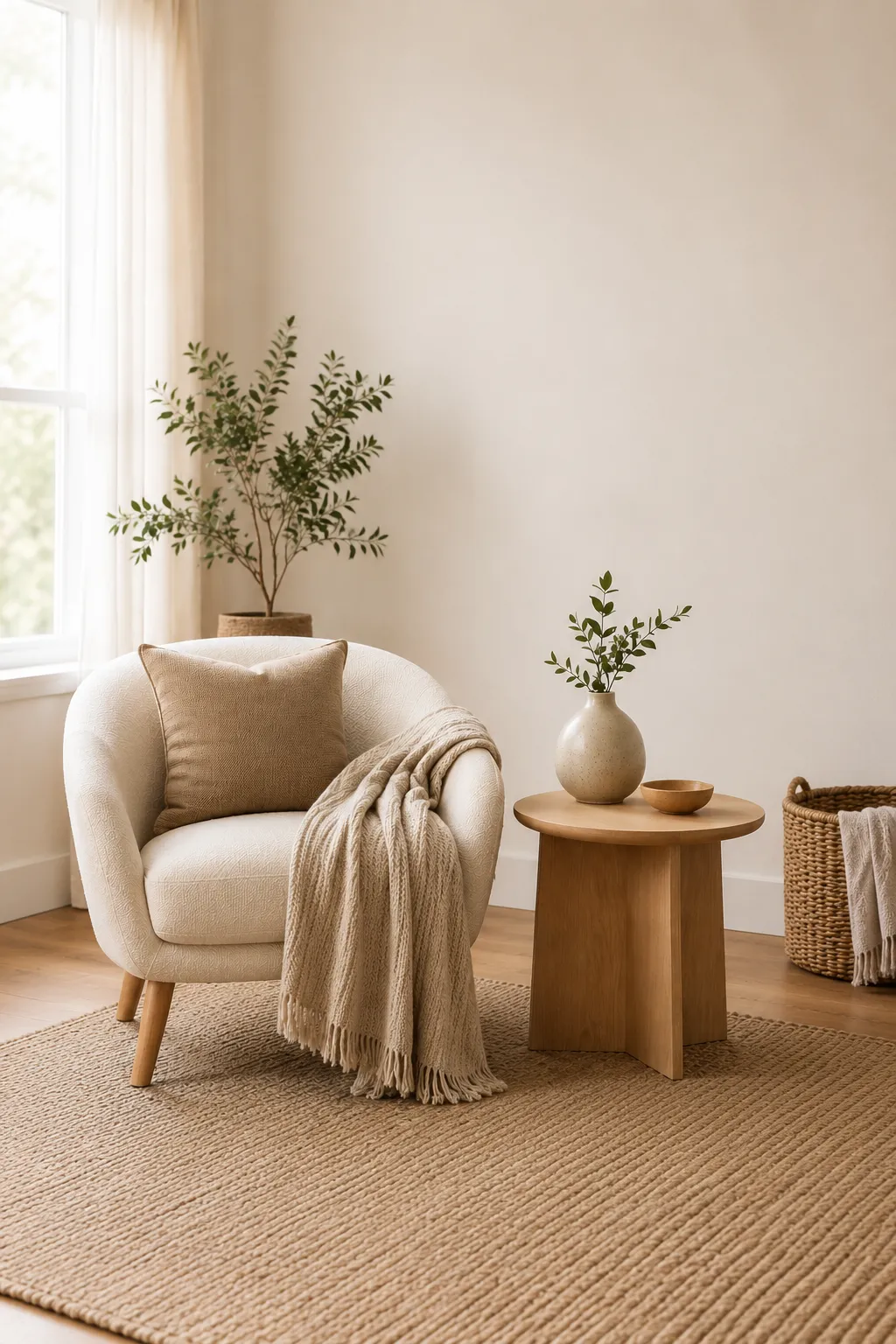
The easiest way to make neutral colors feel cozy is to add texture. Texture gives the room warmth without adding visual clutter.
Use linen, cotton, boucle, wool, jute, rattan, oak wood, ceramic, and woven baskets.
Warm lighting also helps. A soft lamp can make beige, cream, and taupe feel much richer at night.
A cozy minimalist room is not just about color. It is about how the colors feel with light and texture.
Try this simple cozy layer:
Neutral wall
+
Soft fabric
+
Warm wood
+
Woven texture
+
Warm lamp glow
That combination usually makes a neutral room feel finished.
 Simple Neutral Color Formula
Use this easy formula if you feel stuck.
Choose one base color.
Add one soft fabric color.
Add one wood tone.
Add one texture.
Add one tiny accent.
Example:
Base color: warm white
Fabric color: cream
Wood tone: light oak
Texture: woven rug
Accent: muted sage plant or pillow
This formula keeps the room simple but not boring.
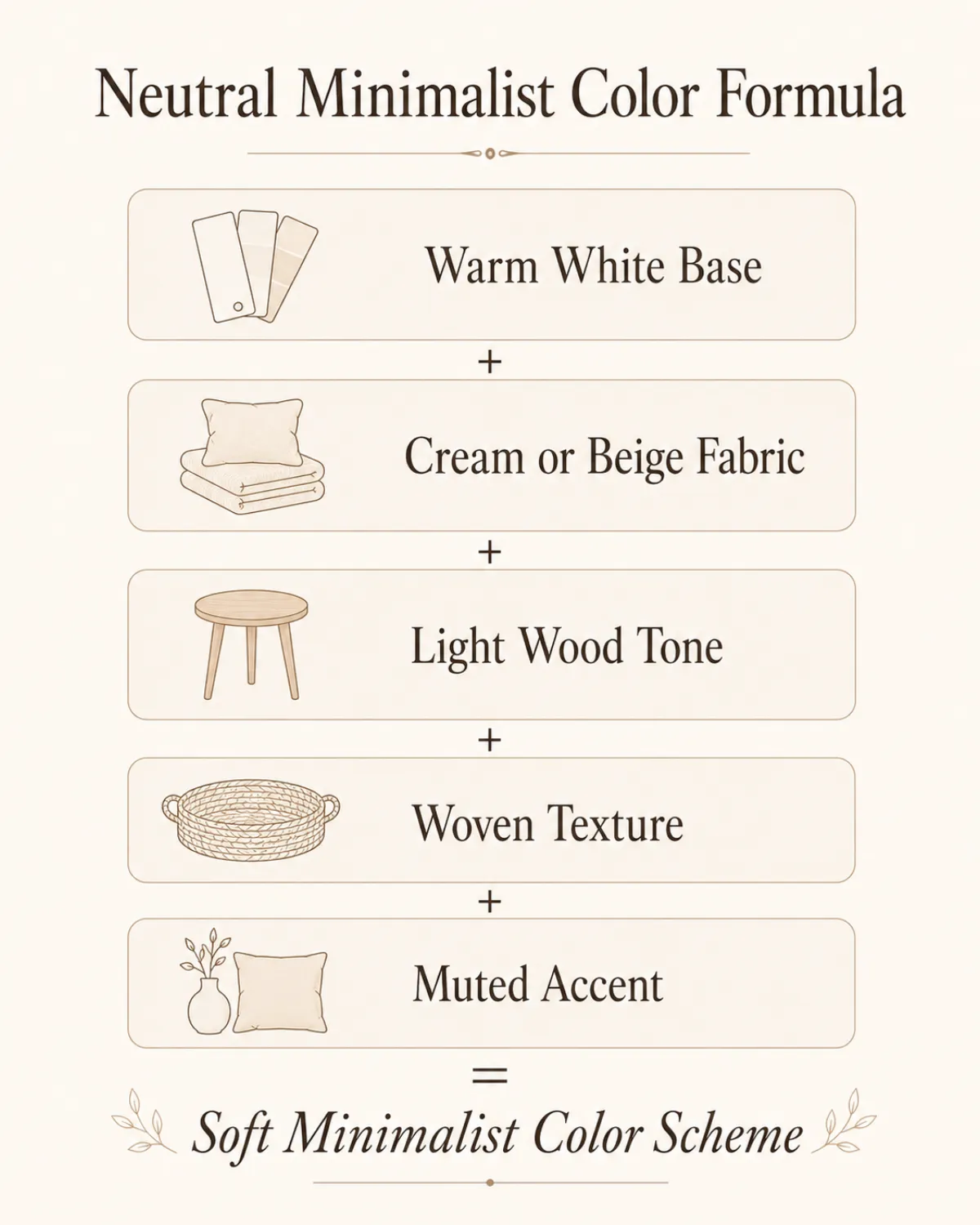
Neutral Minimalist Color Formula
Use this formula when choosing colors for a calm minimalist room:
Warm White Base
+
Cream or Beige Fabric
+
Light Wood Tone
+
Woven Texture
+
Muted Accent
=
Soft Minimalist Color Scheme
This is the easiest way to keep a neutral room warm, simple, and cozy.
Neutral Minimalist Room Checklist
Use this checklist before choosing your colors:
Choose warm white instead of cold white
Use cream or beige as the main soft color
Add light wood for warmth
Use taupe or oatmeal for depth
Keep strong accent colors small
Repeat colors in more than one place
Use texture to avoid a flat look
Keep wall decor calm
Use warm lighting at night
Avoid too many undertones
Match fabrics with wood tones
Let some space stay simple
A good neutral room should feel peaceful, not unfinished.
FAQ About Neutral Color Schemes for Minimalist Rooms
What is the best neutral color scheme for a minimalist room?
Warm white, cream, beige, and light wood is one of the best neutral color schemes for a minimalist room. It feels soft, calm, and easy to style. You can add taupe, oatmeal, or muted sage for a little more warmth and depth.
How do I make a neutral minimalist room feel cozy?
Add cozy texture through linen curtains, woven rugs, cotton pillows, throw blankets, rattan baskets, and light wood furniture. Warm lighting also helps a lot. Neutral rooms feel cozy when the textures are soft and the lighting feels gentle.
Is gray good for minimalist rooms?
Gray can work in minimalist rooms if it feels warm and soft. Avoid cold blue-gray if you want a cozy look. Pair soft gray with cream, beige, warm wood, and natural textures so the room does not feel too cool.
What colors should I avoid in a minimalist room?
Avoid too many bright colors, harsh cool whites, heavy dark accents, and colors with clashing undertones. A minimalist room usually feels better when the colors are soft, connected, and repeated throughout the space.
Can neutral rooms still have color?
Yes, neutral rooms can still have soft color. Muted sage, warm terracotta, dusty beige-pink, or muted brown can work well in small amounts. Keep the main base neutral and use color as a gentle accent.
How do I choose neutral colors for a small room?
Choose warm white or cream as the base, then add beige, light wood, and one soft accent. Keep darker colors small. A small neutral room feels bigger when the main colors are light and the textures are soft.
Conclusion
Neutral color schemes for minimalist rooms are about creating a soft, calm foundation. The right palette can make a room feel open, cozy, and easy to style.
Start with warm white, cream, beige, or light wood. Then add texture through rugs, curtains, baskets, bedding, and soft pillows.
A beautiful minimalist room does not need many colors. It needs colors that feel connected, warm, and easy to live with.