14 Neutral Bedroom Ideas for a Soft and Relaxing Room
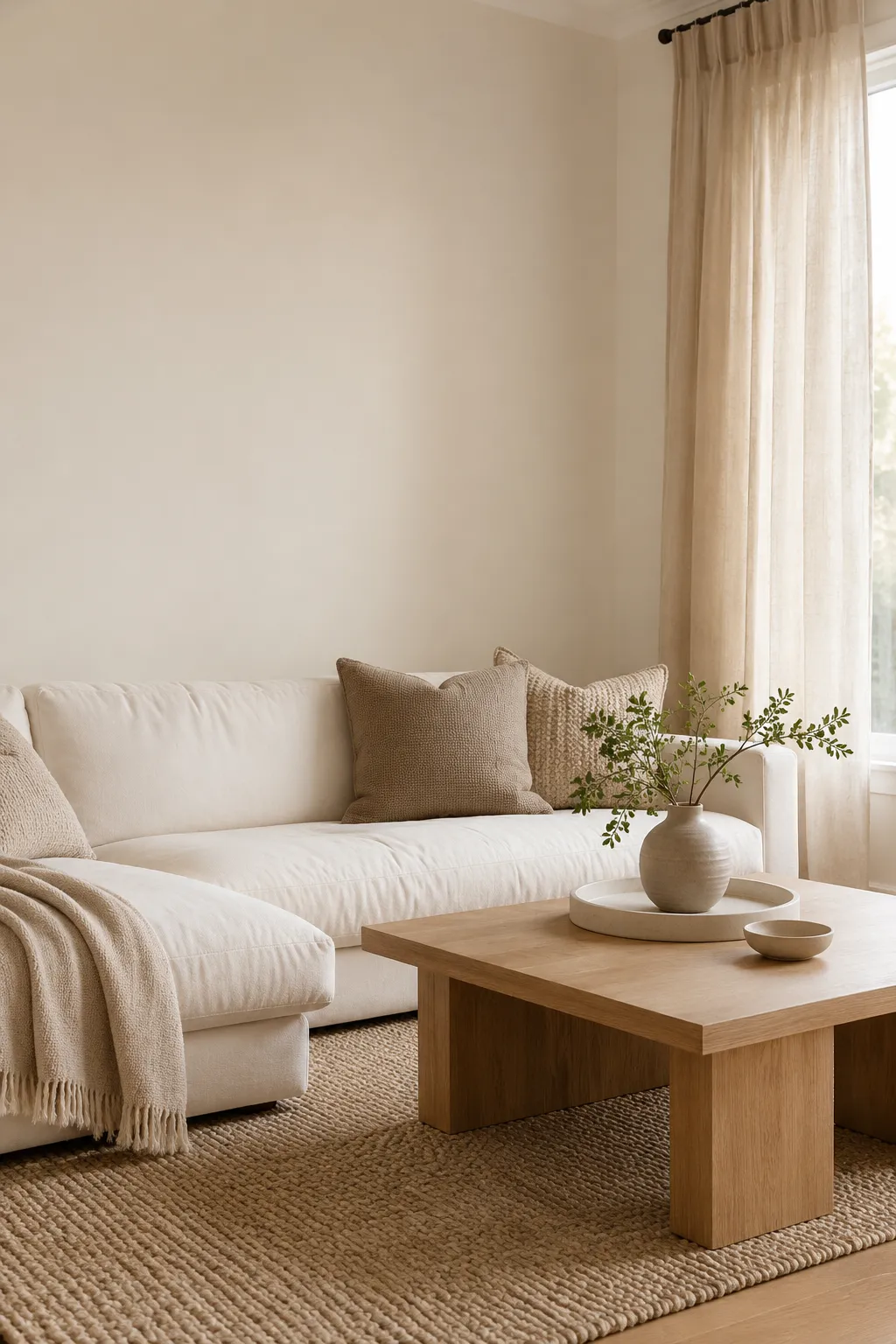
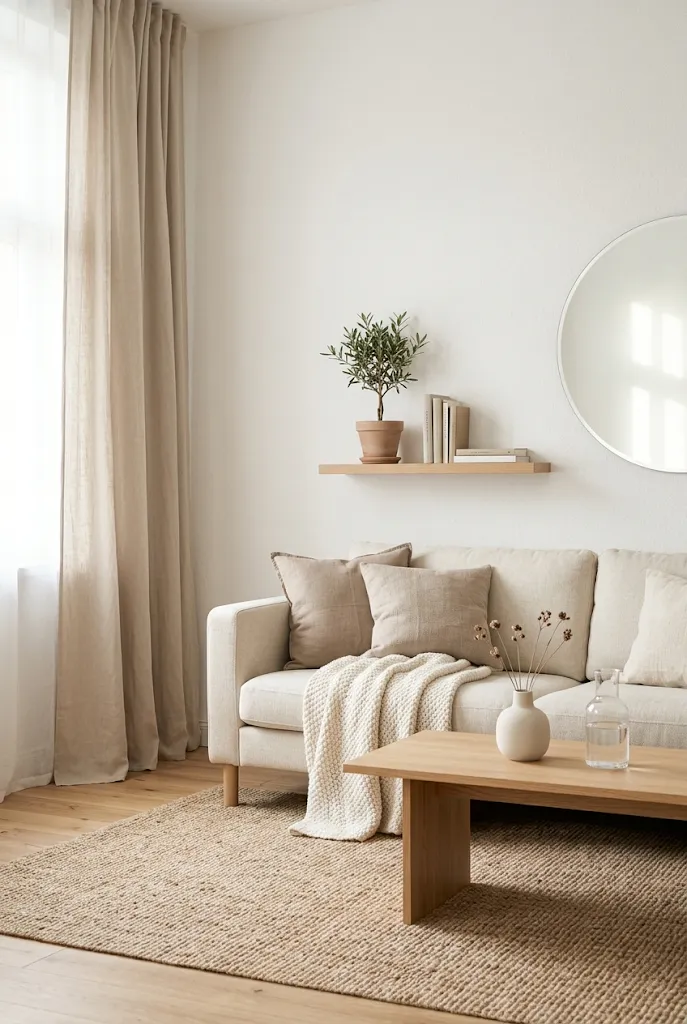
Neutral bedroom ideas feel most inviting when the room has more than one shade, texture, and material. A bedroom filled with one flat beige tone can feel unfinished, while warm white, cream, taupe, wood, linen, and gentle contrast can create depth without making the space busy.
The goal is not to remove color from the room. It is to build a quiet palette where every material feels connected.
Start with the undertone of the largest surfaces, then layer bedding, wood, rugs, curtains, lighting, artwork, and one restrained accent.
For the complete bedroom foundation, see our cozy bedroom ideas guide.
Neutral Bedroom Ideas at a Glance
A relaxing neutral bedroom combines several related tones rather than relying on one color. Start with warm white, cream, beige, or soft taupe, then add natural wood, woven texture, and gentle contrast through bedding, rugs, curtains, and artwork.
Repeat a small number of materials throughout the room so the palette feels connected. Warm lighting can also keep cream and beige from appearing cold at night.
The finished bedroom should feel layered rather than monochromatic, calm rather than empty, and simple enough that a small seasonal or personal detail can be added without disturbing the overall mood.
1. Decide Whether the Room Needs Warm or Cool Neutrals
The undertone of a neutral color matters as much as the color name.
Warm neutrals usually lean toward cream, beige, oatmeal, sand, clay, or soft brown. Cooler neutrals may include blue-gray, stone, or cooler off-white.
Look first at the parts of the bedroom that will remain:
- flooring
- fixed cabinetry
- existing furniture
- stone
- carpet
- window light
A bedroom with honey-toned wood often feels more connected with warm white and beige than with icy gray.
The goal is not to match every surface exactly. Choose undertones that feel comfortable together in the room’s actual daylight.
2. Start With a Warm White or Cream Base
Large neutral surfaces should create breathing room for the smaller layers.
Warm white or cream can work well on walls because they reflect daylight while providing a softer background than a stark blue-white.
Do not choose wall color from a digital swatch alone.
Paint a generous sample on more than one wall and check it in morning, afternoon, and evening light. A color that looks creamy beside a window may appear more yellow beneath a warm lamp.
If painting is part of the update, follow the product instructions and ventilate the room appropriately. EPA guidance notes that paints and some remodeling products can release volatile organic compounds, so good ventilation matters while the work is being done.
For more detail, see the EPA indoor air guidance for remodeling.
For broader palette combinations, see our neutral color schemes for minimalist rooms guide.
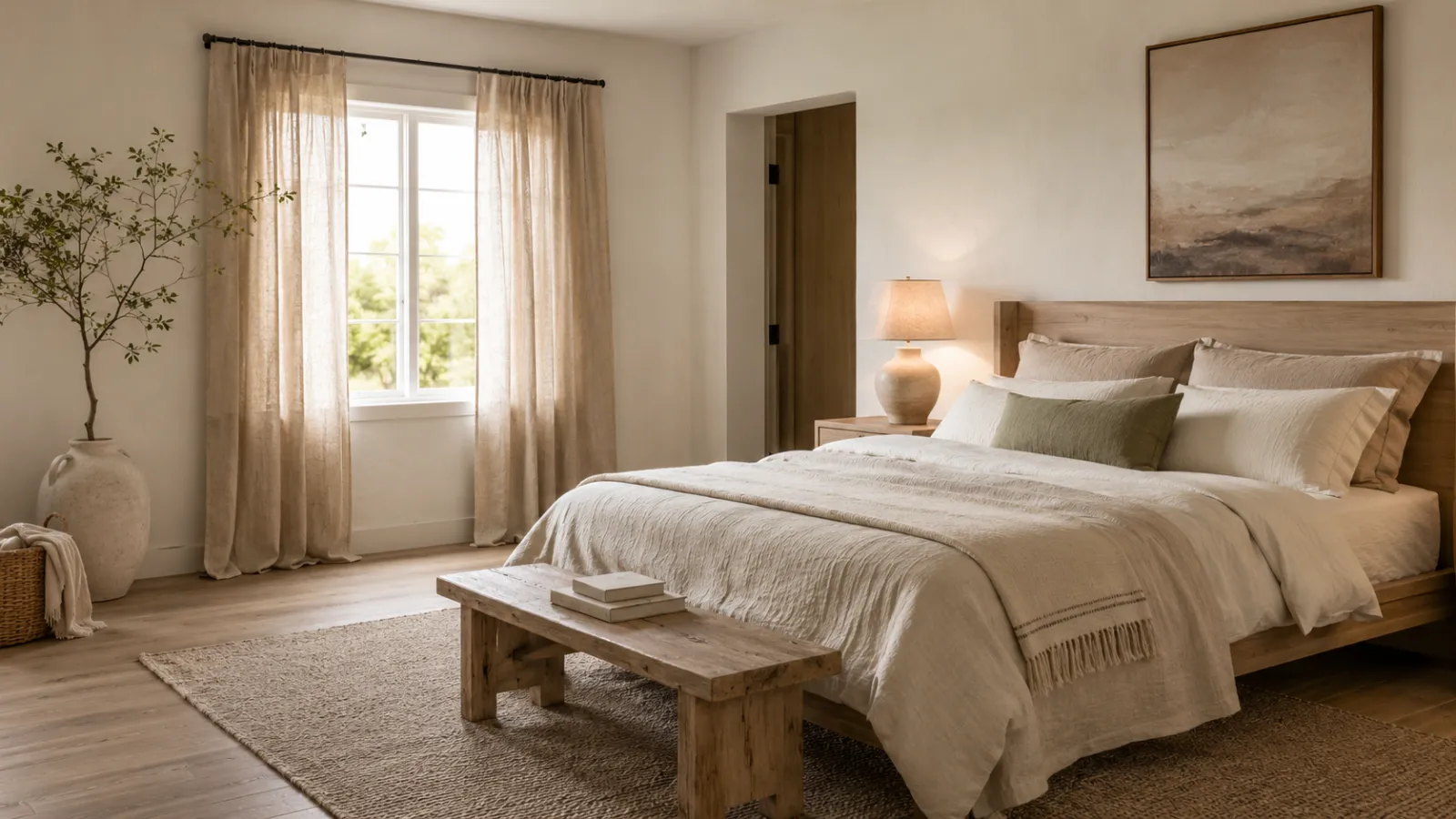
3. Layer Cream, Beige, and Taupe Instead of Using One Beige
A neutral bedroom becomes more interesting when nearby colors are related but not identical.
For example:
- warm-white walls
- cream bedding
- beige curtains
- soft taupe rug
- natural oak furniture
The difference between each layer should be gentle enough to feel connected but visible enough to create depth.
Avoid buying every textile in the same beige shade. When bedding, curtains, rug, and upholstery are nearly identical, the room can lose definition.
A tonal palette works best when value, texture, and material change slightly from one surface to another.
For more decor-focused layering, see our bedroom decor ideas guide.
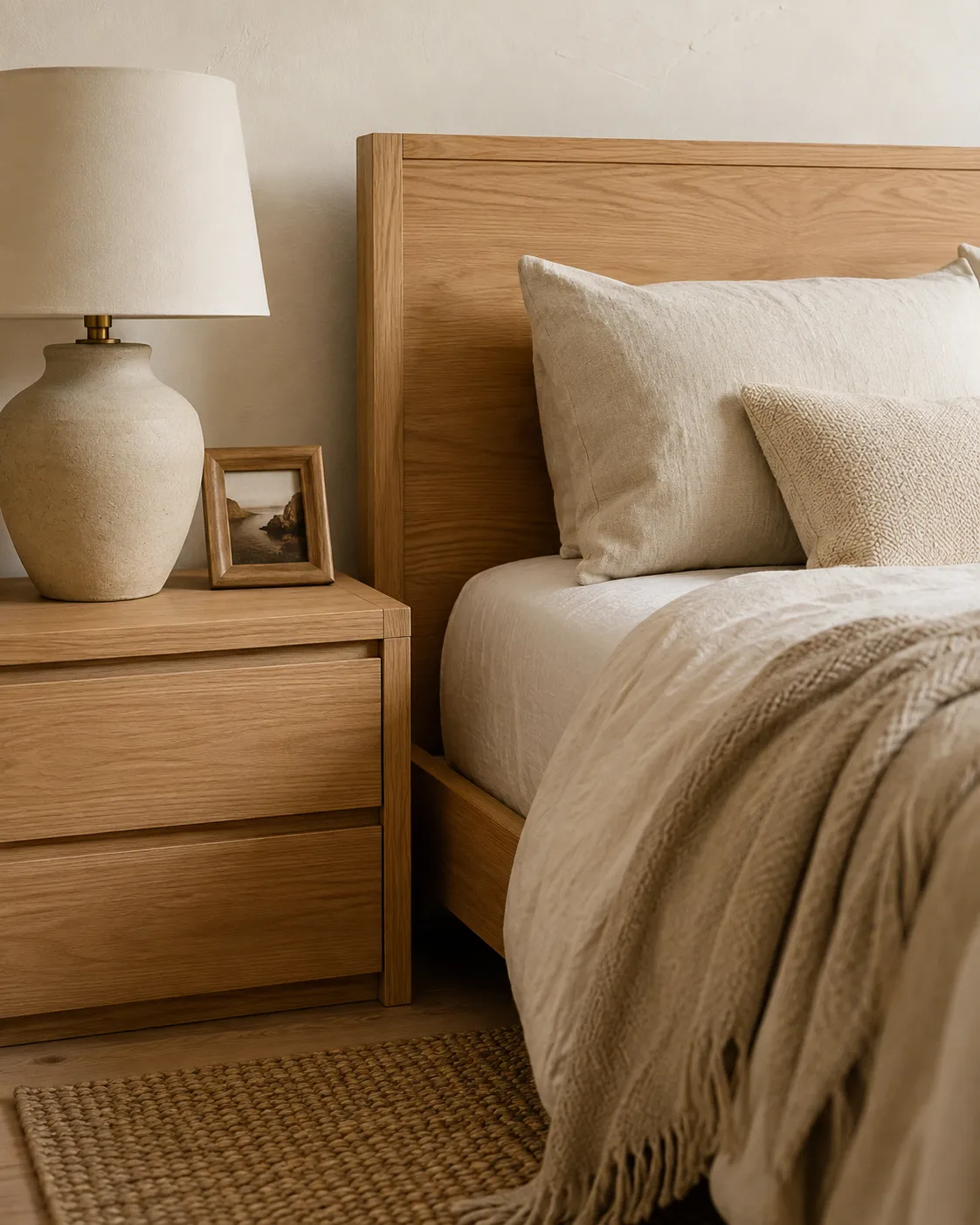
4. Let Natural Wood Add Warmth and Definition
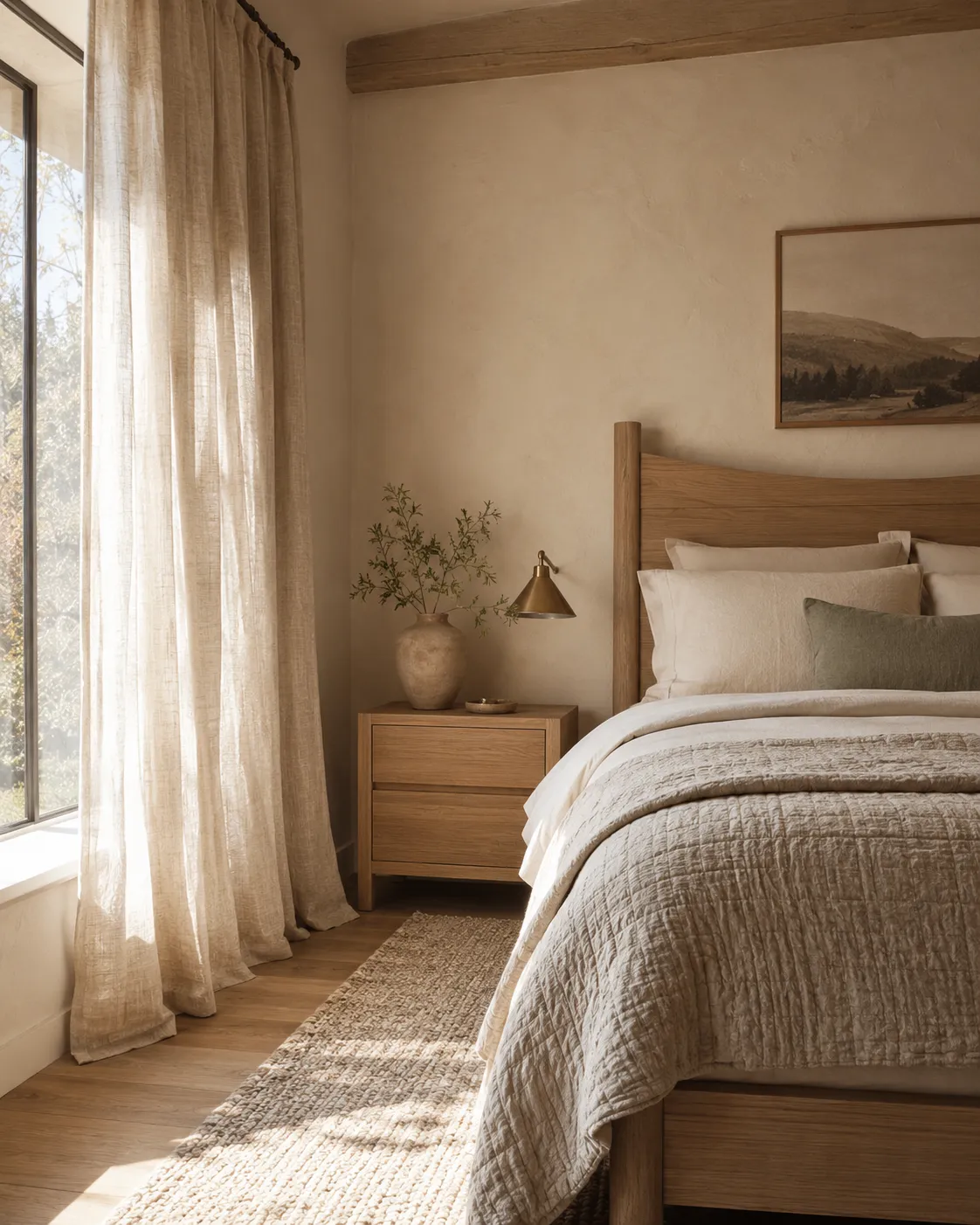
Wood is one of the easiest ways to give a neutral bedroom structure.
A light oak bed, medium wood dresser, or simple wood nightstand can prevent pale walls and textiles from blending into one large surface.
You do not need an exact matching furniture set. Instead, keep the wood undertones compatible. Two or three pieces with similar warm or neutral undertones often feel more natural than a perfectly matched set.
If several finishes already exist, repeat the dominant wood tone once or twice through a frame, tray, stool, or lamp base.
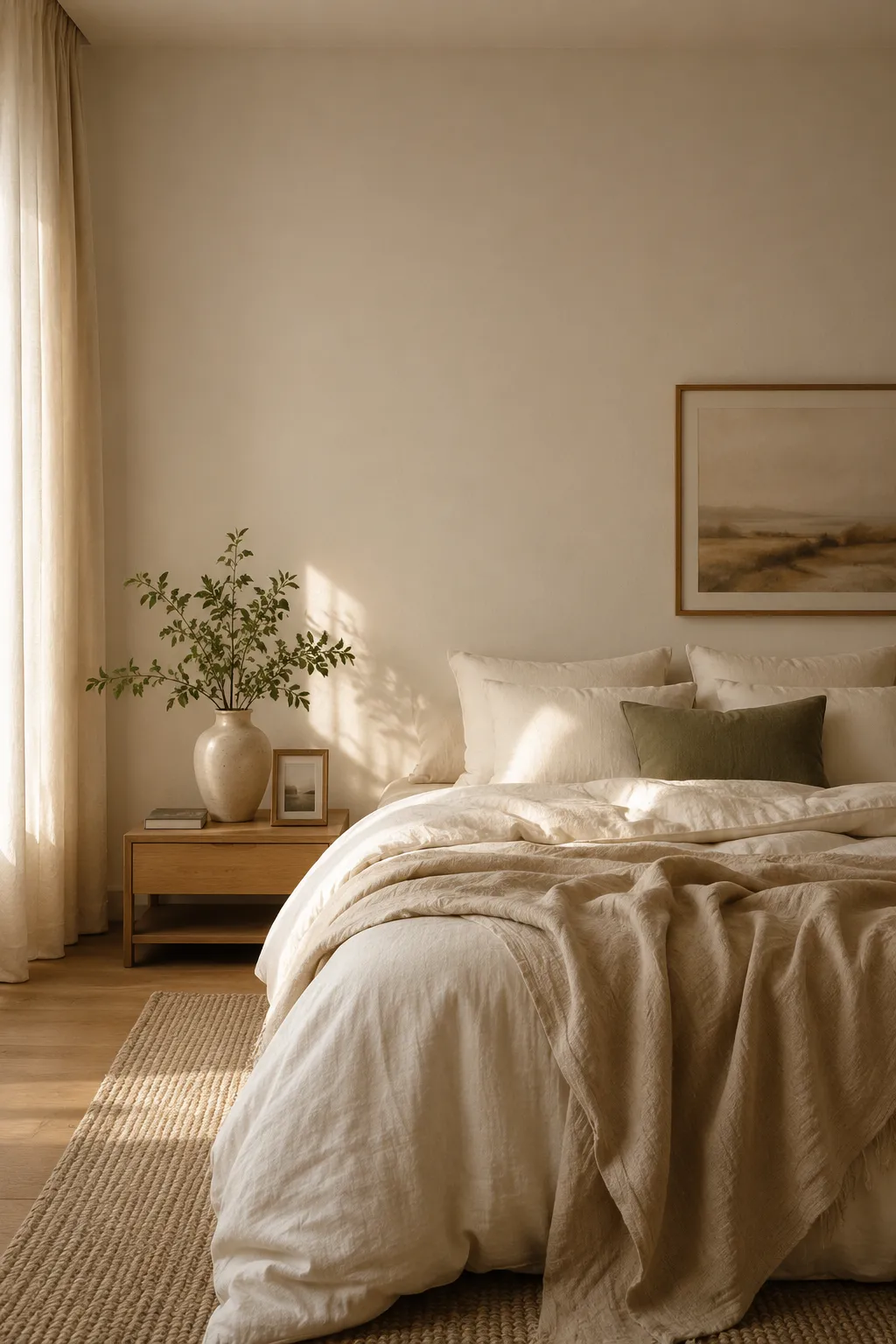
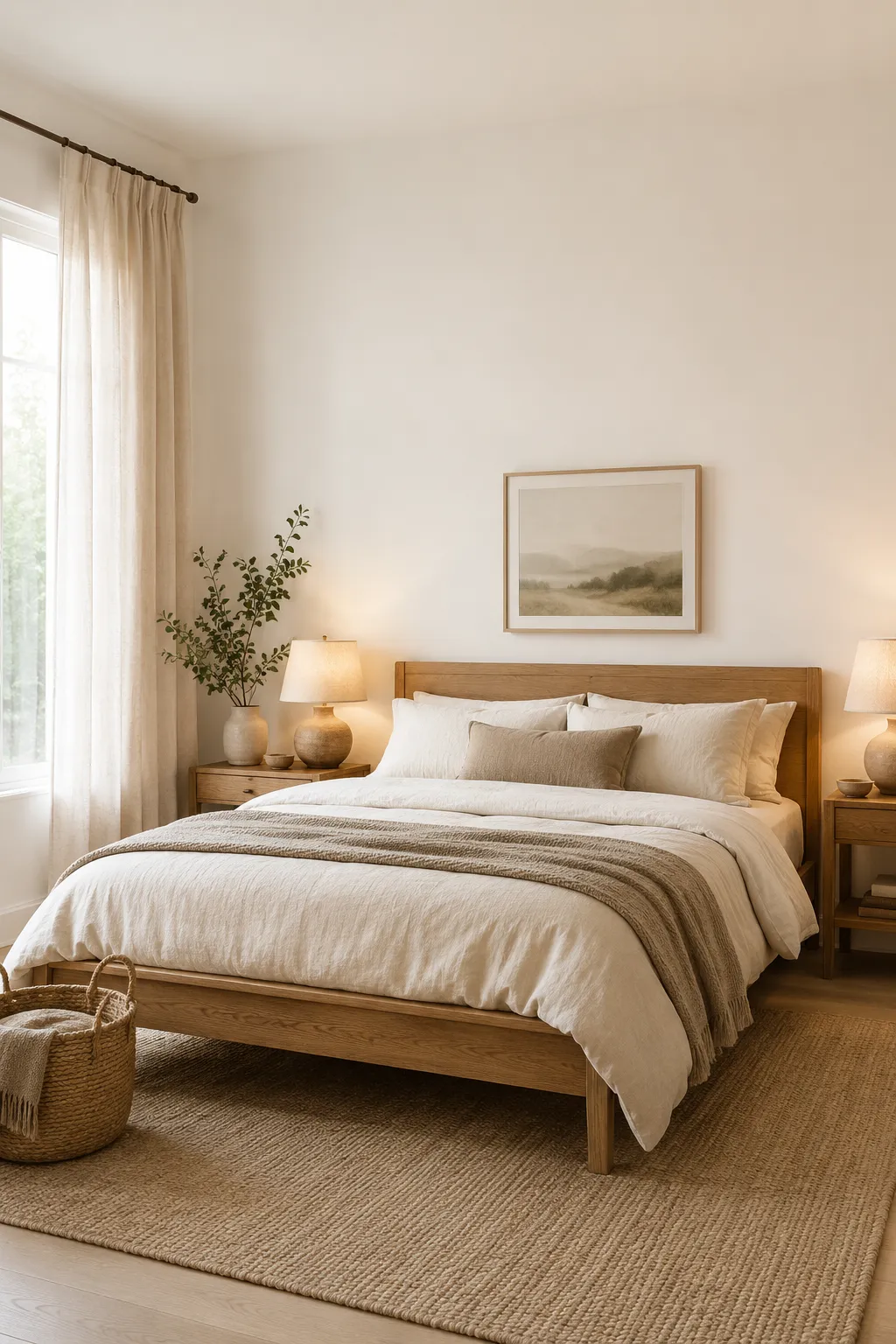
5. Use Bedding to Create Tonal Contrast
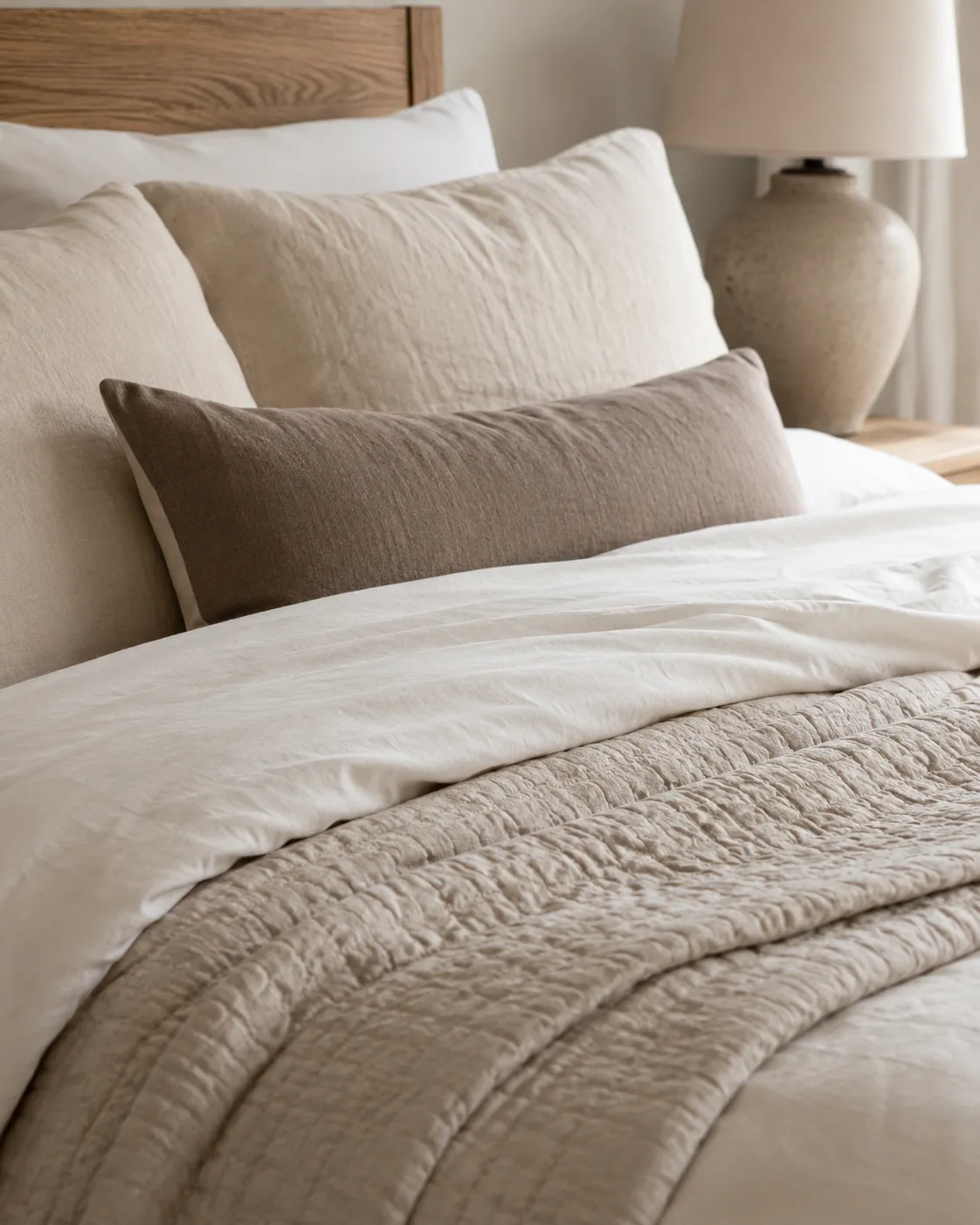
The bed is the easiest place to make a neutral palette feel layered.
Start with light sheets, then add a duvet or quilt in a slightly deeper or warmer tone. Finish with one folded throw and a restrained number of accent pillows.
A useful combination might be:
- warm-white sheets
- cream duvet
- oatmeal quilt
- soft taupe lumbar pillow
The colors remain quiet, but the bed no longer looks flat.
Texture should do some of the decorating. Washed linen, cotton, light quilting, and a soft knit can create enough variation without adding several colors.
For compact bedrooms, our small bedroom ideas guide includes ways to layer a bed without making limited space feel crowded.
6. Ground Pale Colors With the Right Rug
A rug can give a neutral bedroom visual weight.
If the walls and bedding are light, choose a rug with a little more depth—perhaps oatmeal, taupe, warm beige, or a subtle natural weave.
Avoid a very pale rug that disappears completely beneath pale bedding unless stronger contrast appears elsewhere.
Scale matters too.
Where the layout allows, approximately 18–24 inches of visible rug beyond the sides of the bed can help the sleeping area feel grounded.
A lightly patterned or heathered neutral rug can also disguise everyday wear better than a completely solid pale surface.
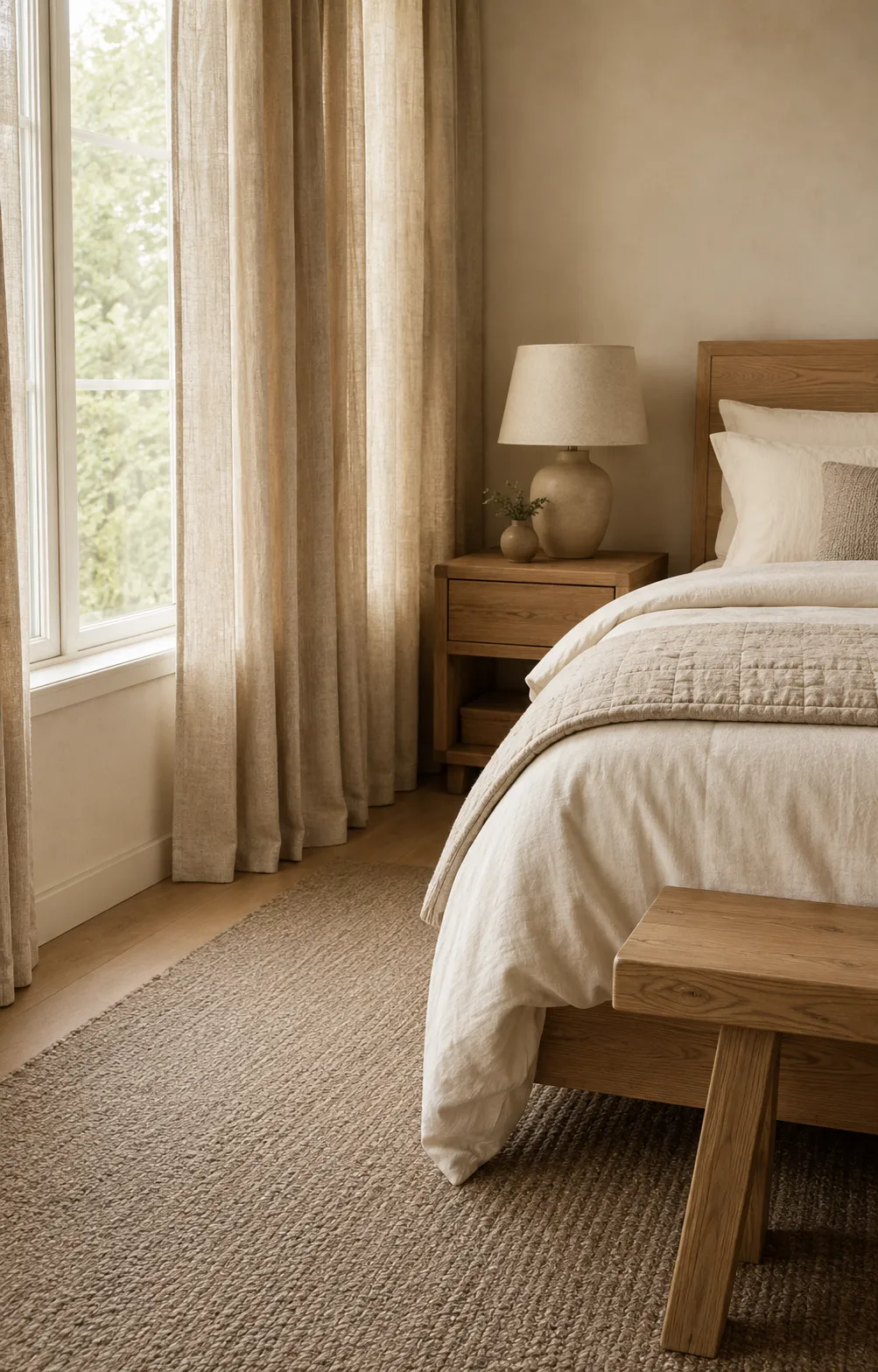
7. Choose Curtains One Step Away From the Wall Color
Curtains do not need to match the walls exactly.
A small tonal shift can make the window feel softer and more dimensional.
For example:
- warm-white wall + cream curtain
- cream wall + oatmeal curtain
- pale beige wall + warm ivory curtain
Floor-length panels usually feel more finished than short curtains.
Mount the rod higher and wider where the architecture allows so the panels can frame the window instead of covering most of the glass.
Keep the fabric relaxed rather than heavy. Linen or linen-look material adds natural movement to a neutral room.
8. Use Texture as the Main Decoration
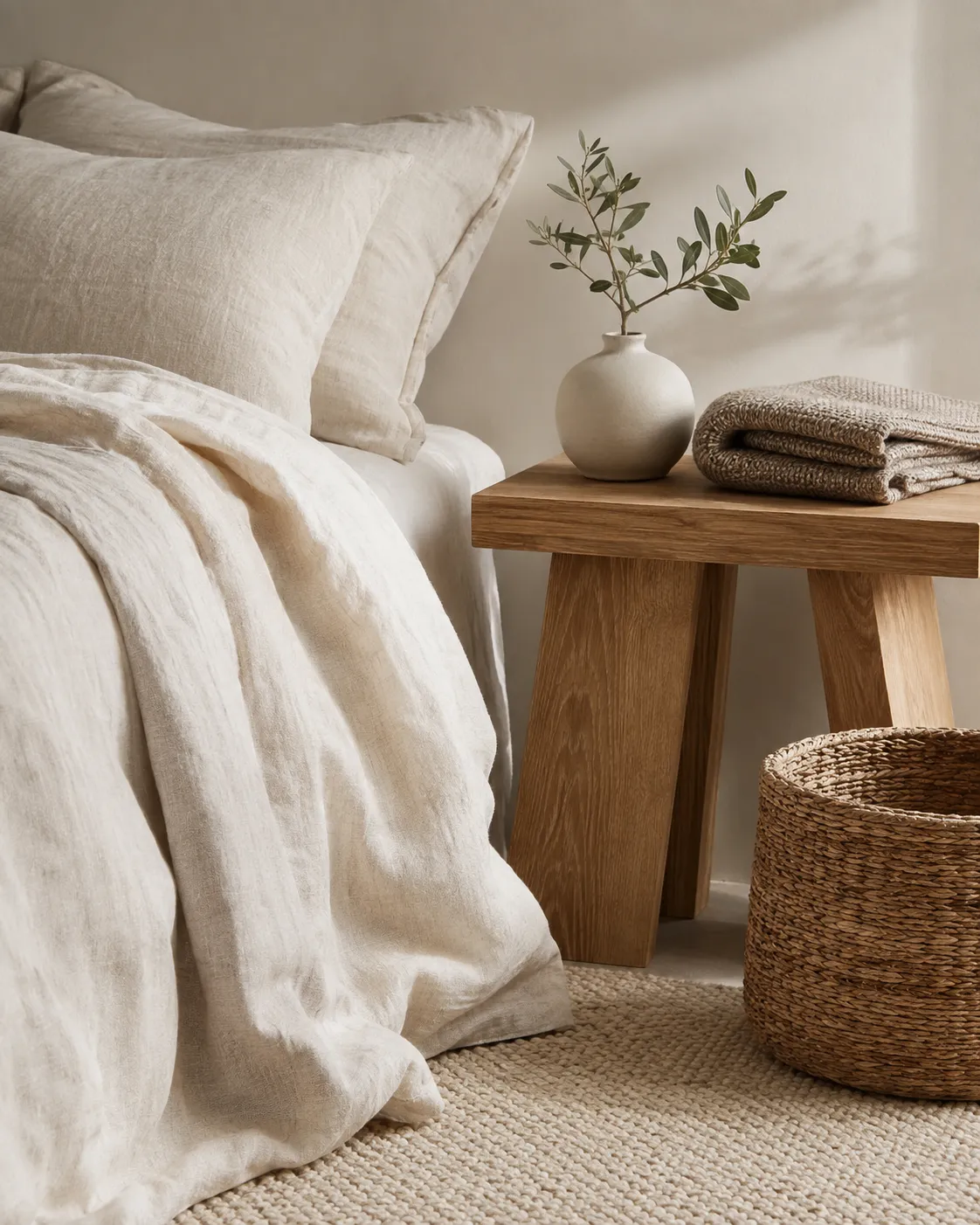
Neutral rooms need texture because color is deliberately restrained.
Instead of adding more accessories, combine a small number of tactile materials:
- washed linen
- soft cotton
- wool
- woven fiber
- light wood
- ceramic
- lightly textured plaster or paint
Repeat materials rather than introducing a new finish in every corner.
For example, a woven rug can relate to a basket, while a ceramic bedside lamp can connect with a small vase on the dresser.
The room gains detail without looking decorated for the sake of decoration.
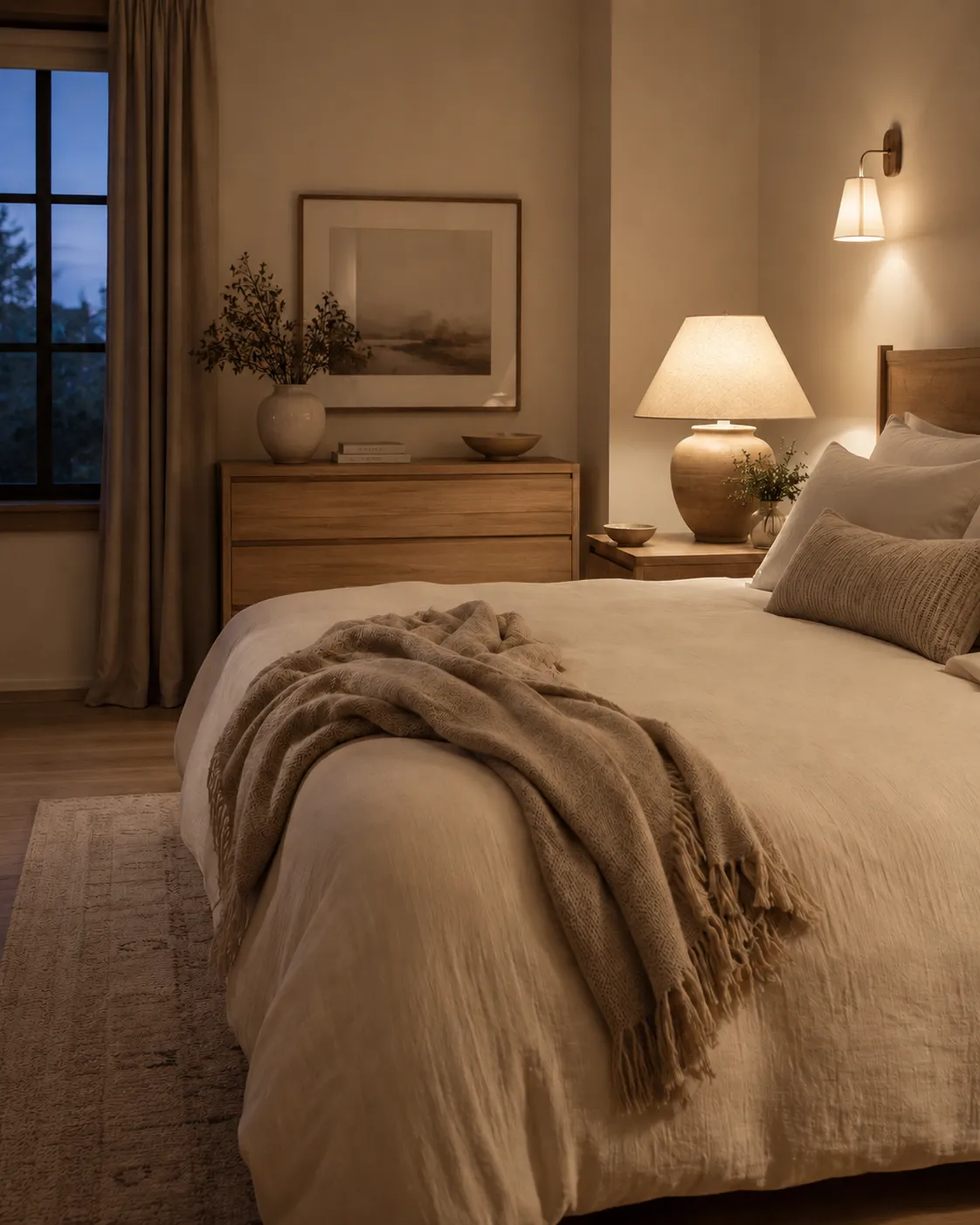
9. Use Warm Lighting to Protect the Neutral Palette at Night
Lighting can completely change how neutral colors appear.
A cream wall that looks soft in daylight may become dull or cold under a harsh cool-white bulb.
Layer ceiling light with bedside lamps or sconces so the room has more than one lighting level.
Warm-white light around 2700K–3000K has a warmer, yellower appearance than higher Kelvin light, according to ENERGY STAR’s color-temperature guidance.
Use similar light temperatures across nearby fixtures so one side of the bedroom does not look noticeably cooler than the other.
For more layered-light inspiration, see our warm living room ideas guide.
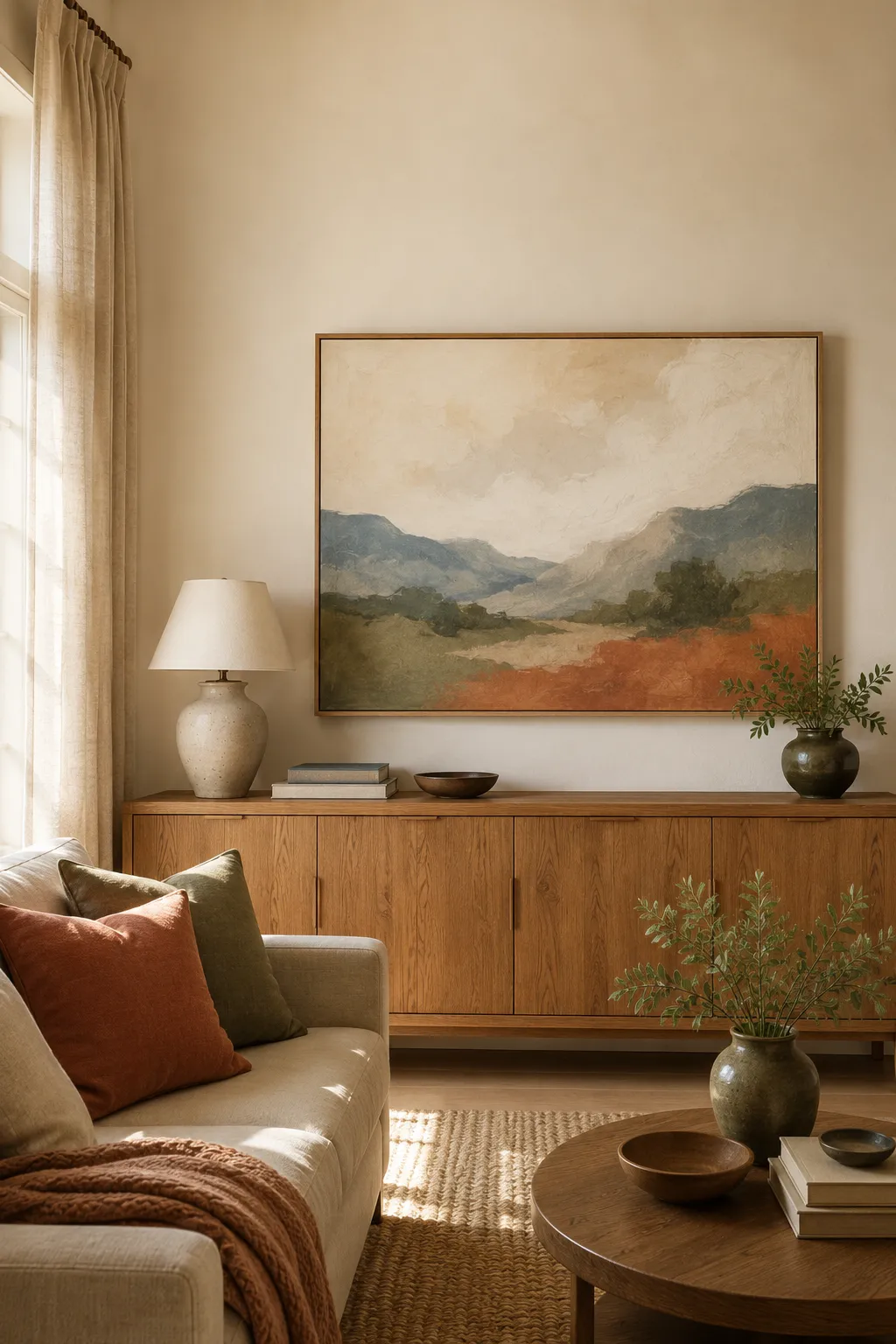
10. Add One Restrained Accent Color
Neutral does not have to mean colorless.
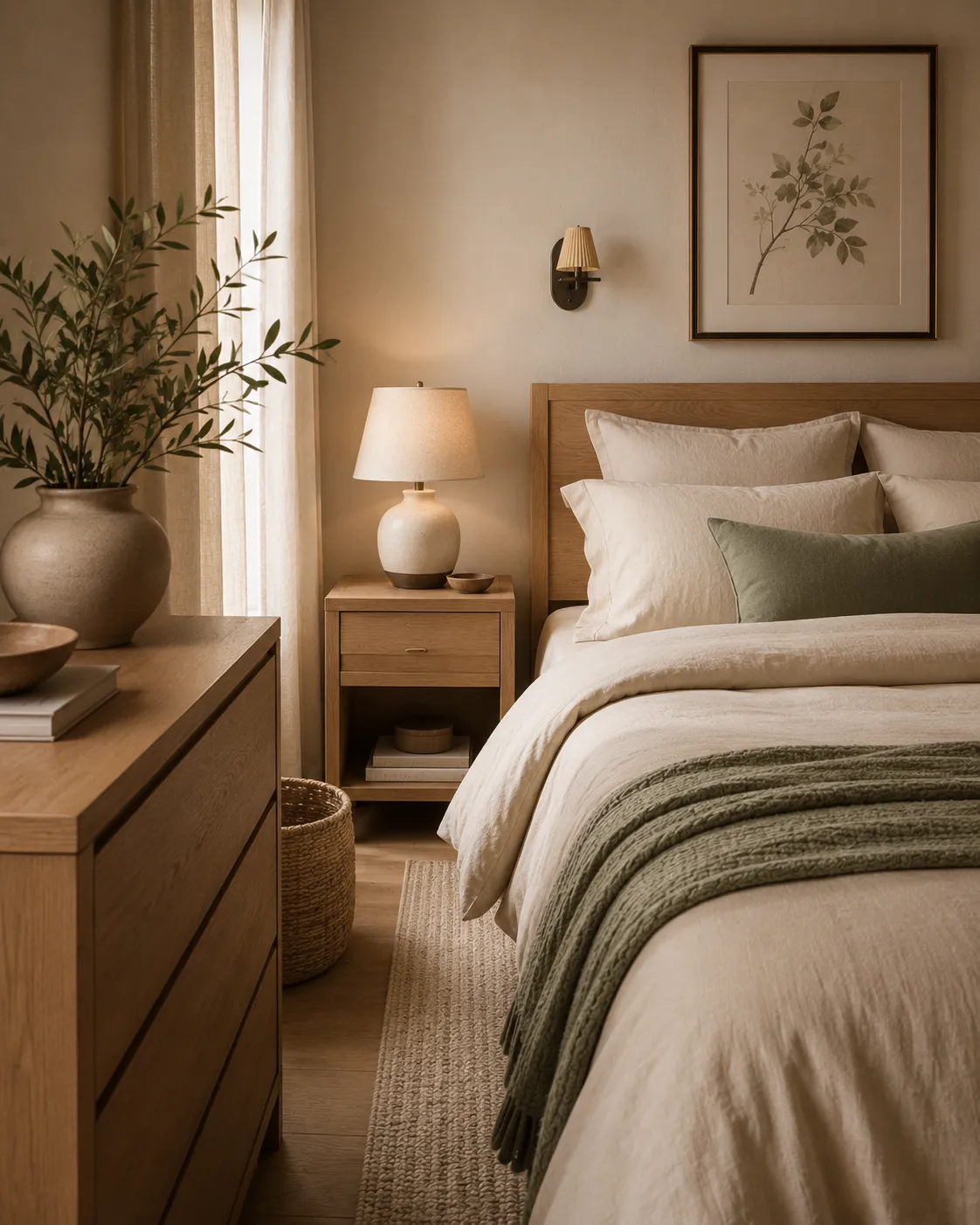
One muted accent can make cream and beige look richer.
Good options include:
- muted sage
- dusty blue
- soft clay
- olive
- warm brown
- faded rust
Use the accent sparingly.
One pillow, a small artwork detail, a vase, or a throw may be enough.
Repeating the accent two or three times in small amounts can make it feel intentional.
Avoid adding several unrelated accent colors simply because the base is neutral. The calm palette should remain the main visual story.
11. Add Contrast With Small Dark Details
A completely pale bedroom may need a small amount of darker contrast to define shapes.
Use dark details carefully:
- slim black picture frame
- dark bronze lamp base
- deep brown wood
- charcoal line in artwork
- dark cabinet hardware
These elements should act like punctuation rather than becoming a second color scheme.
One or two restrained dark notes can make cream, beige, and wood look more deliberate.
Avoid heavy black furniture throughout the room unless the entire design direction is built around stronger contrast.
12. Keep Furniture Shapes Simple and Visually Quiet
Neutral bedrooms feel calmer when furniture has clean, readable shapes.
Choose pieces that support the palette without becoming the main decoration.
A simple wood bed, slim nightstand, upholstered bench, or plain-front dresser can provide enough structure.
In a smaller room, visible furniture legs can expose more flooring and reduce visual weight.
Storage should also support the calm look. Keep everyday belongings inside drawers, closets, baskets, or under-bed containers instead of relying entirely on open shelving.
Tall dressers and other top-heavy furniture should be secured appropriately. CPSC’s Anchor It campaign provides guidance on furniture tip-over prevention.
For a rental-focused version of this approach, see our apartment bedroom ideas guide.
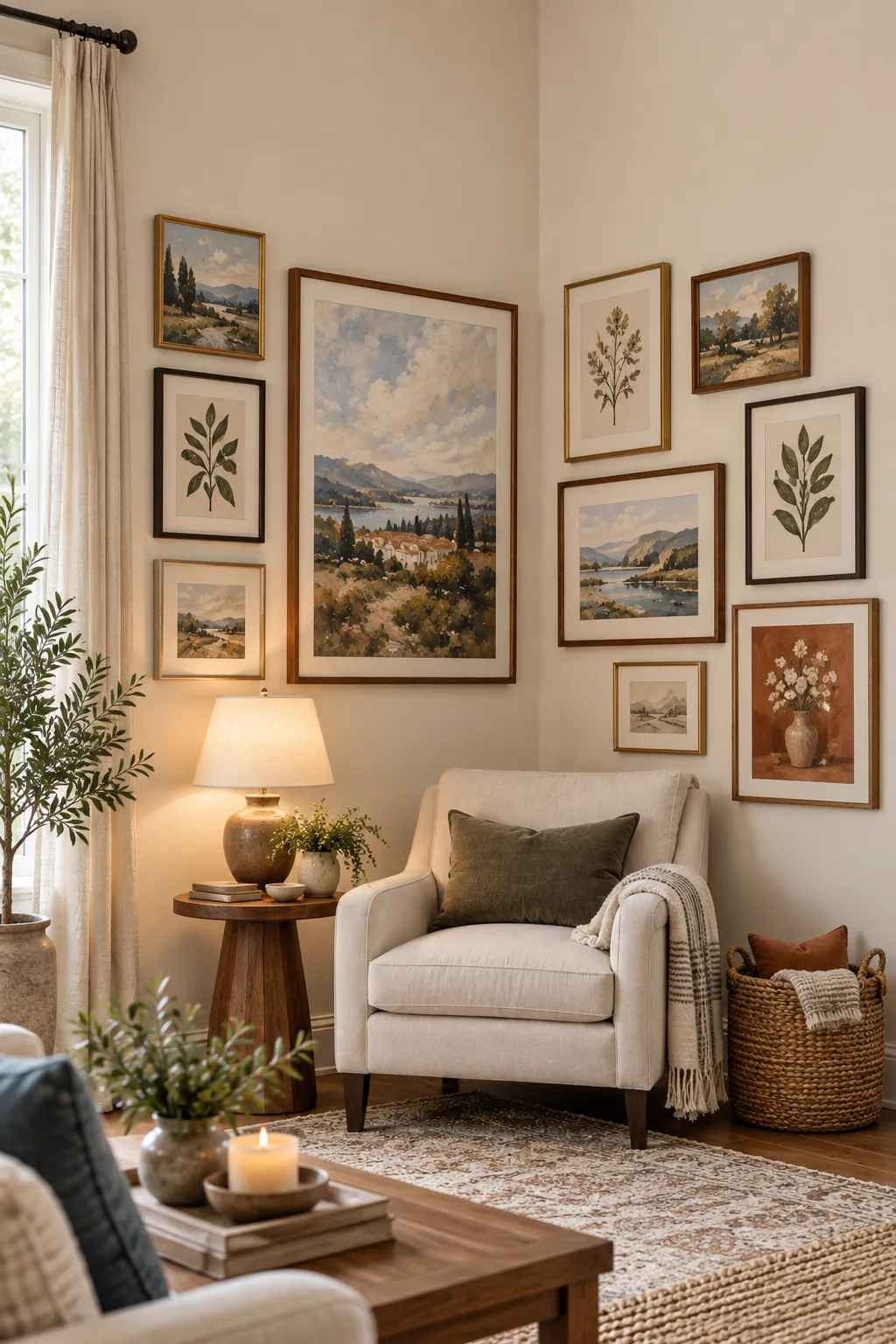
13. Choose Artwork That Supports the Palette
Artwork can give a neutral bedroom personality without breaking the visual calm.
Look for pieces with:
- soft landscape colors
- warm abstract shapes
- restrained line work
- muted botanical detail
- natural photography
- simple textile art
The artwork does not have to be beige.
It simply needs enough connection to the bedroom palette that it feels part of the room.
One larger piece above the bed often looks calmer than several unrelated small frames.
Use the frame color to repeat another finish in the room, such as wood, dark bronze, or warm white.
For more mood-focused styling, see our cozy bedroom aesthetic ideas guide.
14. Finish the Room by Editing the Neutral Layers
The final step is checking whether the room feels layered or simply full.
Stand at the doorway and look at the large visual areas first:
- bed
- walls
- rug
- curtains
- furniture
- artwork
If everything is the same value, introduce a little depth through wood, taupe, texture, or one muted accent.
If the room feels busy, remove one or two small decorative objects before changing the main palette.
Keep dresser and nightstand surfaces partly open.
A neutral bedroom looks most relaxing when there is enough detail to feel warm and enough empty space to let that detail breathe.
For a larger refresh, see our bedroom makeover ideas guide. For more ways to layer accessories without creating clutter, see our cozy bedroom decor ideas guide.
Common Neutral Bedroom Mistakes
- Using the Exact Same Beige Everywhere
- Choosing Color Without Checking Undertones
- Depending on Texture-Free Fabrics
- Using Lighting That Is Too Cool
- Adding Too Many Accent Colors
- Mixing Too Many Wood Undertones
- Making Every Surface Decorative
- Choosing a Rug That Disappears Completely
The Layered Neutral Bedroom Formula
A soft neutral bedroom works best when six elements support one another:
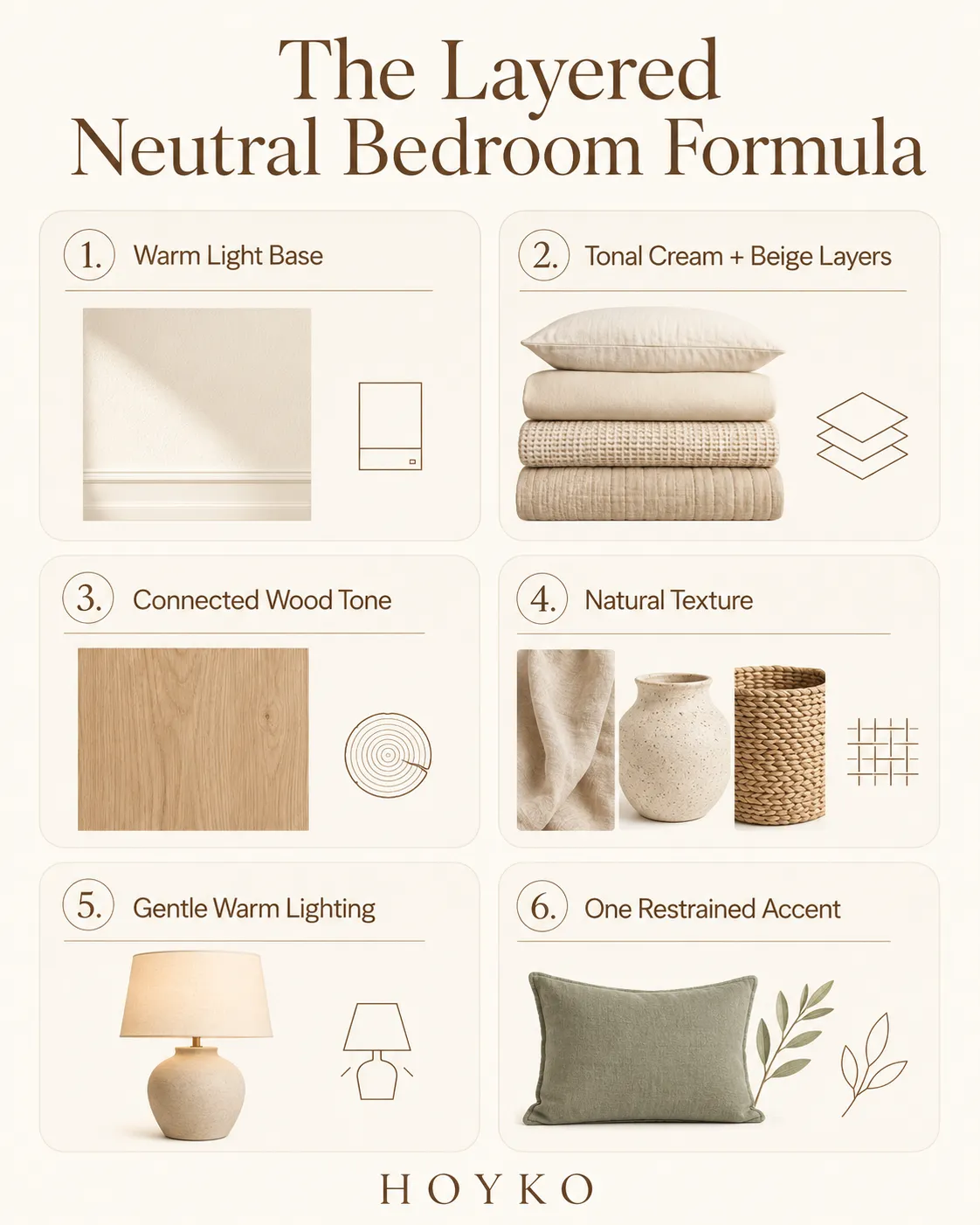
- Warm Light Base
- Tonal Cream and Beige Layers
- Connected Wood Tone
- Natural Texture
- Gentle Warm Lighting
- One Restrained Accent
Together, these layers create depth without relying on a busy color palette.
Neutral Bedroom Checklist
- Check the room’s existing undertones.
- Choose a warm or cool neutral direction.
- Test wall colors in real daylight.
- Use more than one neutral shade.
- Repeat a connected wood tone.
- Layer bedding through tone and texture.
- Choose a rug with enough visual depth.
- Hang floor-length curtains.
- Repeat a small group of natural materials.
- Use more than one light source.
- Keep nearby bulb temperatures visually consistent.
- Choose one restrained accent color.
- Add dark contrast only where useful.
- Keep furniture shapes visually simple.
- Use closed storage for everyday clutter.
- Secure tall furniture appropriately.
- Choose artwork that relates to the palette.
- Leave some surfaces and walls visually quiet.
- Edit the room from the doorway before adding more decor.
A successful neutral bedroom should feel calm and layered, not blank or over-coordinated.
FAQ About Neutral Bedroom Ideas
What colors work best in a neutral bedroom?
Warm white, cream, beige, oatmeal, soft taupe, greige, and natural wood tones create a calm neutral foundation. Muted sage, dusty blue, clay, or warm brown can be added in small amounts for gentle contrast without disturbing the room’s quiet look.
How do you stop a neutral bedroom from looking boring?
Use several related neutral shades instead of one flat color, then add depth through texture. Linen, cotton, woven rugs, natural wood, ceramic, and soft lighting can make a neutral bedroom feel layered and interesting without introducing a busy color palette.
What color curtains work in a neutral bedroom?
Choose curtains that sit close to the wall or bedding color without matching it exactly. Cream, warm white, oatmeal, beige, and soft taupe work well because they create gentle tonal contrast while keeping the room soft and visually connected.
Can a neutral bedroom have dark accents?
Yes. Small amounts of dark brown, charcoal, black, or bronze can help define furniture, artwork, and lighting. Keep darker tones limited to a few details so they add structure without taking over the soft neutral palette.
What lighting is best for a warm neutral bedroom?
Warm-white lighting around 2700K–3000K generally creates a softer, warmer appearance. Layer bedside lamps, sconces, or a small floor lamp so the room can feel practical during the day and more relaxed in the evening.
How can a neutral bedroom feel cozy without adding clutter?
Create coziness through bedding, rugs, curtains, natural materials, and warm lighting rather than adding many accessories. Keep some surfaces open, use closed storage for everyday items, and choose a few meaningful decorative pieces that support the room’s palette.
Final Thoughts on Neutral Bedroom Ideas
The strongest neutral bedroom ideas are built with layers rather than a single beige color.
Start with the undertones already present in the room, then combine warm white, cream, taupe, natural wood, soft textiles, and a small amount of contrast.
Let texture and lighting do much of the decorative work. Add one restrained accent and a few personal pieces only after the larger surfaces feel connected.
A well-designed neutral bedroom should feel warm in daylight, soft at night, easy to maintain, and calm without ever looking empty.
Save this palette guide for your next bedroom refresh, and begin with the undertones already present in your room.