17 DIY Room Decor Ideas for Small Rooms That Feel Cozy, Not Cluttered
In a small room, decor has nowhere to hide.
A row of tiny frames, an overloaded nightstand, or several unrelated DIY projects can make a bedroom feel crowded before you have added much at all. The better approach is to choose pieces that either soften the room, organize something useful, or give one blank area a clear focal point.
These DIY room decor ideas are designed with that balance in mind. Think framed prints instead of a wall full of small objects, fabric-covered storage instead of loose supplies, and one warm lamp corner instead of decorative pieces scattered everywhere.
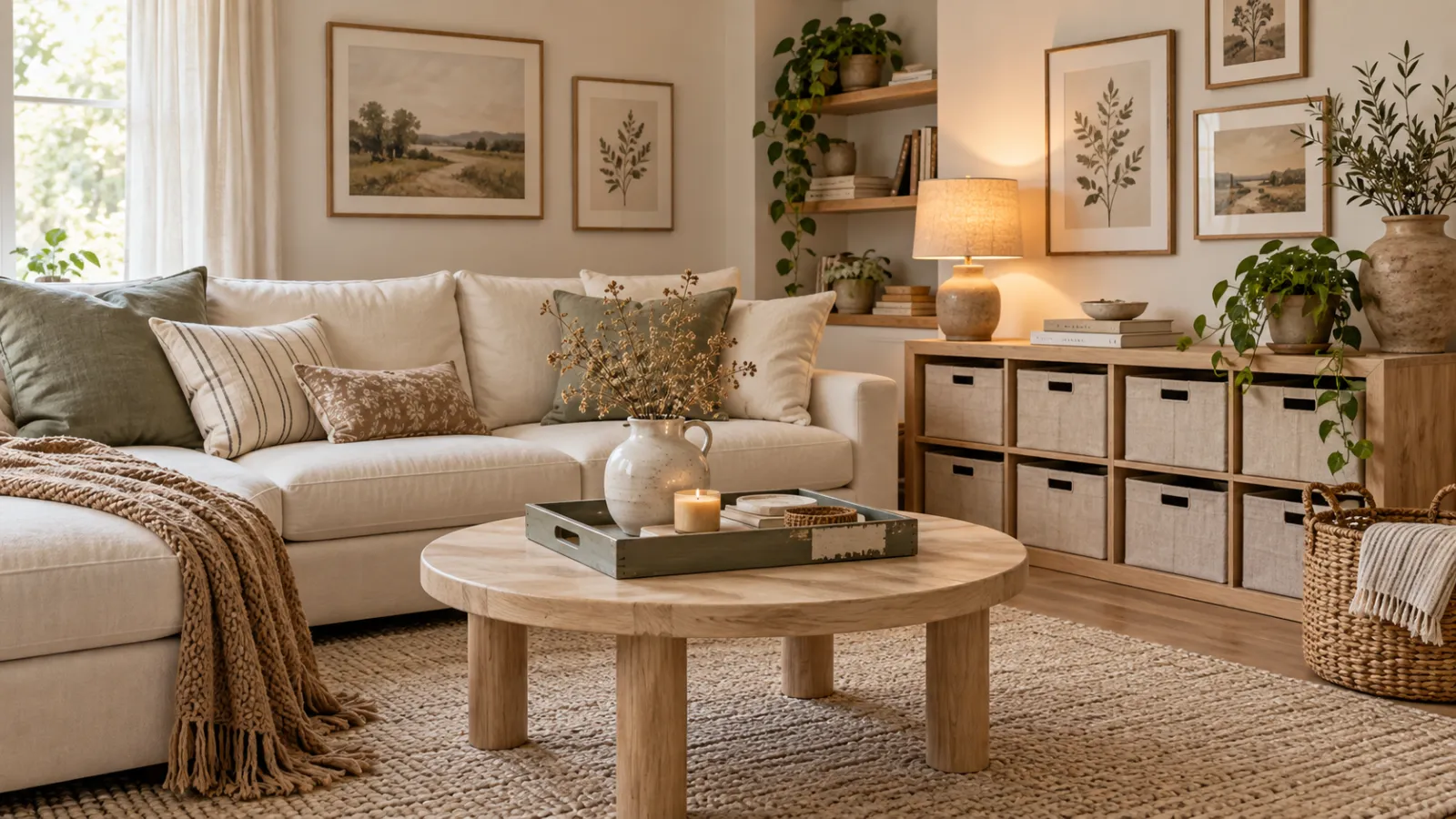
The room should still have places where nothing is happening.
For more beginner-friendly handmade projects around the home, see our easy DIY decor crafts guide.
DIY Room Decor Ideas at a Glance
For small rooms, start with one area: the wall above a desk, the space beside the bed, an open shelf, or a corner that feels unfinished.
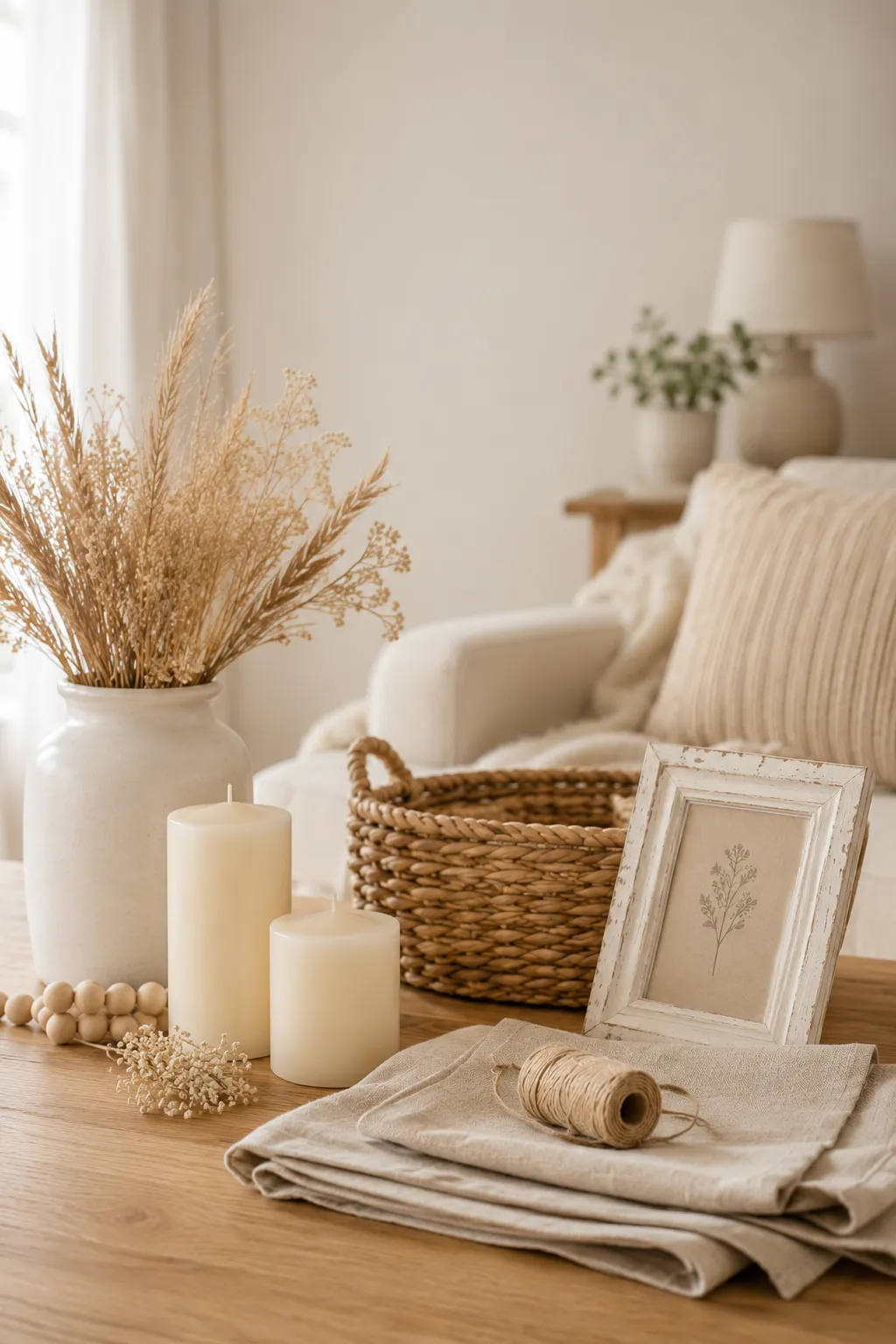
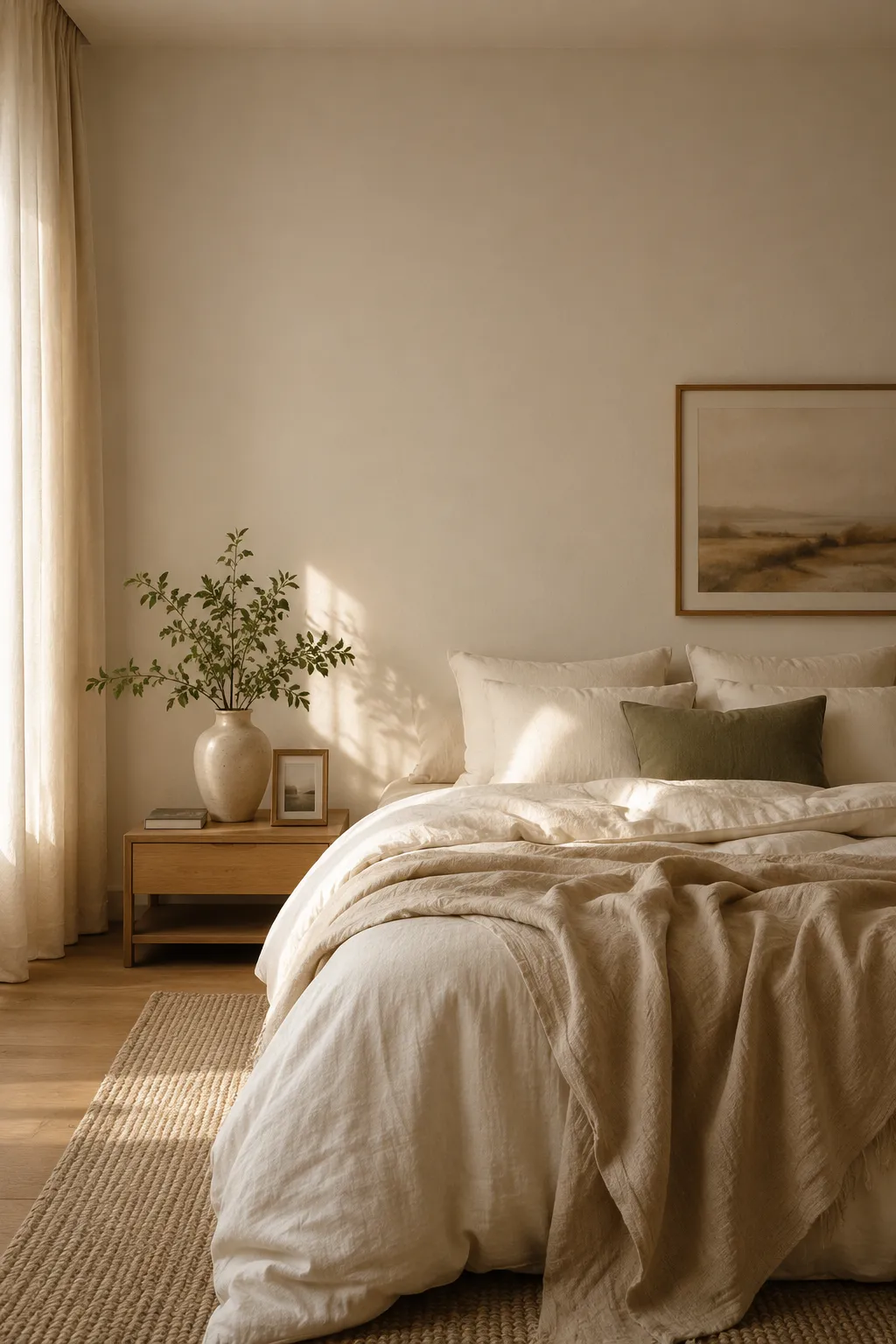
Keep the materials related. Light wood, linen, woven texture, matte ceramic, warm white, muted sage, dusty blue, and soft clay can mix without making the room feel flat.
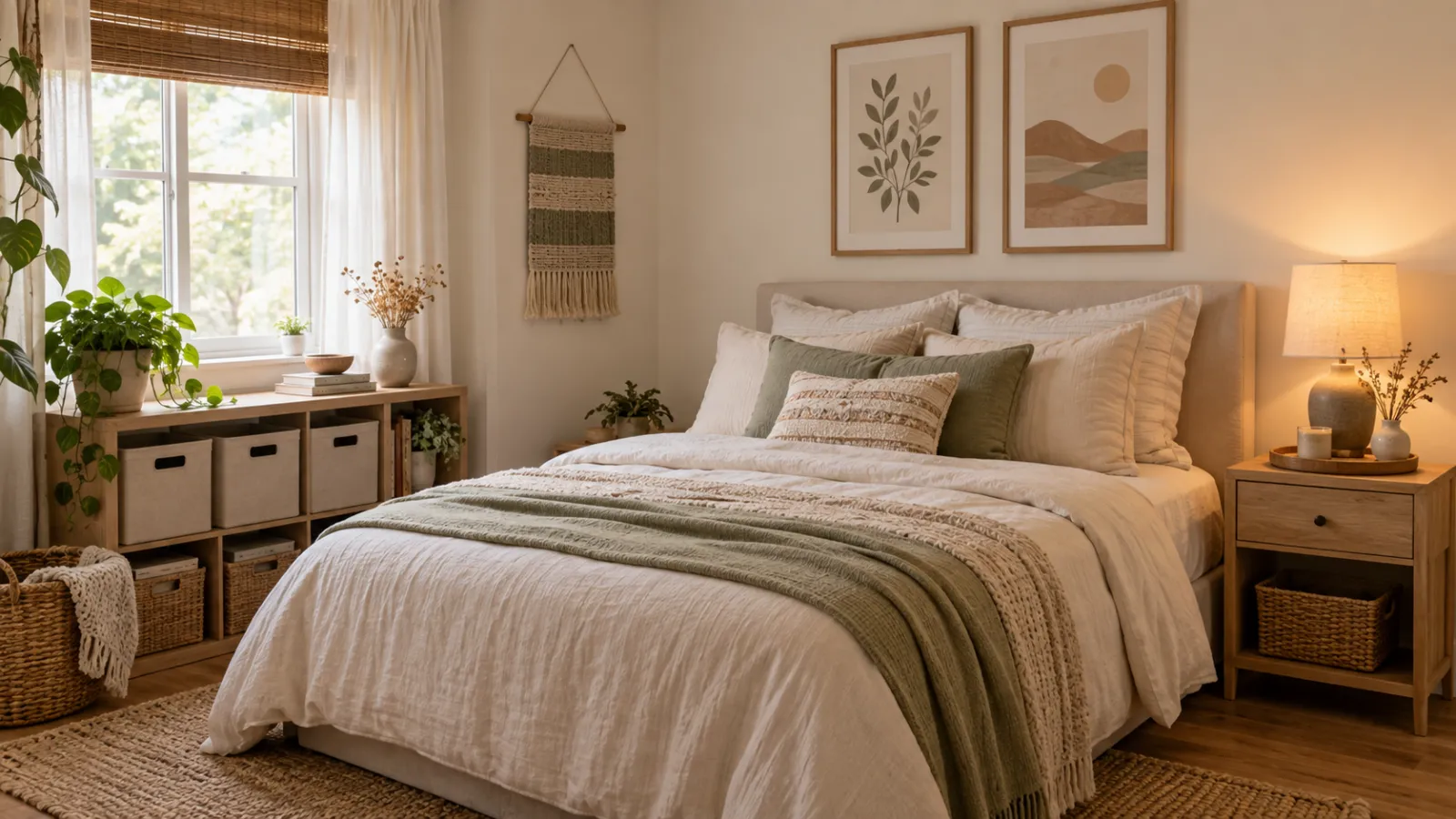
And before making another decorative object, look at storage. A pretty box, tray, or basket often improves a compact room more than another ornament.
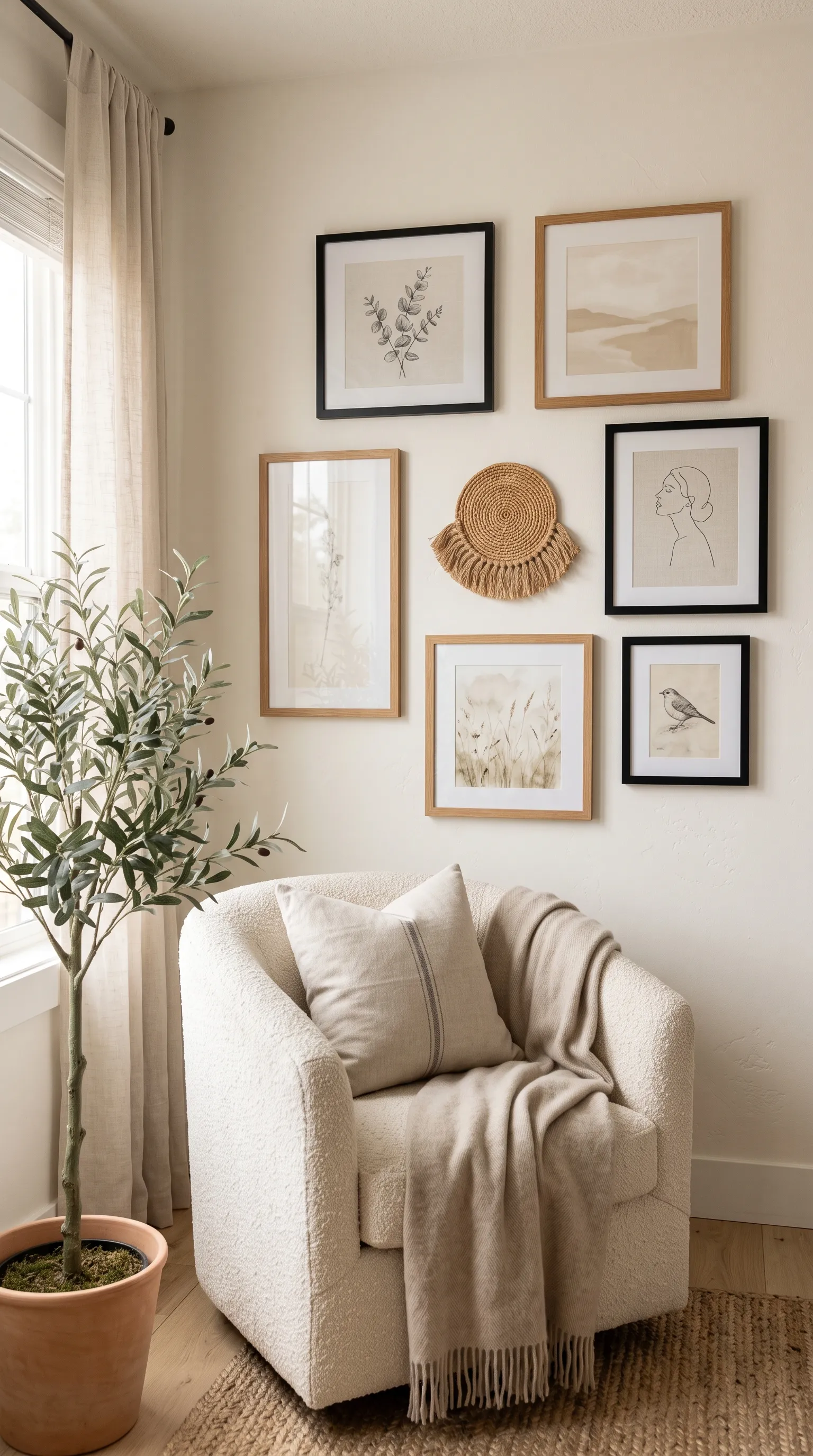
1. Frame Printable Art in a Simple Pair
What to make
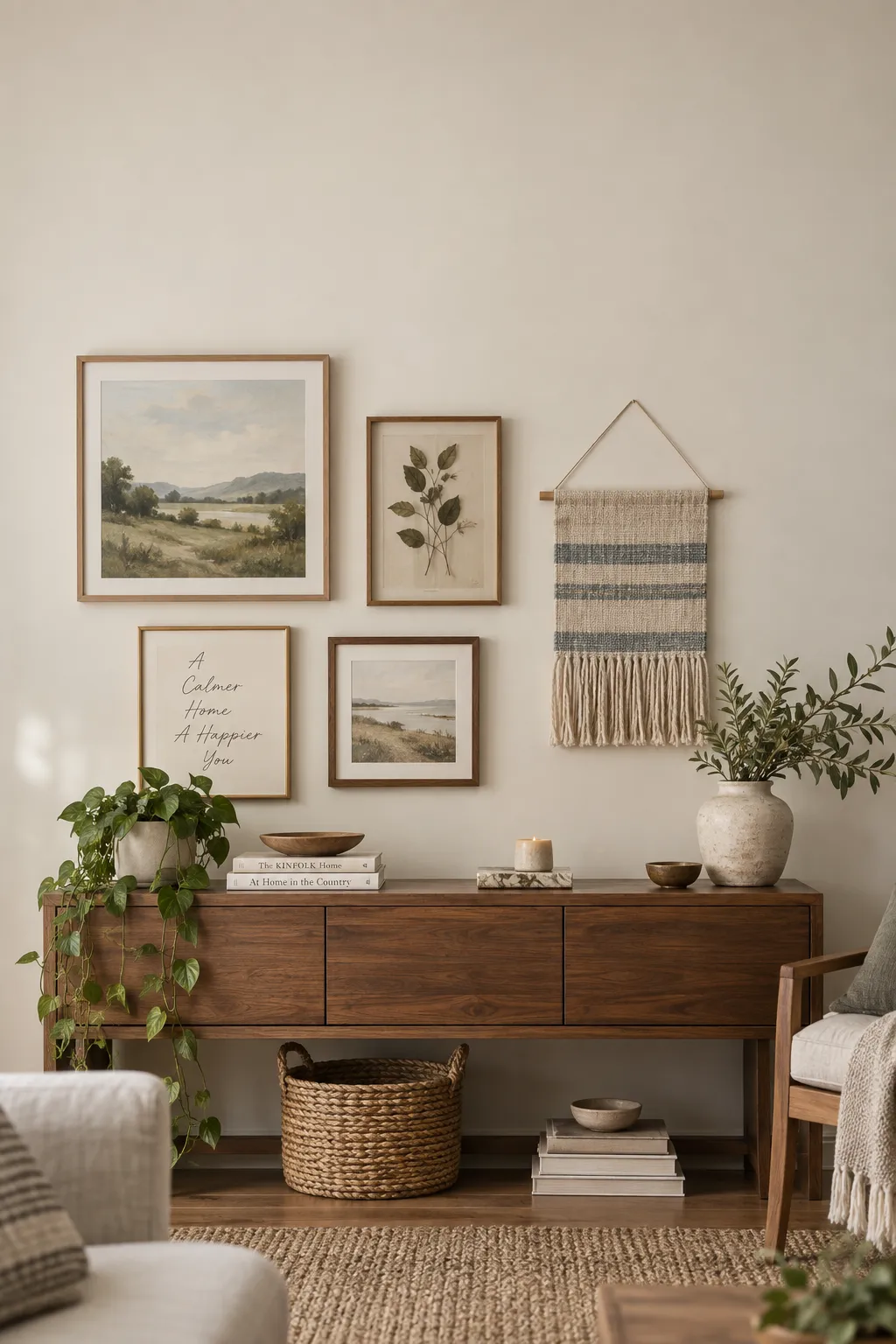
Choose two printable artworks that share a similar palette and place them in matching or coordinating frames.
Soft landscapes, line drawings, botanical prints, and quiet abstract shapes work well because they add detail without turning the wall into the busiest part of the room.
Where to place it
Try the pair above a desk, dresser, nightstand, or narrow section of wall beside the bed.
If the room already has a statement headboard or patterned bedding, use the prints on a quieter wall instead.
Best for small rooms
Two medium pieces create a clearer visual shape than a scattered collection of tiny frames.
They also decorate the wall without using any floor space.
Materials
Printable artwork, paper, two frames, and a hanging method appropriate for the wall.
If you use removable hanging strips, check the official Command Picture Hanging Strips instructions for surface, weight, and removal guidance.
Clutter mistake to avoid
Do not keep adding small frames simply because there is wall space left. The blank area around the pair helps the artwork look intentional.
2. Turn Fabric Into Soft Wall Art
What to make
Frame a piece of linen, cotton, canvas, or softly patterned fabric.
A muted stripe, block print, or textured solid can work just as well as conventional artwork.
Where to place it
Fabric art feels natural above a nightstand, beside a mirror, over a dresser, or near a reading chair.
It also works well in bedrooms where several hard-edged frames might make the wall feel too rigid.
Best for small rooms
Fabric adds texture without adding another piece of furniture.
It is particularly useful when the room is mostly painted drywall, smooth furniture, and plain bedding and needs something softer.
Materials
Fabric, lightweight frame or canvas panel, scissors, and fabric tape or another suitable fastening material.
Clutter mistake to avoid
If the duvet, curtains, and rug already carry strong patterns, keep the wall fabric simple.
If you want more wall-focused projects, our DIY wall decor ideas guide has more framed art, textile, and renter-friendly wall ideas.
3. Use a Mini Picture Ledge for Flexible Decor
What to make
Style a narrow picture ledge with one larger frame, one smaller piece, and perhaps one lightweight decorative object.
The goal is not to fill the ledge from end to end.
Where to place it
A ledge can work above a desk, dresser, bed, or compact console.
It is especially useful where you want to rotate art without creating a new arrangement every time.
Best for small rooms
The ledge keeps several objects within one horizontal zone, so the wall reads as one composition rather than several disconnected items.
For renters, it can also reduce how often the display needs to be changed.
Materials
Picture ledge, lightweight framed art, postcard or print, and installation hardware suitable for the wall.
Clutter mistake to avoid
Do not turn a picture ledge into another storage shelf. Give each piece room around it.
For narrow walls and compact zones, our small wall decor ideas guide can help with scale and placement.
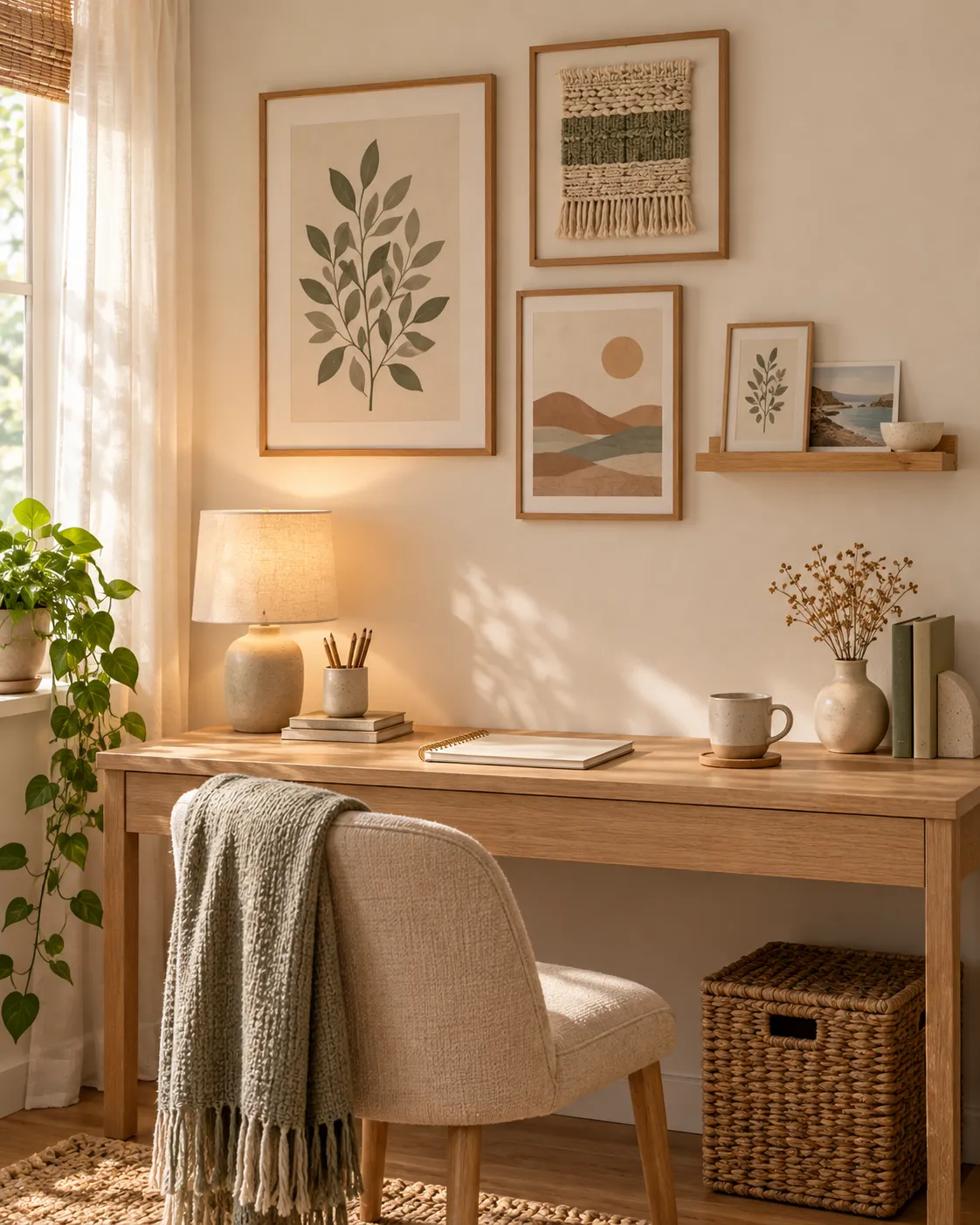
4. Cover Plain Storage Boxes With Fabric or Paper
What to make
Turn basic storage boxes into part of the room by covering them in linen-look fabric, kraft paper, or a simple decorative paper.
Use the same finish on boxes that sit together.
Where to place it
Slide them onto an open bookcase, under a console, beside a desk, on a closet shelf, or inside a cubby unit.
Use them for chargers, notebooks, craft supplies, accessories, and other small objects that normally collect on surfaces.
Best for small rooms
Closed-looking storage reduces visual noise.
Instead of seeing ten unrelated objects on a shelf, you see one calm box.
Materials
Plain boxes, fabric or paper, scissors, suitable adhesive, and optional simple labels.
Clutter mistake to avoid
Avoid covering every box in a different pattern. Repetition makes inexpensive storage feel much more deliberate.
5. Make a Painted Tray for the Nightstand
What to make
Refresh a plain tray with a soft paint color, paper liner, or fabric insert.
Use it to contain the few bedside items you actually reach for.
Where to place it
Set it on a nightstand, dresser, desk, or small side table.
A tray is especially useful beside the bed, where glasses, jewelry, books, and small everyday items tend to spread.
Best for small rooms
A tray gives loose objects a boundary.
That small boundary can make a compact surface look noticeably calmer.
Materials
Small tray, paint or liner material, brush, and a few useful bedside objects.
Clutter mistake to avoid
Do not fill the tray just because there is space. Leave part of it visible.
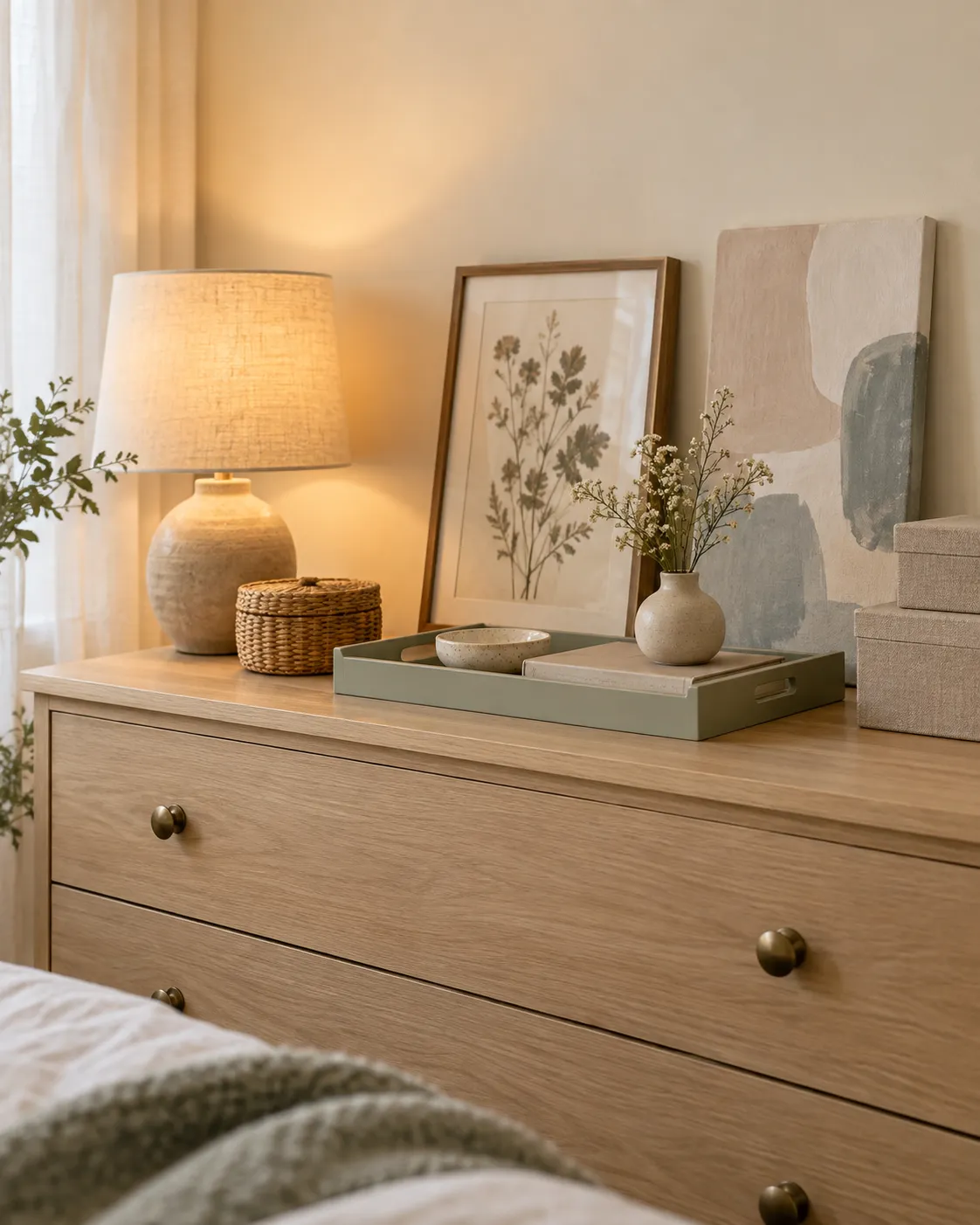
6. Make a Pressed Botanical Frame
What to make
Frame a few pressed leaves, flowers, or delicate dried stems against a plain backing.
Keep the arrangement loose rather than filling every part of the frame.
Where to place it
Use it over a nightstand, above a small desk, on a dresser wall, or beside a window.
The natural shapes work particularly well with light wood, linen, woven baskets, and neutral bedding.
Best for small rooms
Botanical art introduces organic detail without needing another plant pot, stand, or floor object.
Materials
Pressed botanical pieces, frame, paper backing, and small positioning tools if needed.
Clutter mistake to avoid
A few stems are usually enough. Too many tiny pieces can make the frame look busy from across the room.
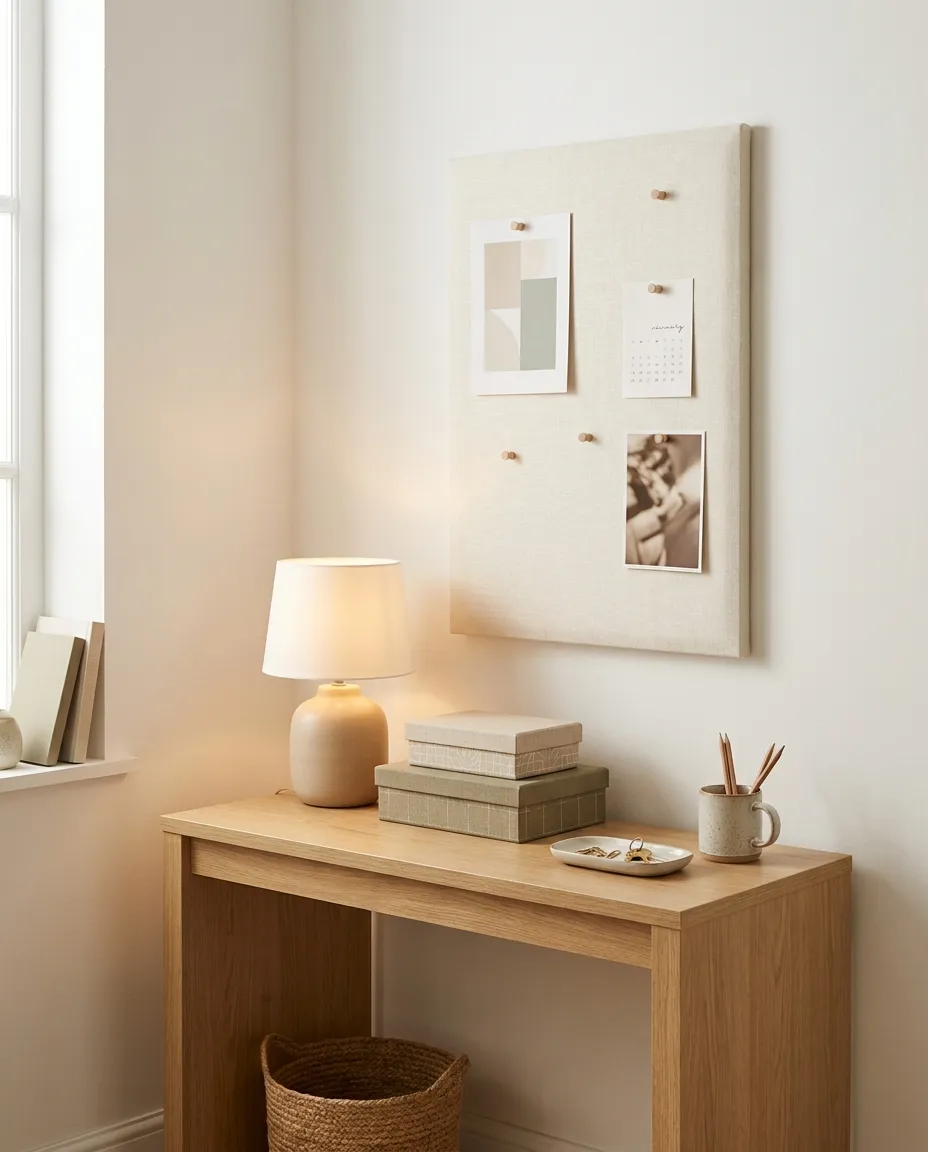
7. Turn a Cork Board Into a Fabric Pinboard
What to make
Cover a cork or memo board with linen, canvas, or neutral cotton.
Pin only the things you want visible: perhaps a small print, a note, a calendar card, or a favorite photo.
Where to place it
Use the board above a desk, vanity, study area, or craft corner.
Best for small rooms
Paper clutter gets one defined home instead of spreading across the desk.
The fabric also softens the utilitarian look of a standard cork board.
Materials
Cork board, fabric, fabric tape or suitable adhesive, pins, and a few paper items.
Clutter mistake to avoid
Leave some of the fabric visible. A pinboard covered edge to edge quickly starts to feel like another messy surface.
8. Add Texture With a Small Woven Basket Wall
What to make
Arrange two or three shallow woven baskets as wall decor.
Keep the materials similar even if the basket shapes vary slightly.
Where to place it
Try the grouping above a low dresser, bench, accent chair, or narrow console.
A small wall beside a closet or window can also handle this type of texture well.
Best for small rooms
The baskets bring warmth to a plain wall without requiring shelving or another floor-standing piece.
Materials
Two or three lightweight woven baskets and wall hardware appropriate for their weight and your wall type.
Clutter mistake to avoid
Do not keep expanding the arrangement across the wall. In a compact room, a tight grouping usually looks stronger than a wide scatter.
9. Refresh a Plain Mirror Frame
What to make
Update an existing mirror with a new frame color or simple decorative finish.
Cream, soft taupe, light wood, muted sage, or warm brown can help a basic mirror relate to the rest of the room.
Where to place it
Use the mirror above a dresser, near a vanity, beside a desk, or where it can catch natural light from a nearby window.
Best for small rooms
A mirror adds function and visual depth without introducing another category of decor.
Placed opposite or beside a brighter area, it can also carry more light into the room.
Materials
Mirror, painter's tape, appropriate paint or finish, brush, and mounting hardware if needed.
Clutter mistake to avoid
Let the mirror have some wall space around it. Frames, shelves, and hanging decor packed tightly around a mirror can cancel out its lighter feeling.
For more bedroom-specific wall styling, see our bedroom wall decor ideas guide.
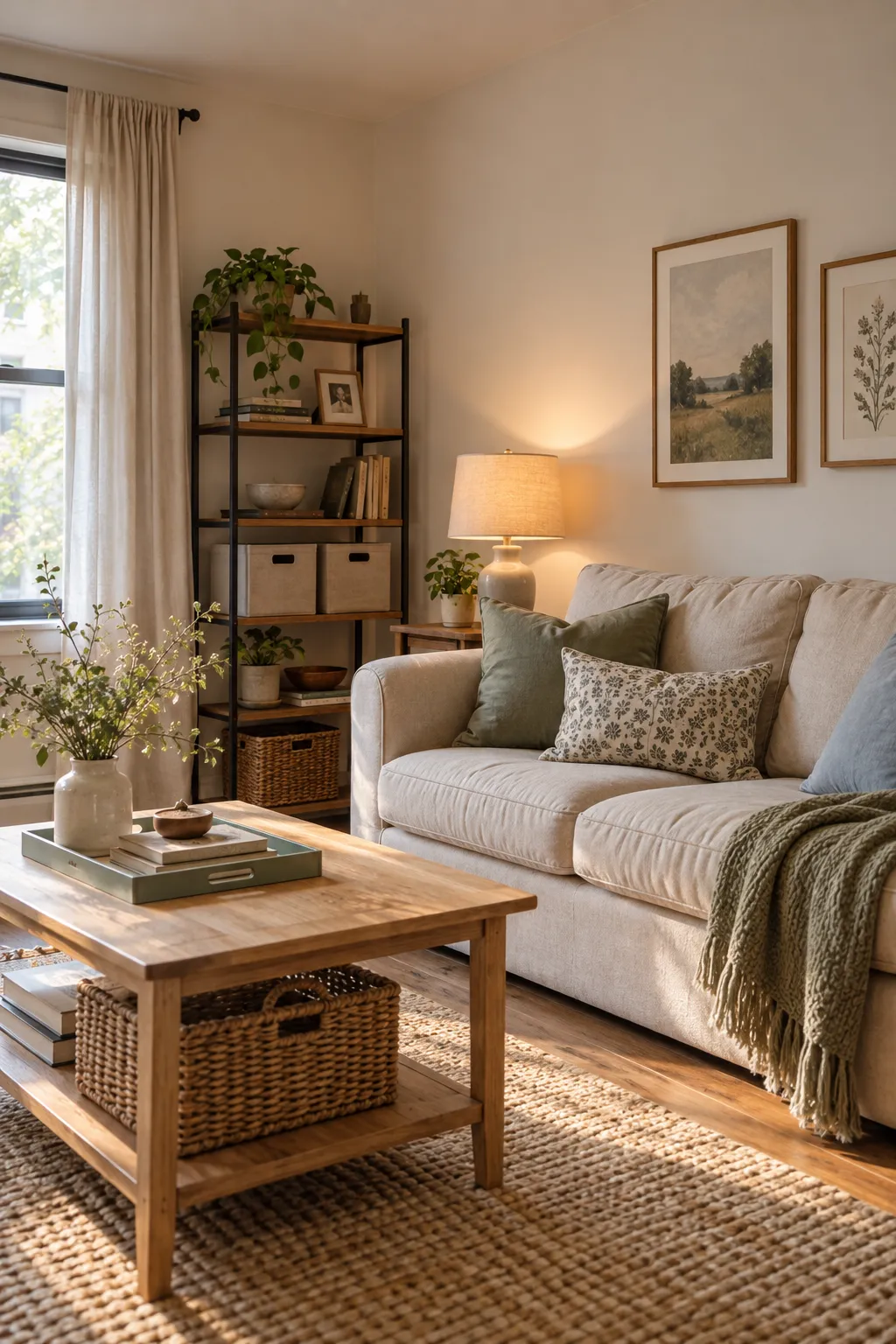
10. Build One Warm Lamp Corner
What to make
Instead of adding several decorative objects, create one lighting-focused corner with a table lamp, a framed piece of art, and perhaps one small vase or tray.
Where to place it
Use a nightstand, dresser, desk, shelf, or narrow side table in the part of the room that feels flat after daylight fades.
Best for small rooms
Lighting changes the atmosphere without taking much physical space.
One well-placed lamp can make a bedroom feel settled while leaving the surrounding surfaces relatively clear.
Materials
Table lamp, compatible bulb, small framed art, and one simple accessory if needed.
Clutter mistake to avoid
Do not stack several competing light sources into one corner. The lamp should be the visual anchor, not one more object in a crowded collection.
11. Paint a Small Canvas Using Colors Already in the Room
What to make
Paint a simple canvas using broad shapes, a quiet stripe, a soft arch, or a restrained abstract composition.
Pull the colors from things already in the room rather than starting a completely new palette.
Where to place it
Hang the canvas above a desk or nightstand, lean it on a dresser, or place it on an open shelf.
Best for small rooms
One canvas creates a clear focal point without needing a full gallery wall.
It is also easy to move when the furniture layout changes.
Materials
Canvas, acrylic paint, brush, painter's tape if needed, and pencil for light planning.
Clutter mistake to avoid
Do not treat the canvas as a place to use every leftover paint color. Two or three related tones usually read more clearly.
12. Use Peel-and-Stick Pattern on a Small Surface
What to make
Instead of covering an entire wall, use removable decorative material on a limited surface such as a drawer front, removable shelf backing, or small furniture panel.
Where to place it
A desk nook, freestanding bookcase, nightstand drawer, or small cabinet is enough to introduce pattern.
Best for small rooms
A concentrated accent adds character without giving a compact room another large visual feature.
It can also be easier to change later than a full-wall treatment.
Materials
Removable decorative paper suitable for the surface, measuring tape, scissors, smoothing tool, and clean cloth.
Clutter mistake to avoid
Do not repeat the same bold pattern across several small surfaces. One accent is usually more effective.
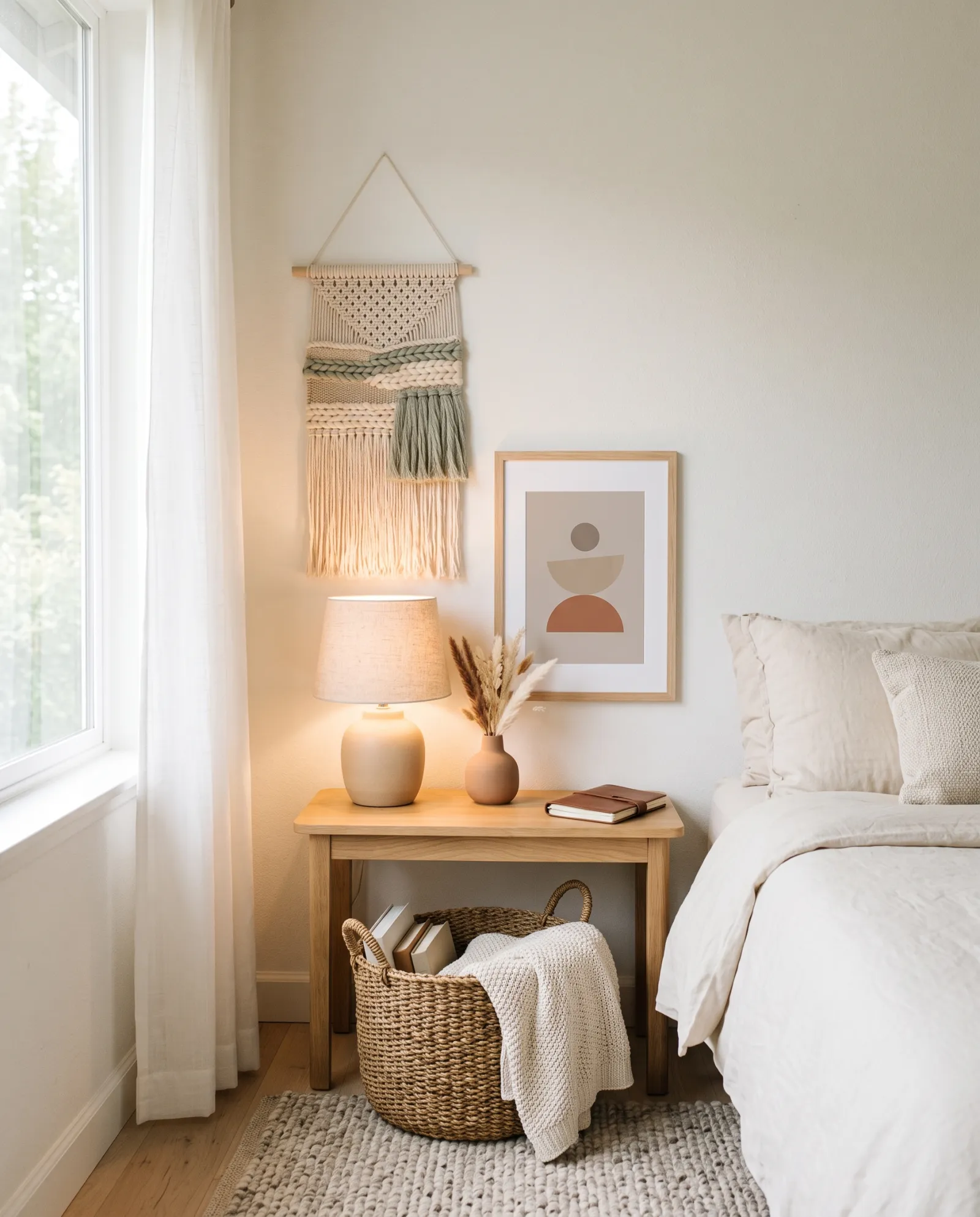
13. Make a Simple Textile Wall Hanging
What to make
Use a small woven piece, fabric panel, placemat, or quilted textile as wall decor.
Keep the silhouette uncomplicated.
Where to place it
A narrow textile can work above a nightstand, beside a dresser, near a reading chair, or on an awkward vertical wall.
Best for small rooms
The soft material brings in texture without adding the visual weight of another heavy frame.
It works especially well in bedrooms with linen bedding or other natural fabrics.
Materials
Textile piece, lightweight hanging support appropriate for the design, string if needed, and a suitable wall attachment.
Clutter mistake to avoid
Match the piece to the wall. An oversized textile on a narrow wall can make the room feel visually top-heavy.
14. Turn a Few Books Into a Useful Styling Layer
What to make
Use two or three books as a low stack and, if necessary, cover worn jackets with plain kraft or neutral paper.
Place one useful object on top rather than treating the stack as a display pedestal for several ornaments.
Where to place it
A nightstand, dresser, shelf, or desk works well.
Best for small rooms
Books add height to a flat surface without requiring you to buy another decorative object.
And they remain useful.
Materials
Two or three books and optional removable paper covers.
Clutter mistake to avoid
Do not create book stacks on every open surface. Repeating the trick too often makes the room feel staged.
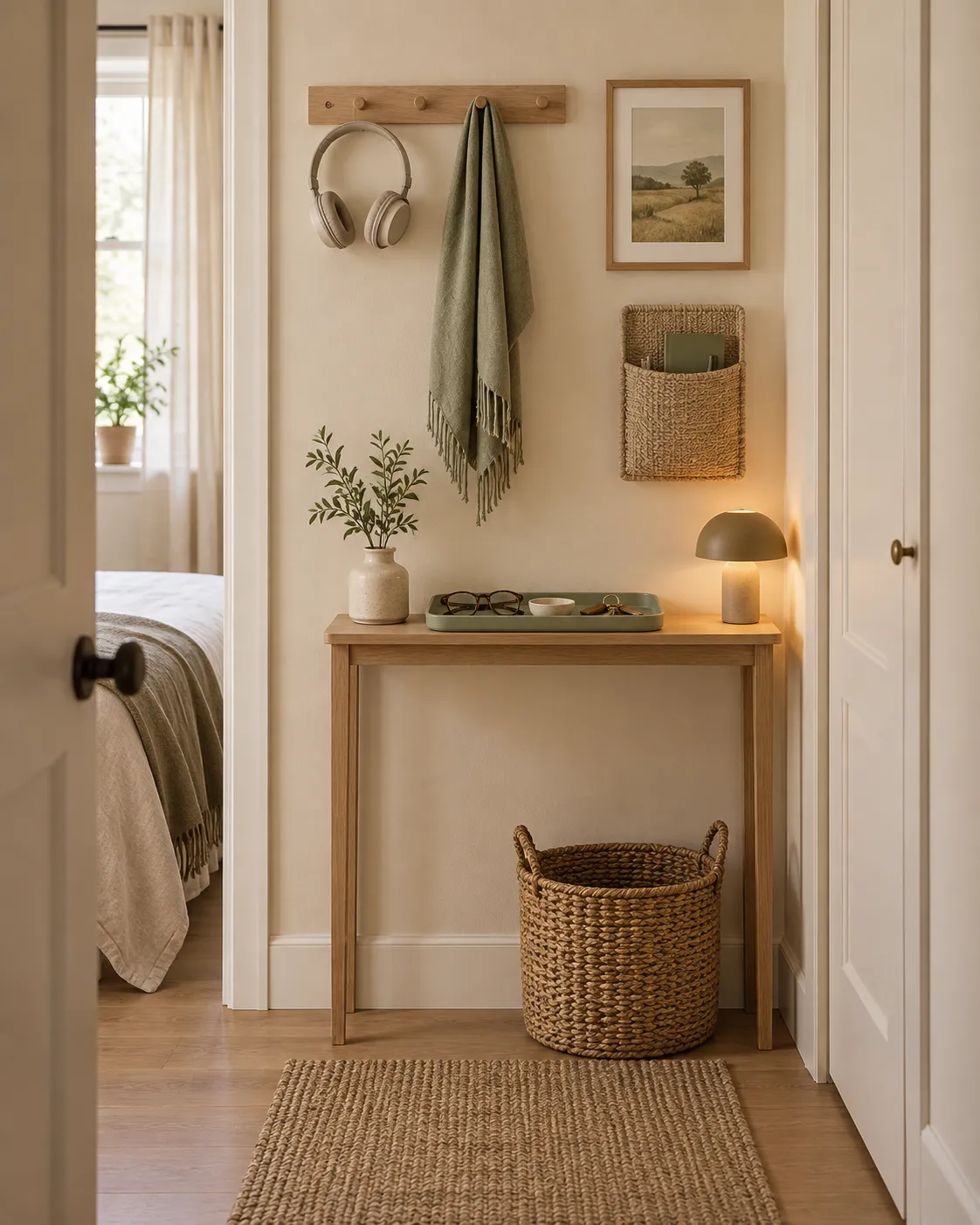
15. Create a Tiny Drop Zone for Everyday Items
What to make
Give everyday objects one defined place with a small tray, wall pocket, basket, or compact organizer.
Where to place it
Use the area near the bedroom door, beside the desk, close to the closet, or on one end of a dresser.
Keys, glasses, headphones, and small accessories should be easy to reach without taking over the room.
Best for small rooms
A drop zone prevents daily clutter from migrating to the bed, desk, chair, and nightstand.
Materials
Tray, basket, small organizer, or other compact storage suited to what you actually need to hold.
Clutter mistake to avoid
Do not let the drop zone become permanent storage for everything that enters the room.
16. Restyle an Open Shelf With More Empty Space
What to make
Start by removing items rather than adding them.
Keep a storage box or basket, a few books, one frame, and perhaps one ceramic or natural accent. Let some parts of the shelf stay open.
Where to place it
Use this approach on a bookcase, desk shelf, bedside shelving unit, or small freestanding storage piece.
Best for small rooms
Open shelves are visually exposed. When every inch is filled, the room feels more crowded even if the floor itself is tidy.
A little empty space gives the eye somewhere to rest.
Materials
Existing shelf, one or two storage pieces, books, frame, and only the useful decor you want to keep.
Clutter mistake to avoid
Do not style every shelf with the same number of objects. Variation keeps the unit from looking like a display grid.
17. Finish One Cozy DIY Corner Instead of the Whole Room
What to make
Bring together a warm lamp, one handmade or framed art piece, a basket or box, and one soft textile.
Stop there.
Where to place it
Choose a corner beside a window, next to the bed, near a desk, or at the edge of a dresser where the arrangement will be visible when you enter the room.
Best for small rooms
One completed corner can give the room a sense of direction without requiring decor on every wall.
It is also easier to edit later because the pieces are concentrated in one place.
Materials
Lamp, framed or textile art, compact storage, small table or shelf, and a throw or cushion if the space needs softness.
Clutter mistake to avoid
The final mistake is continuing after the corner already works. Small rooms often improve when the last object is removed rather than added.
If the whole room still feels crowded, browse our small space decor ideas for layouts, storage, and lighter styling choices.
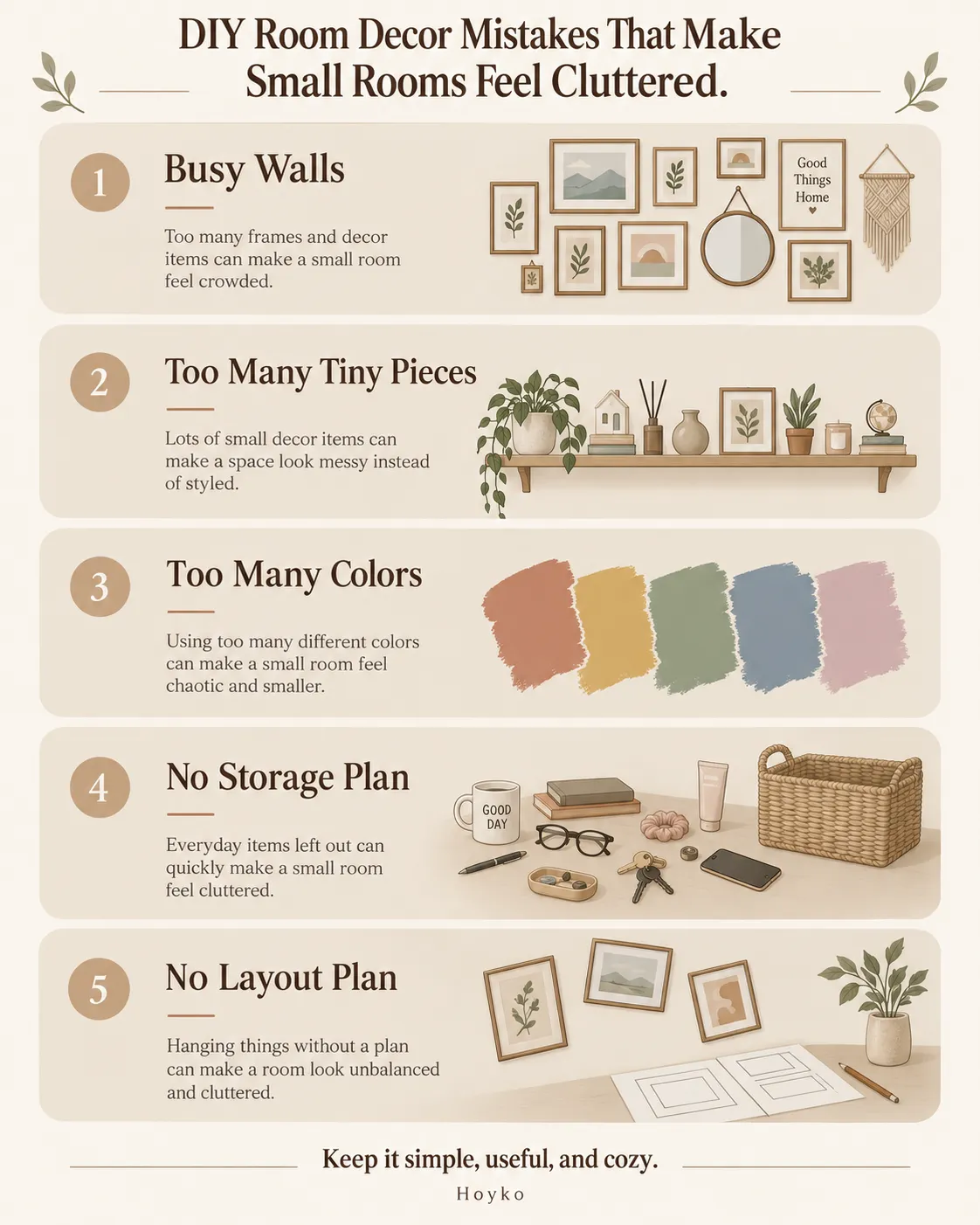
DIY Room Decor Mistakes That Make Small Rooms Feel Cluttered
Making Every Wall Busy
A blank wall is not wasted space.
If one wall has a picture ledge or framed art, the wall opposite it can stay quiet. That contrast helps the decorated area feel stronger.
Using Too Many Tiny Pieces
Small frames, signs, mini shelves, small plants, and little crafts create a lot of separate visual edges.
Before adding another small object, ask whether one larger piece could do the same job more clearly.
Mixing Too Many Colors
DIY projects are often made from supplies already on hand, which can lead to a room full of unrelated colors.
Choose a base of warm neutrals, then repeat one or two softer accent colors through the art, fabric, or storage.
Decorating Before Adding Storage
Decor cannot hide everyday clutter for long.
Give chargers, papers, accessories, craft materials, and small personal items somewhere to go first. Then style what remains visible.
Hanging Art Without Planning the Layout
Test the arrangement before committing to the wall.
You can lay frames on the floor or use lightweight paper templates to judge the overall shape and spacing before installation.
Keep the Room Cozy by Editing, Not Adding
The easiest place to begin is the area that bothers you most.
If the desk looks messy, start with the pinboard or storage boxes. If the bed wall feels empty, solve that wall. If the room feels flat at night, work on the lamp corner before buying more decor.
Then repeat a material or color once somewhere else.
A light wood frame can relate to the nightstand. Muted sage in a fabric panel can reappear quietly in a pillow. A woven basket can echo the texture of a natural rug.
That small amount of repetition is usually enough.
The goal is not to finish every surface. It is to make the pieces that remain visible feel like they belong there.
FAQ
What are easy DIY room decor ideas for beginners?
Framed printable art, fabric wall art, covered storage boxes, painted trays, simple canvas art, fabric pinboards, and shelf restyling are good beginner-friendly options. Choose projects that do not require complicated construction and that solve a real decorating or storage need.
How can I decorate a small room without making it cluttered?
Decorate one area at a time, keep the color palette limited, and leave some wall and surface space empty. Storage-based DIY projects are especially useful because they improve the look of the room while hiding everyday items.
What DIY decor works well in a small bedroom?
Fabric wall art, framed prints, a warm bedside lamp, a small tray, covered boxes, a textile hanging, and a simple mirror update all work well because they add detail without requiring much floor space.
Are DIY room decor ideas suitable for renters?
Many are. Leaning artwork, freestanding storage, trays, baskets, removable furniture accents, and lightweight decor can be easier to move later. For anything attached to a painted wall, check the lease and follow the product's surface and removal instructions.
What colors work well for DIY decor in a small room?
Warm white, cream, beige, light wood, soft taupe, muted sage, dusty blue, clay, and warm brown are easy to combine. You do not need to use all of them; a neutral base with one or two repeated accents is usually enough.