20 Simple DIY Home Decor Ideas on a Budget
A home can feel unfinished even when it already has the furniture it needs.
Sometimes the problem is a blank wall above the console. Sometimes it is an open shelf full of loose objects, a coffee table that never looks settled, or a bedroom corner that feels flat after dark.
That is where DIY home decor ideas on a budget can be useful. The goal is not to make twenty new things. It is to choose a few projects that solve those visible problems without turning the house into a collection of craft supplies.
A painted thrifted frame can give printable art more presence. Fabric-covered boxes can hide chargers and paperwork. A lamp, tray, basket, or refreshed mirror can improve both the way a room looks and the way it works.
If you want to start with smaller beginner-friendly projects, our easy DIY decor crafts guide has more simple ideas for walls, storage, surfaces, and cozy room details.
DIY Home Decor on a Budget: Start With What You Already Have
Before shopping, look around the room.
An old frame may need paint, not replacing. A plain storage box may only need fabric or paper. A tray from another room might work better on the coffee table. Books, baskets, curtains, pillow inserts, mirrors, and simple furniture can all be restyled rather than replaced.
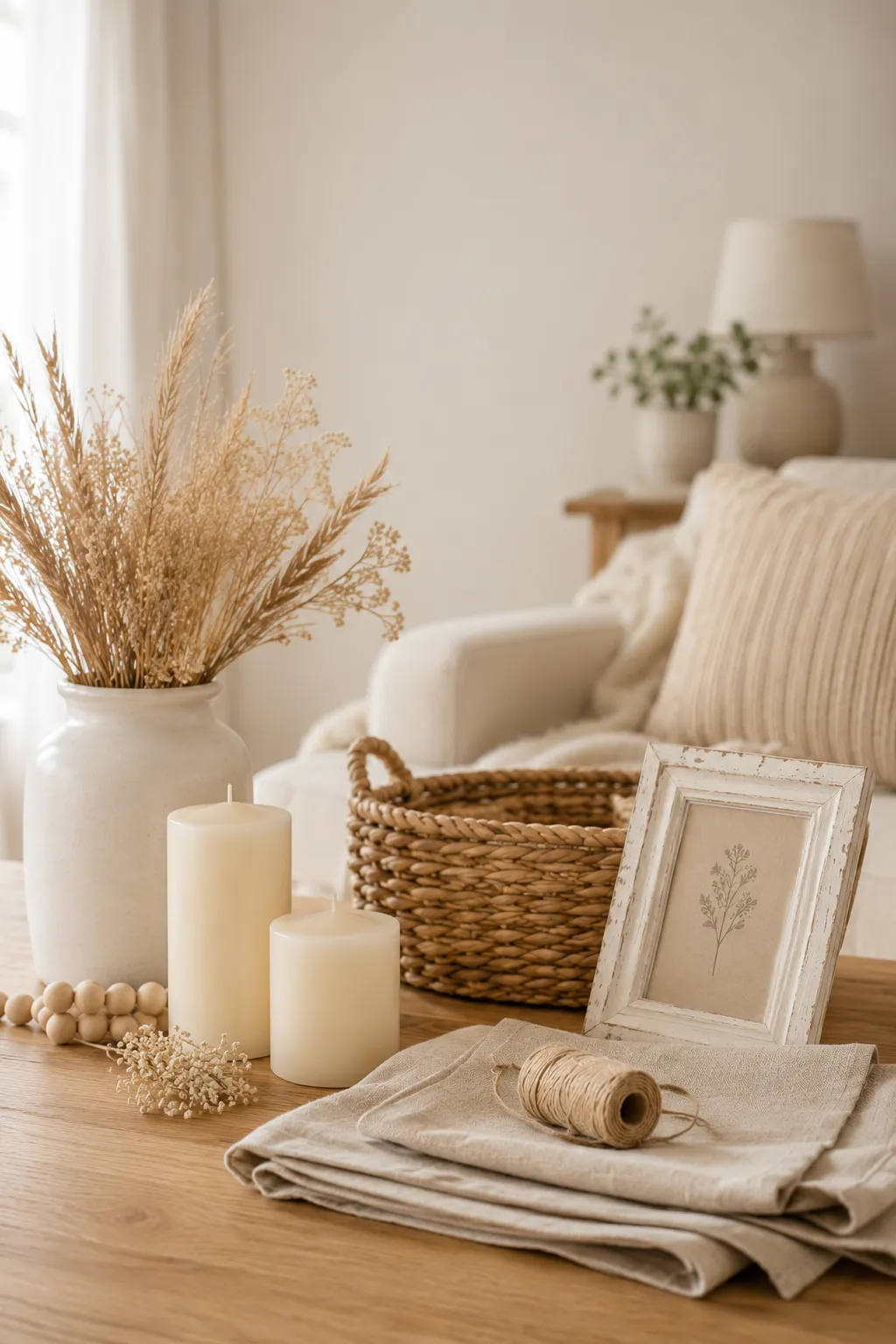
Keep the palette fairly tight while you work. Warm white, oatmeal, beige, light wood, soft taupe, muted olive, dusty blue, and clay can mix easily without making each DIY project feel unrelated.
Most importantly, give practical projects priority. Storage, lighting, and useful surfaces usually make a bigger difference than another small decorative object.
1. Frame Printable Art Instead of Buying Finished Wall Art
What to make:
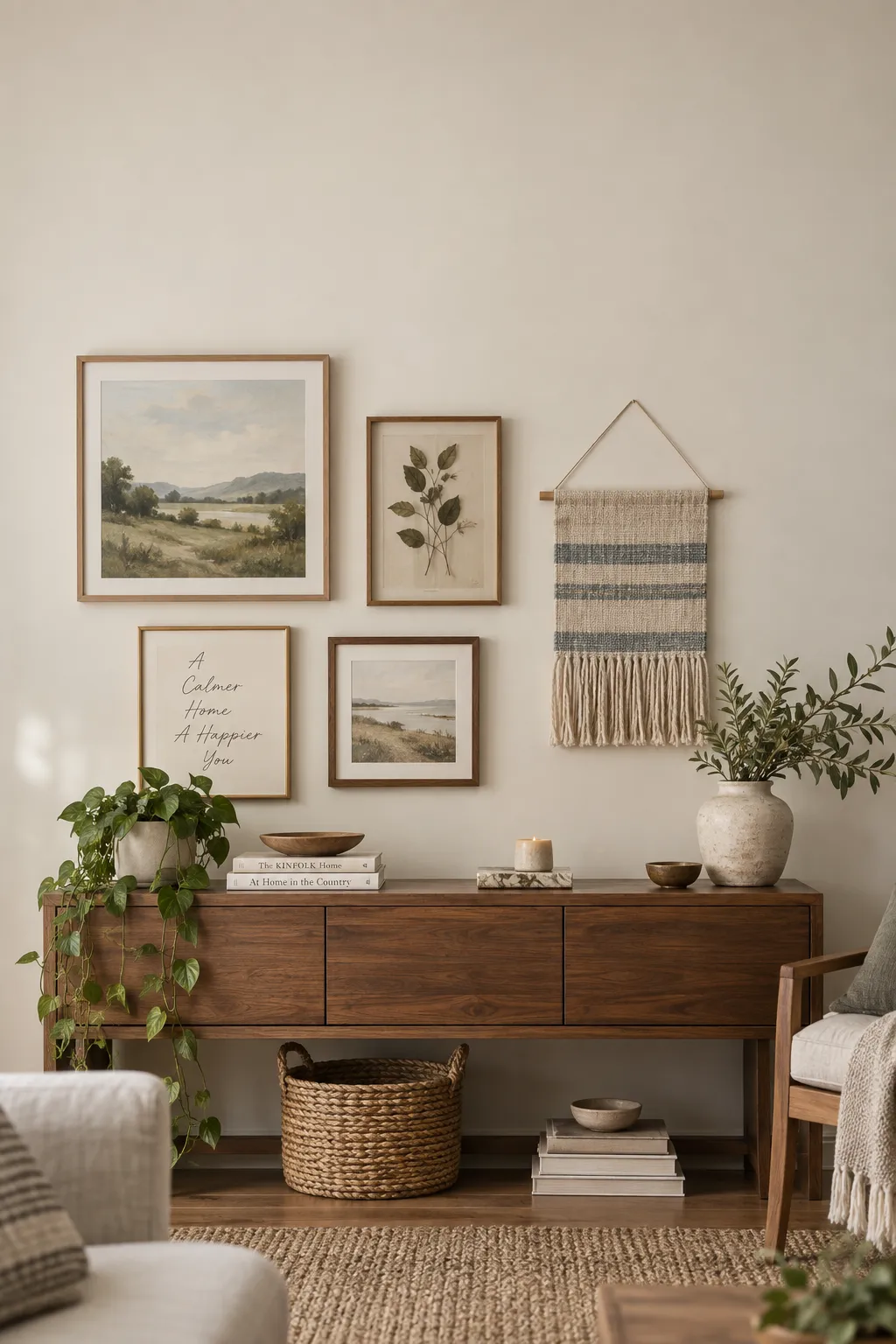
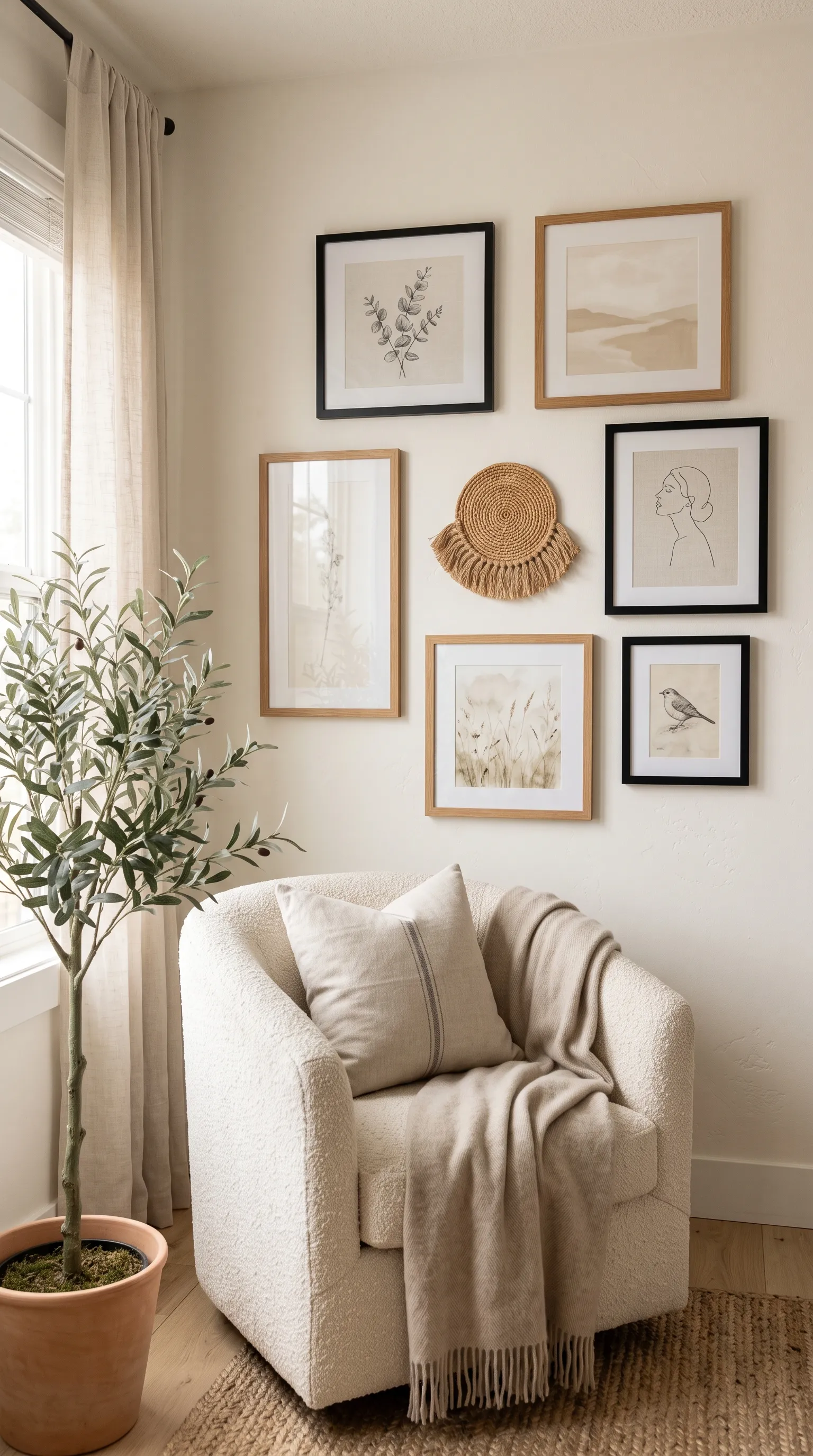
Choose one or two printable artworks and place them in simple coordinating frames. Soft landscapes, botanical drawings, line art, and restrained abstracts work especially well in warm neutral rooms.
Where to use it:
Try a pair above a console, desk, dresser, nightstand, or on the quieter end of a living room wall.
Why it saves money:
The frame can stay even when your taste changes. Swap the print later instead of replacing the whole piece.
Materials:
Printable artwork, paper, frames, and an appropriate hanging method.
Budget mistake to avoid:
Do not buy several cheap mismatched frames simply because they are inexpensive. Two coordinating frames often look more intentional than six unrelated ones.
If the wall itself is your main project, our DIY wall decor ideas guide has more ways to use frames, fabric, printable art, and handmade details without making the arrangement feel crowded.
2. Refresh Thrifted Frames One Consistent Finish
What to make:
Refresh secondhand or older frames with a finish that already exists in the room.
Cream, warm white, dark brown, muted sage, matte black, or a wood-look finish can help frames from different sources relate to each other.
Where to use it:
Use them on a picture ledge, dresser, hallway wall, desk, or small gallery grouping.
Why it saves money:
The frame itself may still be perfectly usable. Updating the finish lets you reuse the shape and size instead of starting over.
Materials:
Existing or thrifted frames, appropriate paint or finish, painter's tape, brush, and artwork.
Budget mistake to avoid:
Do not repaint every frame just to make them identical. A small mix of related finishes can look more natural than a perfectly matched set.
3. Cover Plain Storage Boxes With Fabric or Paper
What to make:
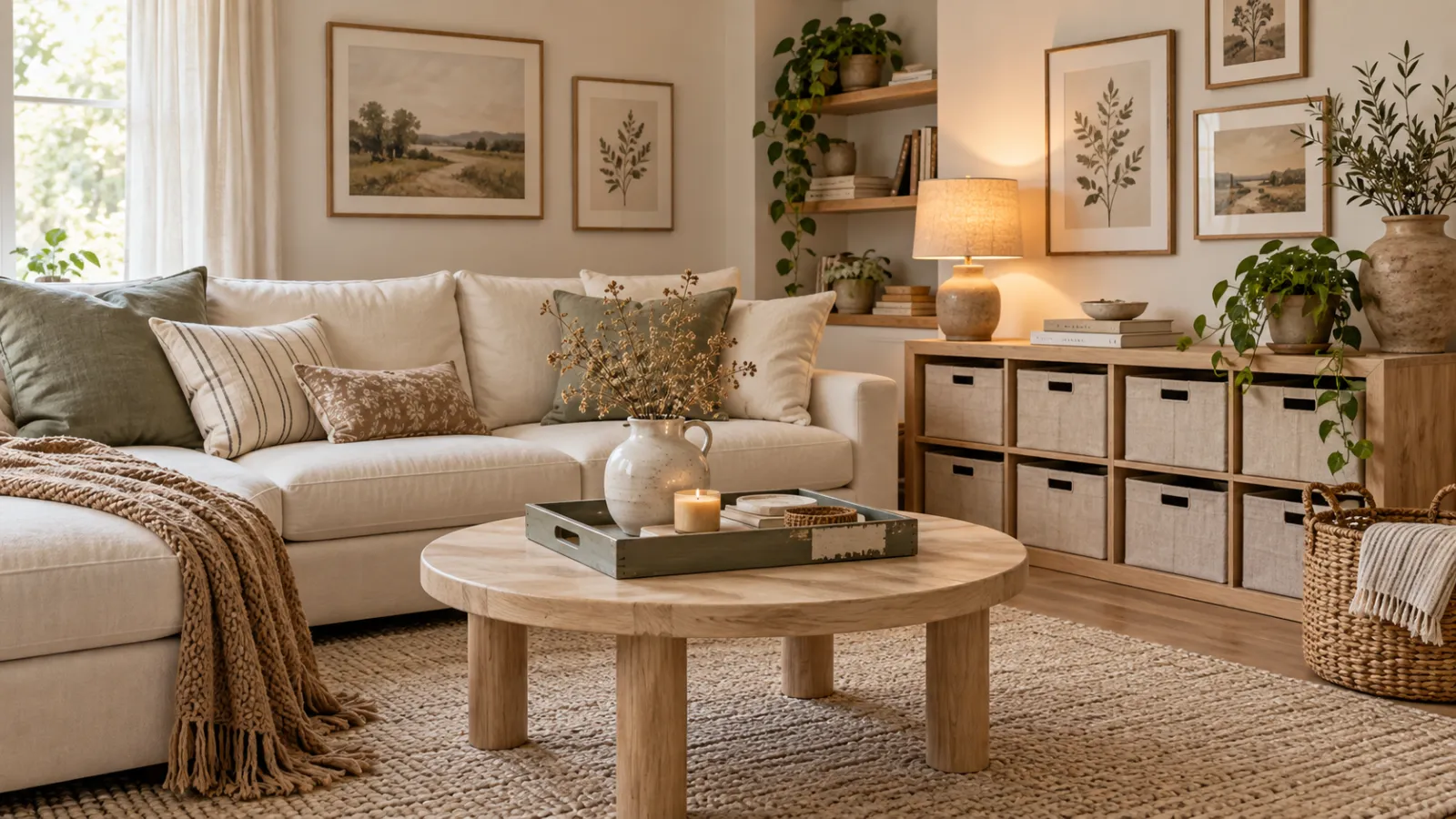
Wrap plain boxes in linen-look fabric, kraft paper, or another simple covering.
Use the same finish on boxes that will sit beside each other.
Where to use it:
Open shelves, closets, desks, console tables, craft areas, and bedroom storage units are all good spots.
Use the boxes for chargers, notebooks, paperwork, accessories, craft supplies, or anything else that normally sits loose.
Why it saves money:
You get more polished-looking storage without replacing containers that already work.
Materials:
Plain storage boxes, fabric or paper, scissors, and a suitable adhesive.
Budget mistake to avoid:
Five different prints will usually make open storage feel busier. Choose one material or one close color family.
4. Make No- se Pillow Covers
What to make:
Use existing pillow inserts and make or add new covers in linen, cotton, a subtle stripe, or a muted check.
The change does not need to be dramatic. Texture often does more than a bold pattern.
Where to use it:
on a sofa,armchair, bed, bench, reading chair, or window seat. or bench. Swapping covers changes the mood of a room quickly.
Why it saves money:
You reuse pillow inserts you already have, so you only buy fabric. Inexpensive covers let you change styles by season (like swapping a cover for summer vs. winter) without extra bulky pillows.
Materials:
Existing inserts, fabric, measuring supplies, and the sewing or suitable no-sew method you prefer.
Budget mistake to avoid:
Do not turn every pillow into a different DIY project. A patterned cover usually looks better beside quieter solids.
5. Paint a Tray to contain small items
What to make:
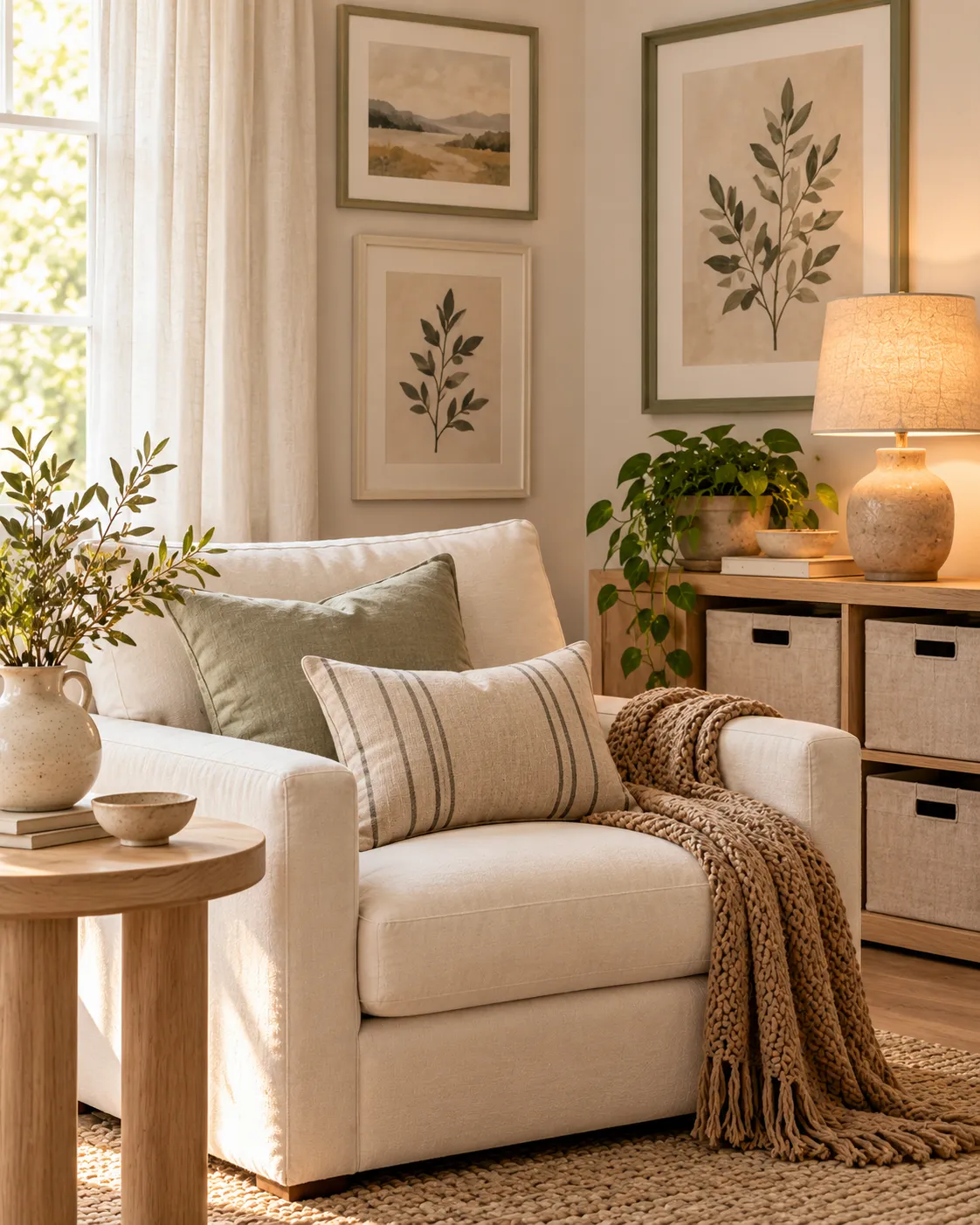
Refresh an old or basic tray with paint or a simple liner.
Then use it to collect only a few things you already keep nearby.
Where to use it:
Coffee table, ottoman, nightstand, kitchen counter, dresser, or entry console.
Why it saves money:
A tray can make ordinary items look organized, which often removes the urge to buy more decorative objects.
Materials:
Tray, suitable paint or liner material, brush, and the everyday pieces you want to contain.
Budget mistake to avoid:
The tray is not a reason to add more decor. Leave some of its surface visible.
6. Add Peel-and-Stick Detail to Furniture, Not Walls
What to make:
Use removable decorative material on a small furniture surface such as a drawer front, removable shelf backing, or cabinet insert.
A linen texture, subtle stripe, warm wood look, or quiet solid works better here than a very busy print.
Where to use it:
Nightstands, freestanding bookcases, desks, drawer units, or small storage cabinets.
Why it saves money:
A small surface update can change basic furniture without replacing a piece that still functions well.
Materials:
Removable material suitable for the surface, measuring tape, scissors, smoothing tool, and clean cloth.
Budget mistake to avoid:
Do not spread one bold pattern across several pieces of furniture. One accent area usually has more impact.
7. Create a simple picture ledge Display
What to make:
Create a simple ledge display with one larger framed piece, a smaller print, and perhaps one lightweight decorative object.
Keep part of the ledge empty.
Where to use it:
Above a desk, console, sofa, hallway bench, or bedroom dresser.
Why it saves money:
Small prints and artwork can be changed over time while the main ledge stays in place.
Materials:
Picture ledge, framed art, small prints, and suitable installation hardware.
If you use adhesive picture-hanging strips, check the manufacturer's instructions for approved surfaces, weight limits, application, and removal before putting them on a painted wall. Command Picture Hanging Strip Instructions
Budget mistake to avoid:
A picture ledge can become a shelf full of unrelated objects very quickly. Art should remain the main focus.
For adhesive picture-hanging products, follow the manufacturer's approved surfaces, product-specific weight limits, application steps, and removal instructions. Command's official guidance notes that products differ by use, surface, and weight rating.
8. Frames Pressed Botanocals for natural Decor
What to make:
Frame a few pressed leaves, flowers, or delicate dried stems against a simple backing.
You do not need to fill the entire frame.
Where to use it:
Bedroom wall, hallway, home office, kitchen corner, dresser, or light wood console.
Why it saves money:
A simple botanical arrangement can add natural shape and texture without purchasing finished artwork.
Materials:
Pressed botanical pieces, frame, backing paper, and small positioning tools if needed.
Budget mistake to avoid:
More is not necessarily better. A few stems usually read more clearly from across the room than a frame packed with tiny pieces.
 9. Refresh a Thrifted Vase With Paint
What to make:
Update an older vase with an appropriate matte or textured decorative finish.
Warm white, clay, olive, taupe, or soft brown can help an inexpensive piece sit naturally with neutral decor.
Where to use it:
Coffee table, dining table, shelf, dresser, console, or nightstand.
Add a small branch or a restrained arrangement of dried stems rather than filling it heavily.
Why it saves money:
You can change the finish of a vase whose shape you already like instead of buying another decorative vessel.
Materials:
Existing vase, appropriate surface preparation and paint or finish, brush, and simple stems if desired.
Budget mistake to avoid:
Do not repaint every vase in the house the same beige. Small variations in tone keep neutral decor from looking flat.
10. Let Woven Baskets Do Double duty
What to make:
Use an affordable basket as visible storage and, if useful, add a simple liner or label.
The woven texture already provides most of the decorative value.
Where to use it:
Beside the sofa, under a console, near an entryway, beside the bed, or on an open shelf.
Why it saves money:
One item stores throws, toys, magazines, craft supplies, or extra textiles while also softening the room visually.
Materials:
Basket and an optional removable liner or label.
Budget mistake to avoid:
Buy storage for a specific job. A random basket that holds nothing useful is still just another piece of decor.
11. Improve a Lamp Instead of Replacing It
What to make:
If the lamp base works, consider changing to a compatible shade or adding a subtle decorative detail specifically suitable for lampshades.
Often the shape and light quality matter more than adding elaborate trim.
Where to use it:
Nightstand, living room side table, desk, console, or reading corner.
Why it saves money:
Updating one part of a working lamp can be more practical than replacing the whole fixture.
Materials:
Existing lamp, compatible lampshade or shade-safe decorative detail, and an appropriate bulb.
When choosing a bulb for the finished lamp, compare brightness in lumens rather than judging the bulb by wattage alone ENERGY STAR: Learn About Brightness
Budget mistake to avoid:
Do not choose a shade only for appearance. It needs to fit the lamp properly and allow safe, useful light.
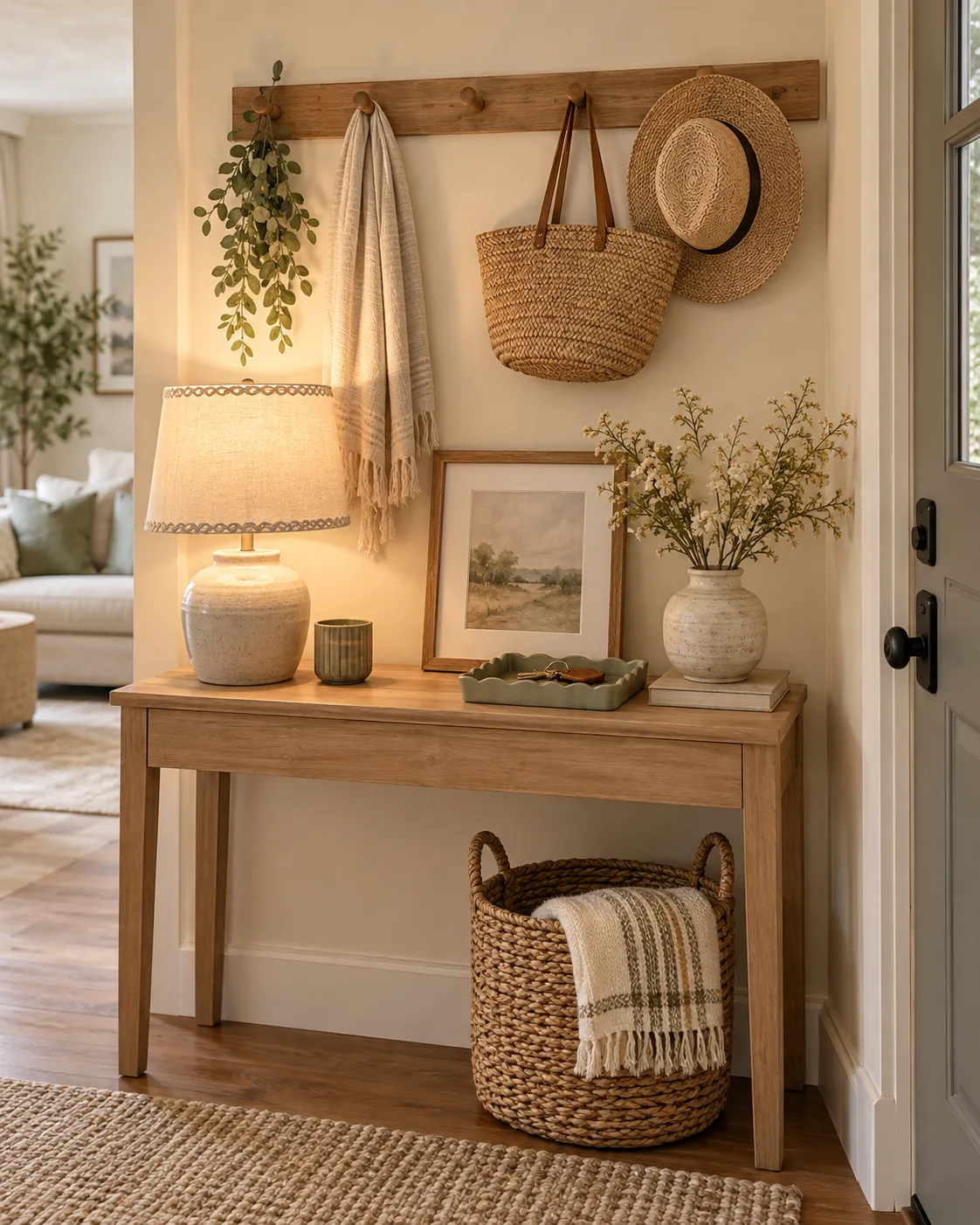
 12. Add a Small Peg Rail for Hooks
What to make:
Add a compact peg rail or simple hook setup for lightweight everyday items.
The rail itself can stay natural wood or be painted to relate to nearby furniture.
Where to use it:
Entryway, bedroom, laundry area, closet corner, kitchen, or bathroom where appropriate.
Why it saves money:
Wall-based organization can reduce the need for another freestanding storage piece.
Materials:
Peg rail or hooks, appropriate wall hardware, and optional paint.
Budget mistake to avoid:
Do not judge the rail by how many hooks it has. Leave some empty or it quickly turns into a visual pile.
13.Paint a canvas with your room's colour
Paint a simple canvas using broad shapes, gentle stripes, a soft arch, or a restrained abstract design.
Take colors from the room itself.
If muted olive already appears in the curtains, for example, repeat a smaller amount in the canvas instead of introducing a completely new accent.
Where to use it:
Above a desk, dresser, bed, sideboard, or compact console.
Why it saves money:
You can create artwork at the scale and color you need without buying a finished piece that almost—but not quite—fits.
Materials:
Canvas, suitable paint, brushes, painter's tape if useful, and pencil.
Budget mistake to avoid:
Do not treat the canvas as a way to use every leftover color. A restrained palette is easier to connect to the room.
14. Style With Books and a single accent
What to make:
Use two or three books as a low stack. If the covers are visually distracting, a removable plain paper cover can quiet them.
Place one useful or decorative object on top.
Where to use it:
Nightstand, coffee table, dresser, shelf, or desk.
Why it saves money:
The books give height and structure without requiring another purchased decorative object.
Materials:
Books and optional removable paper covers.
Budget mistake to avoid:
Do not build book stacks on every open surface. The repetition becomes obvious quickly.
15. Make a Centerpiece From Fewer Pieces
What to make:
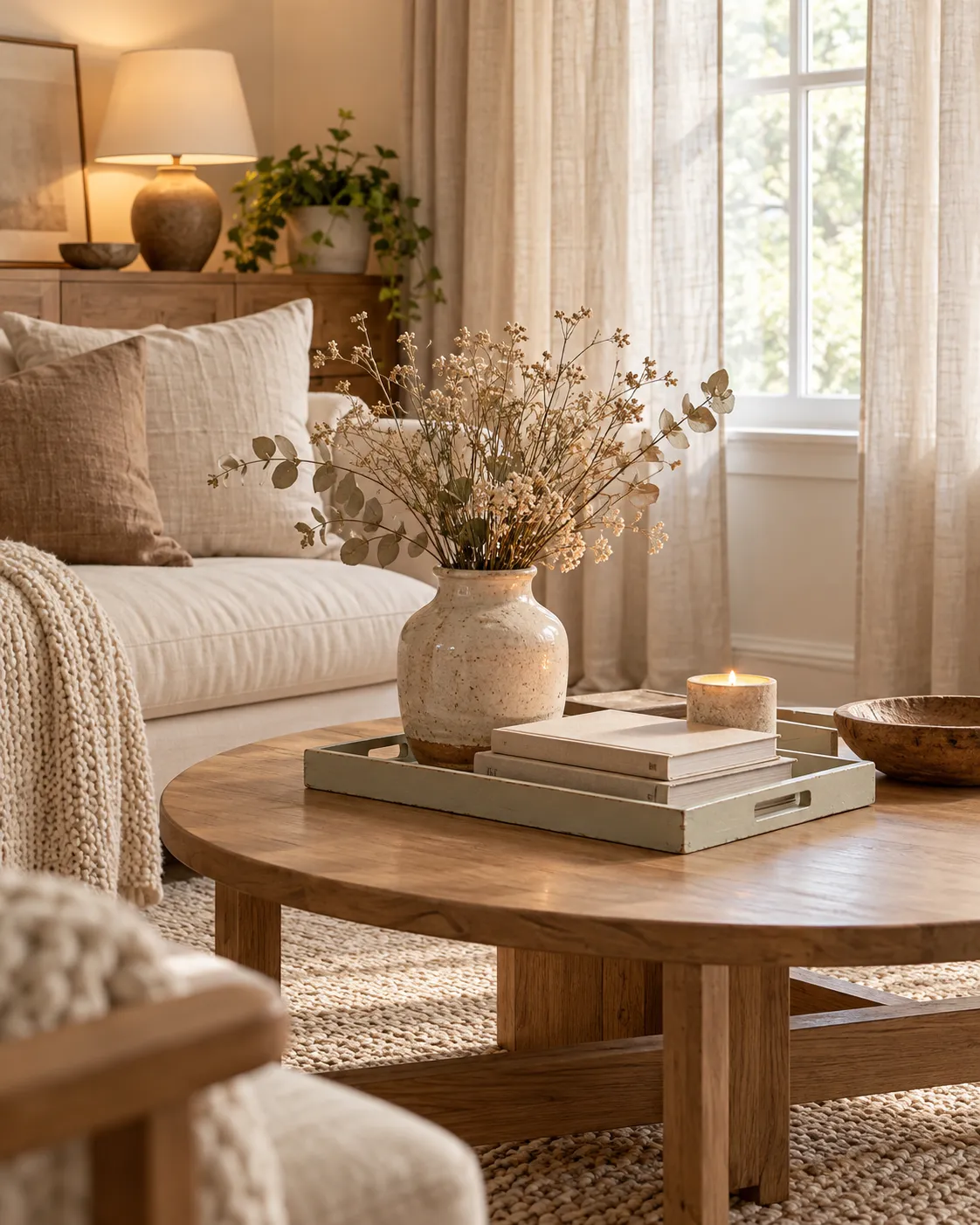
Use a tray or bowl as the anchor, then add one vase, a small branch arrangement, or another low decorative object.
The arrangement should be easy to move when the table is needed.
Where to use it:
Dining table, coffee table, kitchen island, breakfast nook, or console.
Why it saves money:
You can combine useful pieces already in the home instead of buying a complete decorative set.
Materials:
Tray or bowl, vase, stems, and one additional small object if needed.
Budget mistake to avoid:
Do not make the centerpiece so large that normal meals, conversation, or daily use become inconvenient.
16. Improve Plain Curtains 0n a budget
What to make:
A simple change to curtain length, hanging method, or subtle trim can help basic panels sit more naturally in the room.
Keep the fabric itself fairly quiet if the rest of the room already has pattern.
Where to use it:
Living room, bedroom, dining room, office, or apartment window.
Why it saves money:
Basic curtains can work much harder when they hang neatly and relate to the rest of the palette.
Materials:
Existing curtain panels and the appropriate supplies for the specific adjustment.
Budget mistake to avoid:
Do not alter landlord-provided window coverings in a rental unless you know the change is permitted.
17. Restyle Open Shelves with more empty space
What to make:
This project starts by taking things away.
Keep a basket or closed box for loose items, a few books, perhaps one frame, and one ceramic or natural object. Let some shelf space remain open.
Where to use it:
Living room bookcases, home office shelves, bedroom storage, bathroom shelving, or kitchen display shelves.
Why it saves money:
The room may not need new decor at all. Better editing can make the objects you already own look more intentional.
Materials:
Existing shelf, storage baskets or boxes, books, frame, and useful objects already in the room.
Budget mistake to avoid:
Do not style every shelf with the same formula. Some shelves can hold practical storage while others stay lighter.
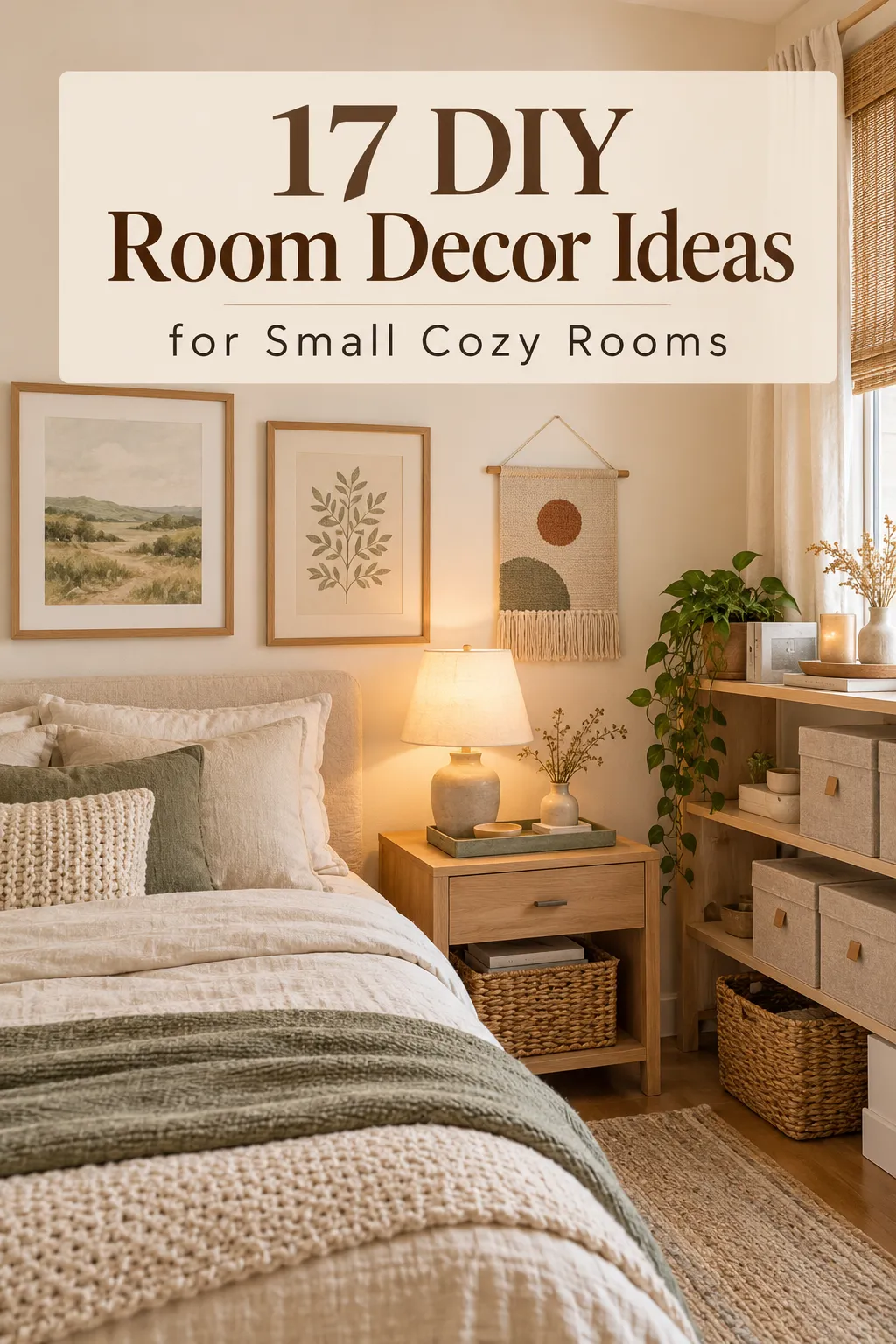
In a compact bedroom or apartment room, the same edit-first approach matters even more. These DIY room decor ideas show how storage, wall decor, lighting, and empty space can work together without making a small room feel crowded.
18. Refresh an Existing Mirror
What to make:
Give an old mirror frame a finish that better relates to the room.
The update can be subtle: warm wood, soft brown, cream, muted taupe, or another finish already present nearby.
Where to use it:
Entryway, bedroom, hallway, living room, or above a dresser.
If possible, place it where it can pick up daylight rather than facing the darkest part of the room.
Why it saves money:
A mirror already gives you function, light, and wall presence. Updating the frame can be enough.
Materials:
Existing mirror and the appropriate refinishing materials for its frame.
Budget mistake to avoid:
Do not force the mirror into a crowded wall simply because it is decorative. Give the frame some breathing room.
19. Create a compact Entry Drop Zone
What to make:
Use a tray, basket, small shelf or console, and only the storage needed for daily items.
Keys, sunglasses, mail, headphones, and small bags should have an obvious place.
Where to use it:
Near the front door, apartment entrance, hallway, mudroom, or closet corner.
Why it saves money:
You may be able to organize the entry without buying a large cabinet or storage bench.
Materials:
Tray, basket, existing surface or compact console, and optional wall hooks where appropriate.
Budget mistake to avoid:
A drop zone is not a place to keep everything indefinitely. Clear out papers and items that no longer need to stay near the door.
If you are decorating a rental, continue with our DIY apartment decor ideas for more movable, renter-friendly ways to handle storage, walls, lighting, and small-space styling.
20. Finish One Cozy Corner, not the Whole Room
What to make:
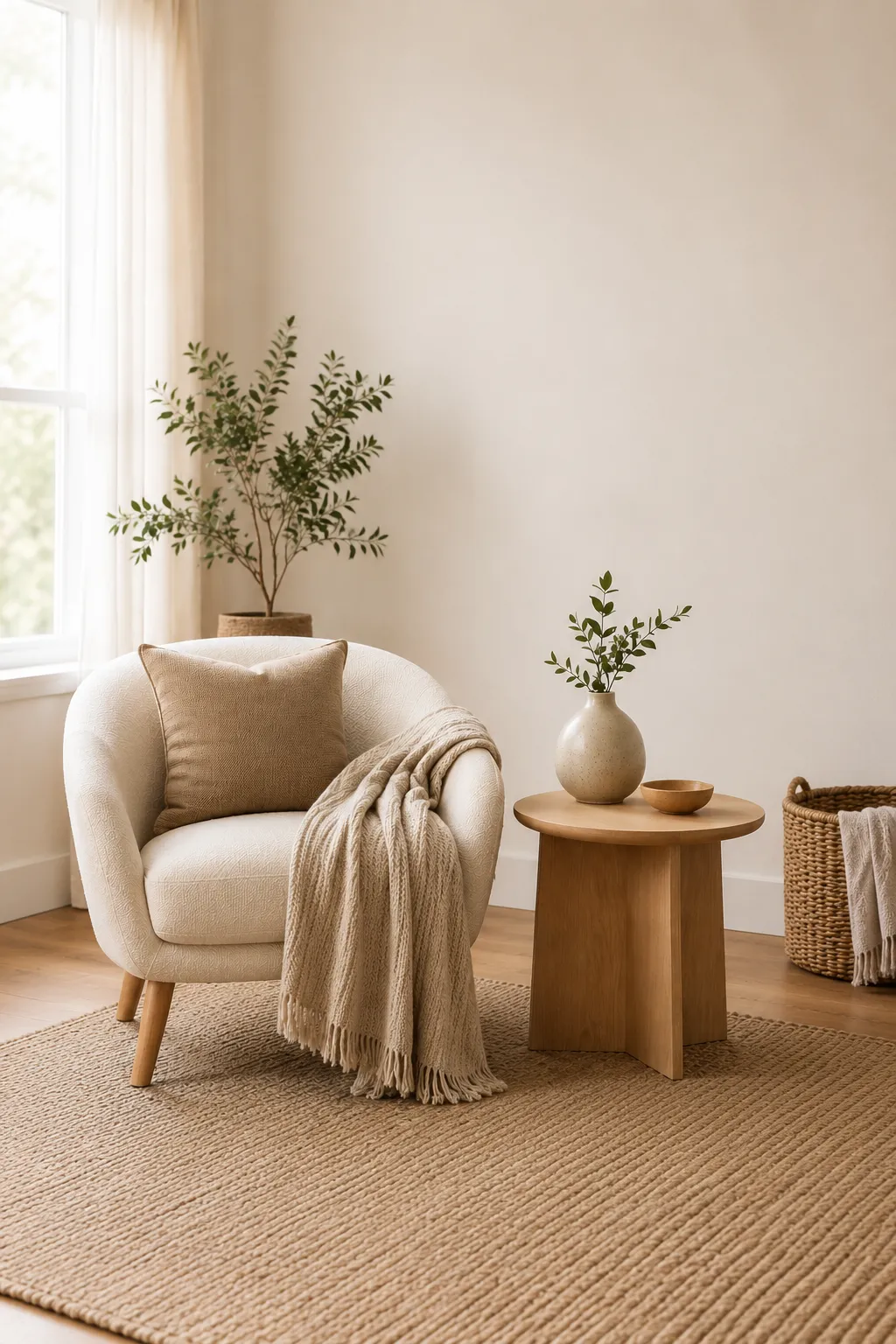
Bring together a lamp, one framed art piece, a basket, a soft textile, and an existing chair or compact table.
You may already own everything the corner needs.
Where to use it:
A quiet living room corner, bedroom corner, reading spot, home office, or guest room.
Why it saves money:
One finished area can give the whole room more direction without creating a shopping list for every wall and surface.
Materials:
Existing furniture, lamp, basket, art, and one textile if useful.
Budget mistake to avoid:
Stop when the corner works. Another stool, plant stand, wall shelf, basket, or decorative object is not automatically an improvement.
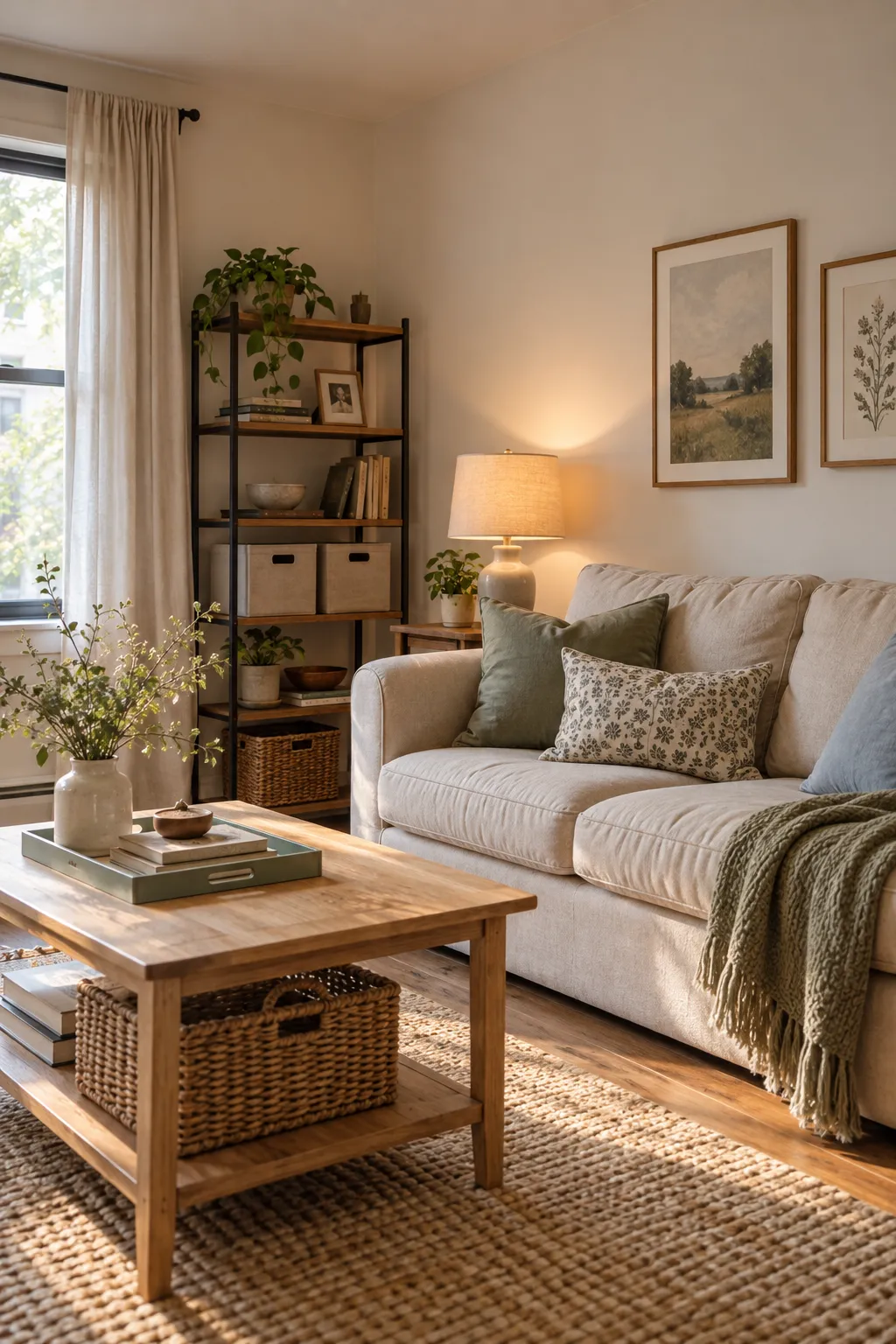
If the corner is in your living room, these cozy living room ideas can help you carry the same warm lighting, soft texture, and uncluttered feeling through the rest of the space.
 Budget Decorating Mistakes That backfire
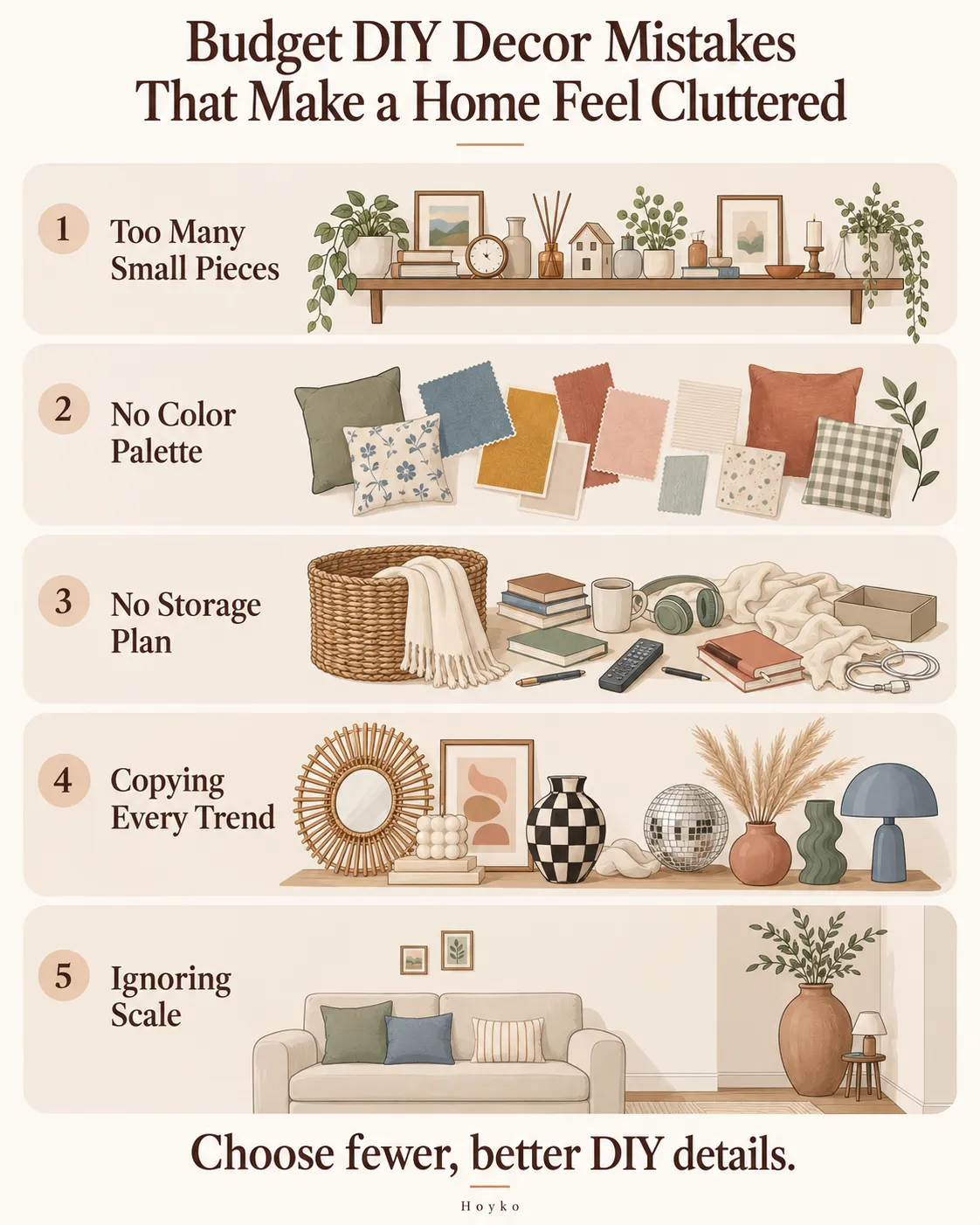
Buying Lots of Small, Cheap Decor
A low price per item does not always mean a low-cost room.
Several small signs, frames, candles, bowls, and decorative objects can cost more together than one piece that actually solves the empty wall or surface.
Choose the room problem first. Then spend—or DIY—accordingly.
Starting Projects Without a Color Direction
A project can be inexpensive and still feel disconnected from the room.
Before painting frames, covering boxes, or choosing fabric, identify the colors already repeated in the furniture, rug, curtains, or artwork.
You do not need a rigid palette. You just need enough repetition that the projects look like they belong in the same home.
Adding Decor Before Fixing Storage
A pretty tray cannot rescue a dresser covered with things that have nowhere else to go.
Deal with the loose items first. Covered boxes, baskets, hooks, drawers, and simple organizers often improve the room more than purely decorative projects.
Copying a Trend That Does Not Fit the Room
A DIY project may look appealing online and still be wrong for your furniture, available wall space, or color palette.
Use the idea, not necessarily the exact look.
Ignoring Scale
A tiny print can disappear above a large console. An oversized basket can block an already narrow walkway.
Before starting the project, look at the area it needs to fill and the furniture beside it.
How to Make Budget DIY Decor Look More Considered
Do not try to make inexpensive decor look expensive by adding more detail.
The stronger approach is usually simpler.
Repeat a material somewhere else in the room. If the frame is light oak, let that wood tone appear again in a side table or tray. If the pillow uses muted olive, pick up a smaller amount in the artwork.
Keep practical objects visually quiet. Storage boxes, baskets, trays, hooks, and lamps already earn their place through function. They do not need extra embellishment everywhere.
And leave something empty.
A partly clear shelf, a simple stretch of wall, or a coffee table with only one small arrangement gives the handmade pieces around it more presence.
Start With the Room Problem, Not the Craft
If the entry is messy, start with the drop zone.
If the living room wall feels empty, work on framed art or a picture ledge. If the bedroom feels flat at night, improve the lamp before making another decorative object. If open shelves look chaotic, cover storage boxes or edit what is visible.
That approach keeps DIY home decor on a budget useful.
You are not trying to fill the house with handmade objects. You are choosing a few places where a small project can make the room work—and look—better.
FAQ
What are easy DIY home decor ideas on a budget?
Beginner-friendly options include framed printable art, painted thrifted frames, fabric-covered storage boxes, pillow cover updates, painted trays, pressed botanical frames, simple canvas art, and shelf restyling.
How can I decorate my home cheaply without making it look cluttered?
Start with what you already own, solve storage before adding decoration, and work on one visible area at a time. A limited palette and some deliberately empty space can help inexpensive pieces look more intentional.
What DIY home decor projects are good for beginners?
Projects that involve simple surface updates or styling are usually easier places to begin: printable art, storage box covers, painted trays, basic frame updates, book styling, basket organization, and simple wall art.
How can budget decor look more polished?
Repeat a few materials and colors, pay attention to scale, and avoid filling every surface. One useful basket, properly sized artwork, or well-placed lamp often has more impact than several tiny decorative objects.
Which room should I decorate first on a budget?
Start with the room you use most or the area with the clearest problem. That might be the living room, bedroom, entryway, or even one open shelf. Finishing one visible zone gives you a better sense of what the rest of the home actually needs.