14 Dining Room Lighting Ideas for a Warm, Inviting Space
A dining room can look lovely in daylight and surprisingly flat after sunset. One bare bulb may cast a harsh circle across the table, while an oversized chandelier can make a small room feel crowded.
The most useful dining room lighting ideas consider the table, ceiling, and way the room is used. A soft pendant might be all a two-person dining corner needs. A longer table may benefit from a fixture that spreads light more evenly, while a sideboard lamp can bring warmth to an otherwise dim wall.
These 14 ideas focus on lighting that looks comfortable, suits ordinary homes, and makes meals more pleasant after dark.
Dining Room Lighting Ideas That Start With the Table
The shape of your table is a good starting point, but it shouldn't be the only consideration. Look at the ceiling height, where people sit, and whether anyone walks beneath the fixture.
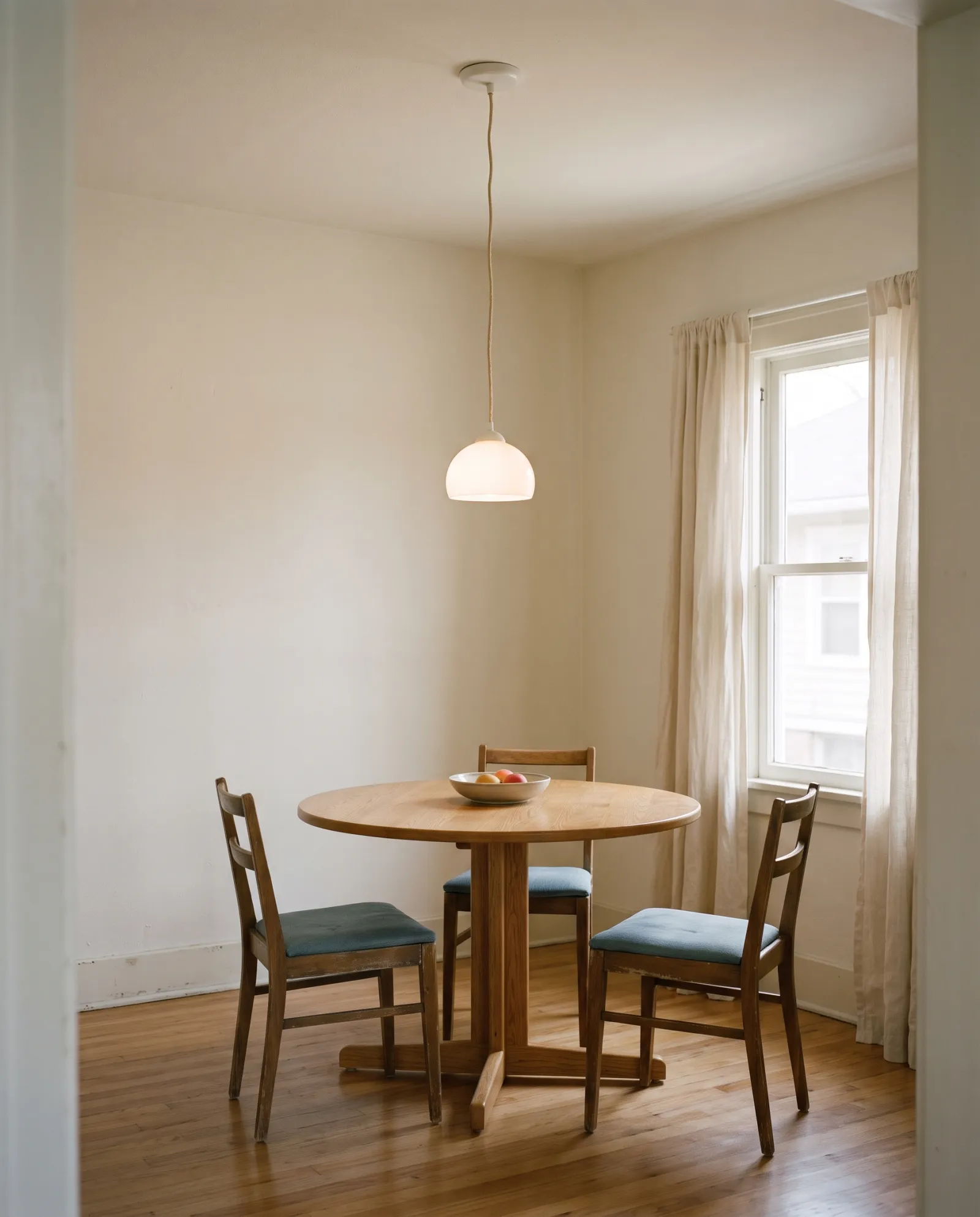
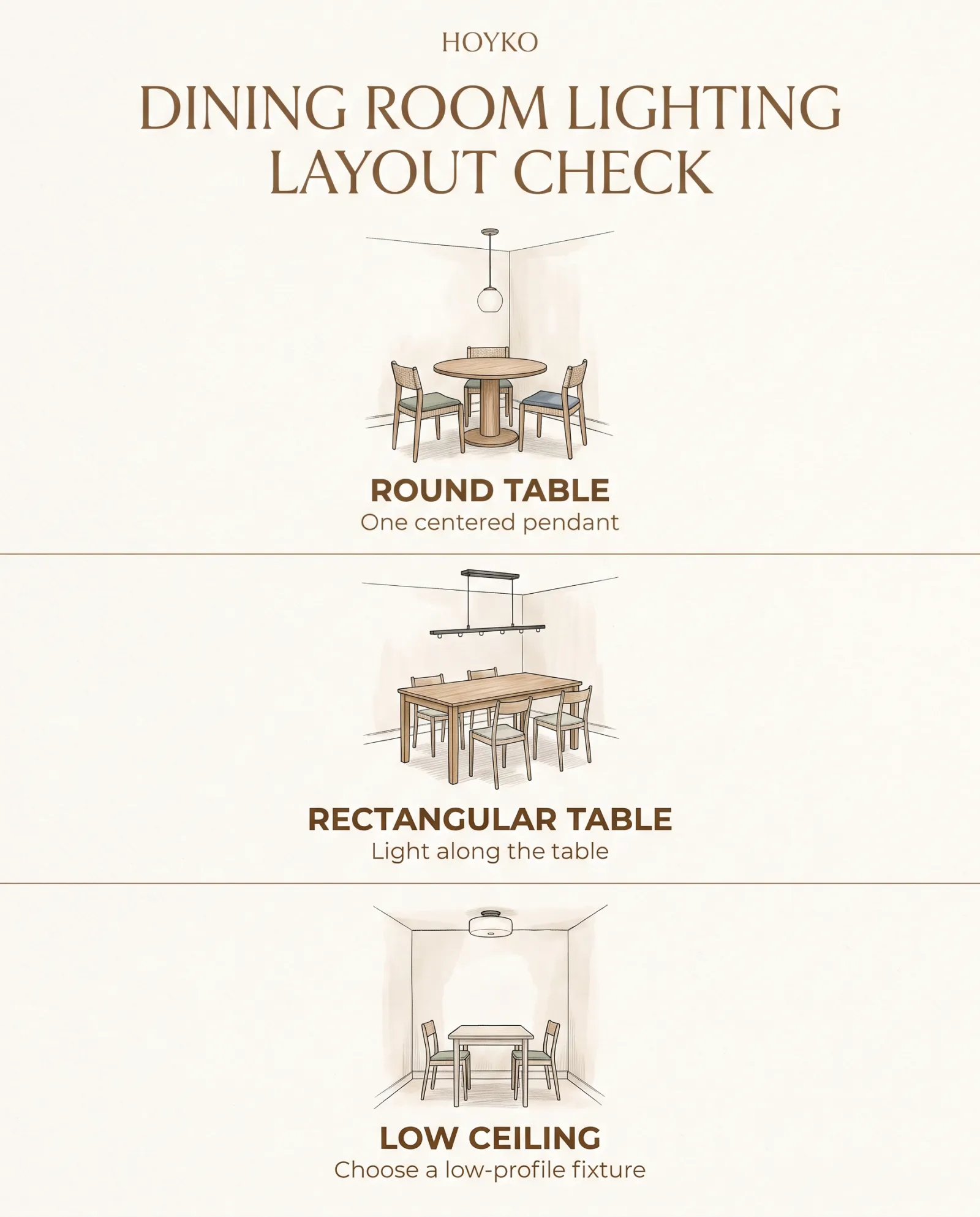
1. Hang One Simple Pendant Over a Round Table
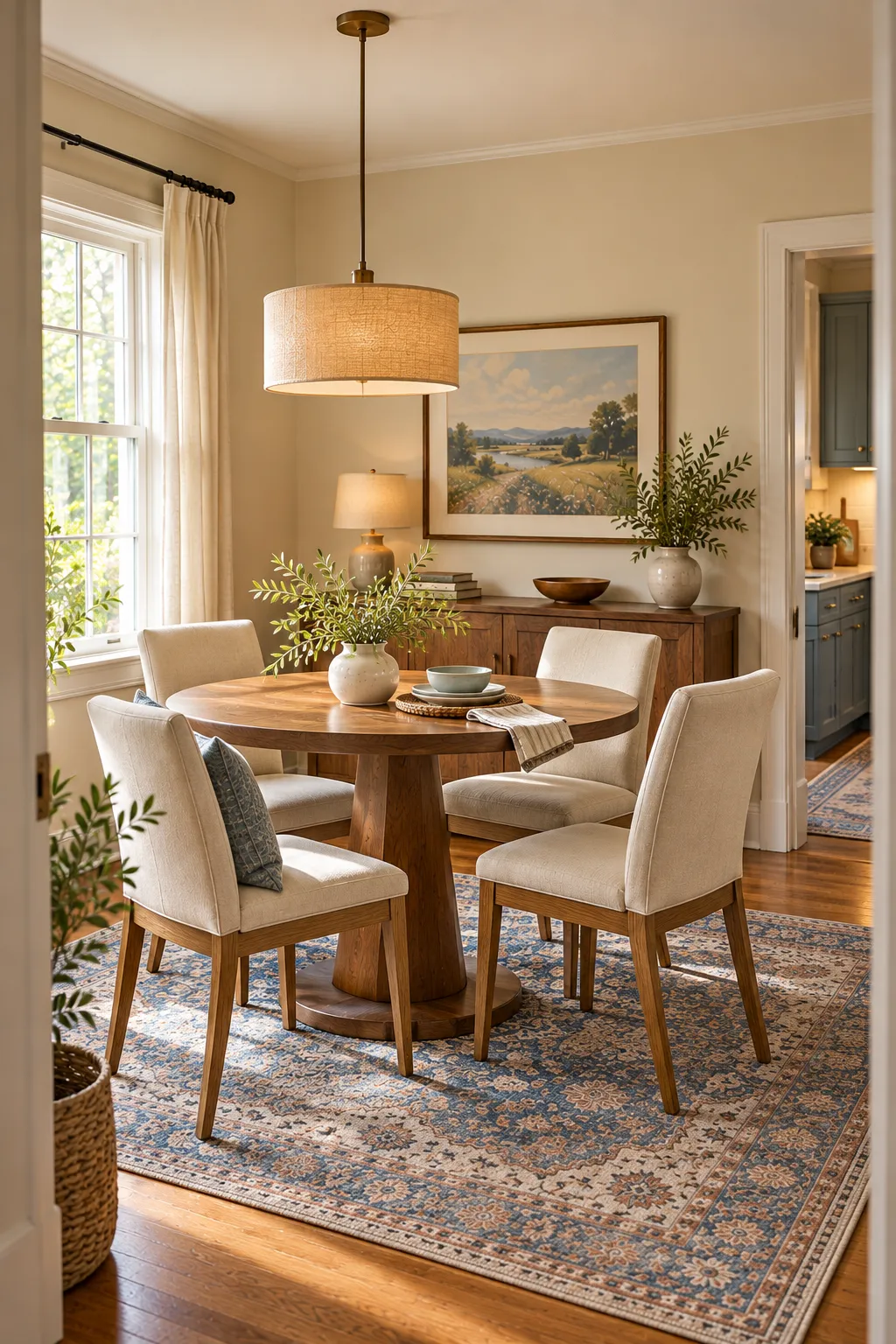
A compact pendant can give a small round dining table a clear focal point without filling the room with decorative hardware.
Try a softly curved cream or opal-glass shade above an oak pedestal table. The simple pairing works well with natural wood chairs, warm-white walls, and a faded blue rug.
Make sure the fixture lights the tabletop comfortably without shining directly into seated diners' eyes.
A pendant with a broad, diffused glow is often more pleasant for long dinners than one that creates a narrow pool of bright light.
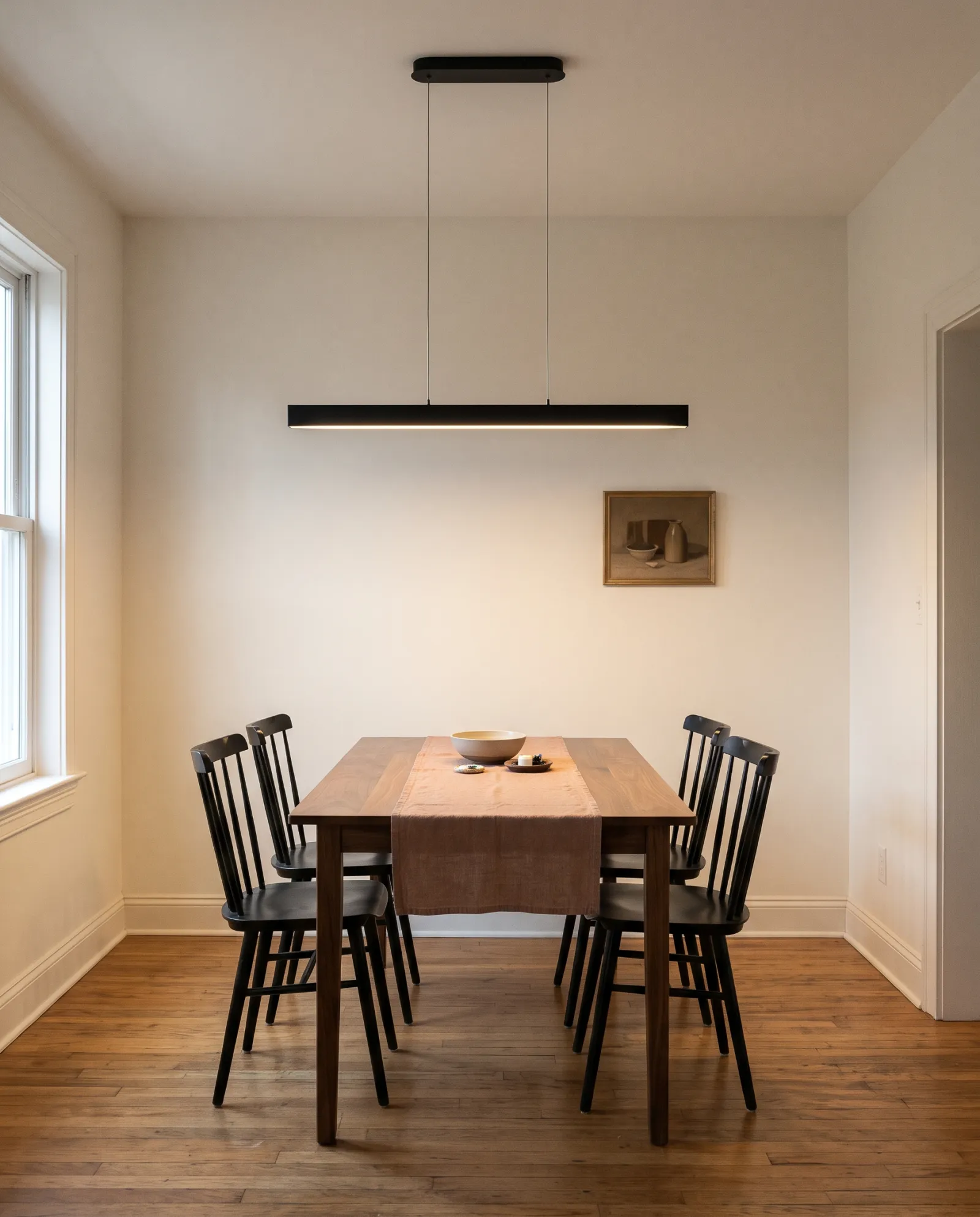
2. Choose a Linear Light for a Rectangular Dining Table
Long dining tables can look visually disconnected from a small round fixture, especially when the light reaches only the middle of the surface.
A restrained linear pendant follows the table's shape and helps distribute light along its length. Black metal, warm bronze, or pale wood finishes can work with straightforward dining furniture.
Look for a design that feels lighter than the table beneath it. A thick, oversized fixture may dominate a narrow room even when its length seems appropriate.
For small dining rooms, the proportion and light distribution matter more than choosing the most dramatic design.
3. Use Two Pendants When the Table Is Long Enough
Two matching pendants can suit a longer dining table, particularly in an open-plan space where the table needs its own visual identity.
Choose modest shades and relate their spacing to the length of the tabletop. There should be a clear sense that both lights belong to one dining arrangement.
A pair of small glass pendants above a walnut table can feel airy. Larger woven shades create a softer, more textured effect, but need more visual room around them.
On a compact four-seat table, one well-chosen light may look better than two competing fixtures.
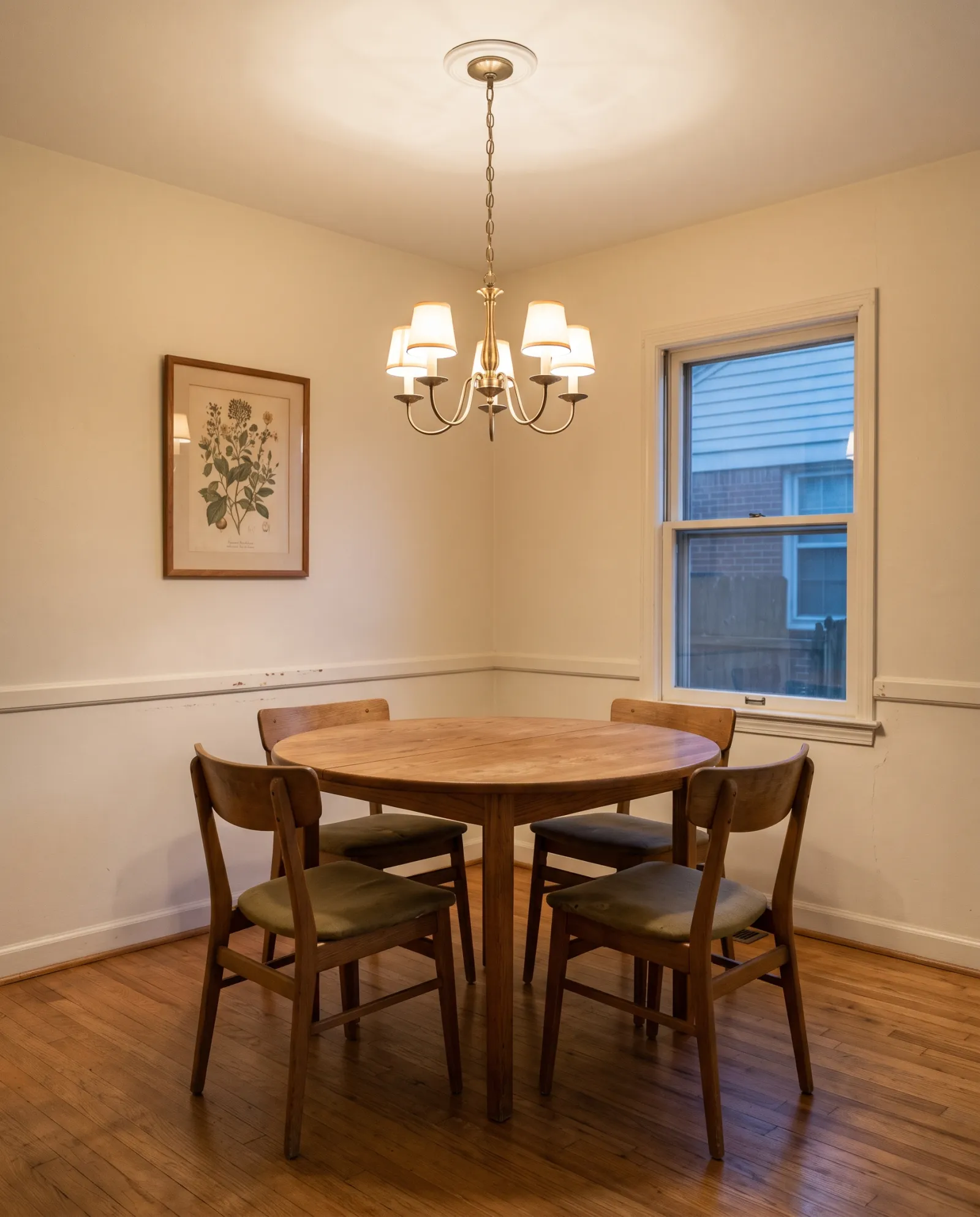
4. Pick a Chandelier With a Light Visual Silhouette
A chandelier doesn't have to be large or heavily decorated.
In a modest dining room, a simple fixture with slender arms and a restrained finish can provide character without overwhelming the table.
Consider aged brass against warm-white walls or a dark bronze finish that relates to black dining chairs. Keep the number of decorative details limited if the room already contains patterned curtains, a gallery wall, or an expressive rug.
Check the fixture's actual dimensions and hanging requirements before choosing it. A design that looks compact in a product photograph may still feel bulky beneath a standard-height ceiling.
Make Small Rooms and Low Ceilings Feel Comfortable
A room with an eight-foot ceiling may need a different approach from a tall, open dining space. There are attractive alternatives to a low-hanging chandelier.
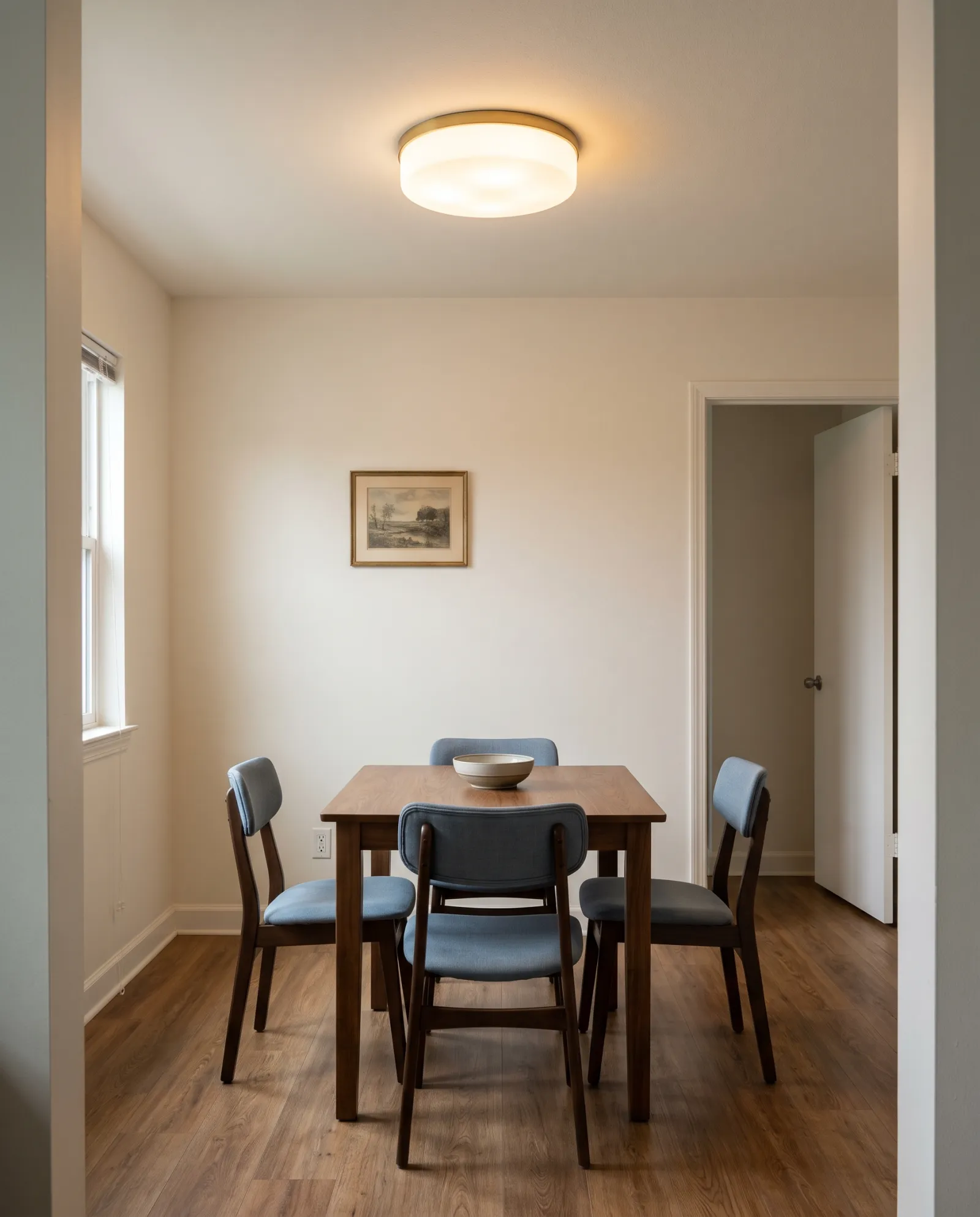
5. Try a Flush-Mount Light for a Low Ceiling
A flush-mount fixture sits close to the ceiling, making it a useful option when a hanging pendant would interfere with the room's circulation.
Choose a broad, softly diffused design rather than a tiny bright spotlight in the center of the room.
A simple cream drum or low-profile opal-glass fixture can suit an older apartment dining room with standard trim and a compact table.
This approach is particularly helpful when the dining furniture may be rearranged and the table doesn't always stay in one exact position.
6. Consider a Semi-Flush Fixture for Gentle Dimension
A semi-flush light hangs a short distance below the ceiling, offering more shape than a flush mount without the long suspension of a pendant.
It can work in a small traditional dining room with simple wall molding, a compact wood table, and upholstered chairs.
Look for a fixture that spreads light across the table rather than leaving the perimeter unusually dark.
Before buying, check the ceiling height, the fixture's overall drop, and the manufacturer's recommended placement. A semi-flush fixture is only suitable where it leaves adequate headroom and clearance.
7. Choose a Shade That Softens Glare
The shade changes how a dining light feels just as much as the fixture's shape.
Opal glass and suitable diffusing shades can soften the appearance of the light source. An opaque metal shade may direct more light downward, which can be useful above the table but leave the surrounding room comparatively dim.
A warm linen-look shade can add softness beside a walnut table and muted olive chairs. Choose a shade and bulb combination approved by the fixture manufacturer, including any heat and wattage limitations.
Before deciding, consider what someone seated across the table will actually see. A beautifully styled fixture is less successful if its bulb remains uncomfortable to look toward.
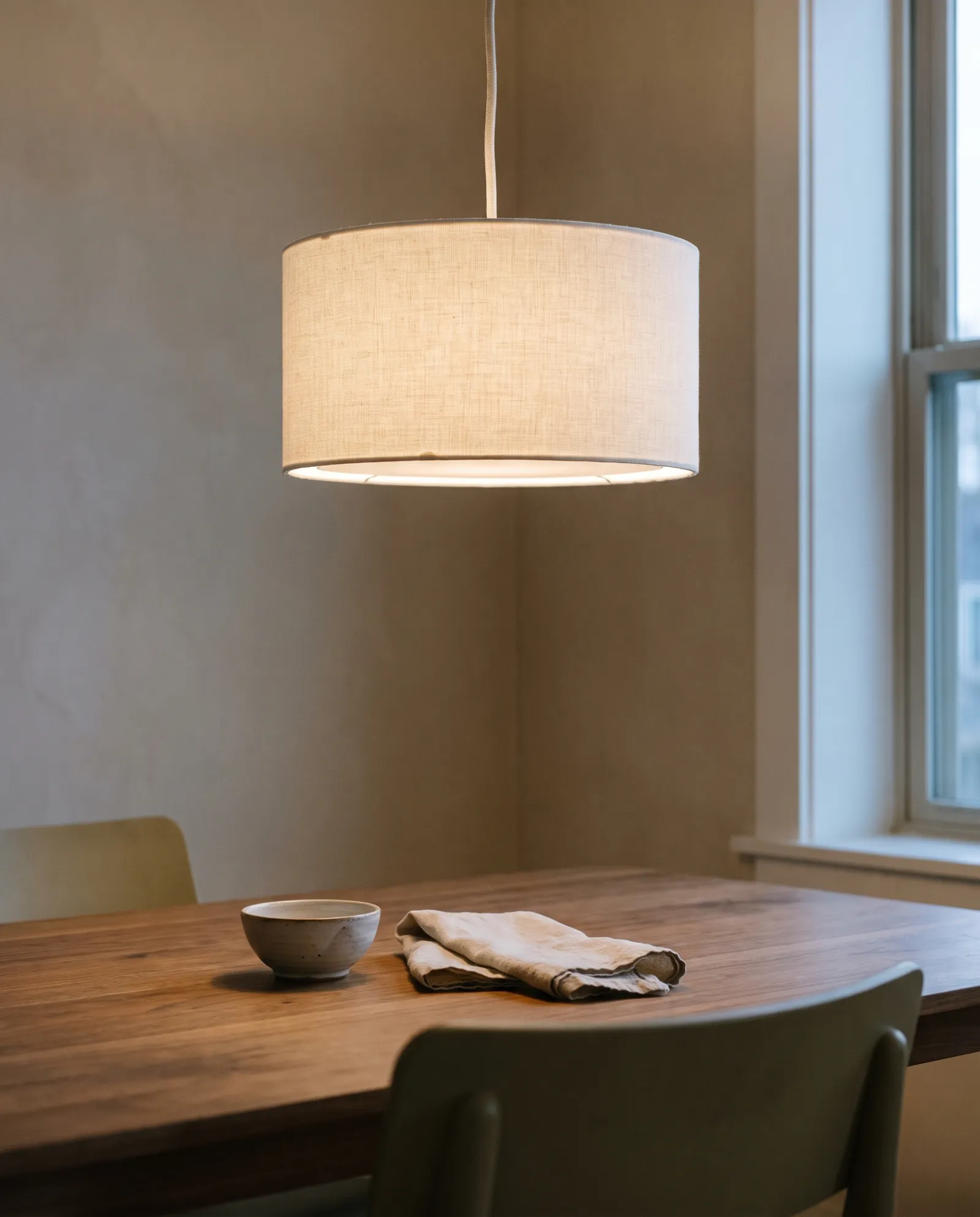
8. Use Dimmable Lighting for Different Evenings
The brightness that works for cleaning the table may feel excessive during a relaxed evening meal.
Adjustable lighting makes the room more flexible. A brighter setting can help with homework or detailed tasks, while a softer setting may be more comfortable at dinner.
Not every LED bulb works properly with every dimmer. ENERGY STAR's lighting guidance recommends checking product compatibility rather than assuming a dimmable bulb will work with an existing control.
If changing a wall control or hardwired fixture is necessary, use a qualified professional rather than treating it as a simple decorating project.
9. Choose Warm White Light Without Making the Room Too Dim
Light color affects how wood, fabric, and food appear after dark.
Warm-white bulbs around 2700K–3000K are a useful starting point for a cozy dining room. The U.S. Department of Energy's lighting guidance explains how color temperature and color rendering influence the appearance of a space.
But warm light shouldn't mean poor visibility. Check the bulb's light output as well as its color temperature, and consider good color rendering so the room's materials and table settings look natural.
A soft glow is inviting when you can still see your meal comfortably.
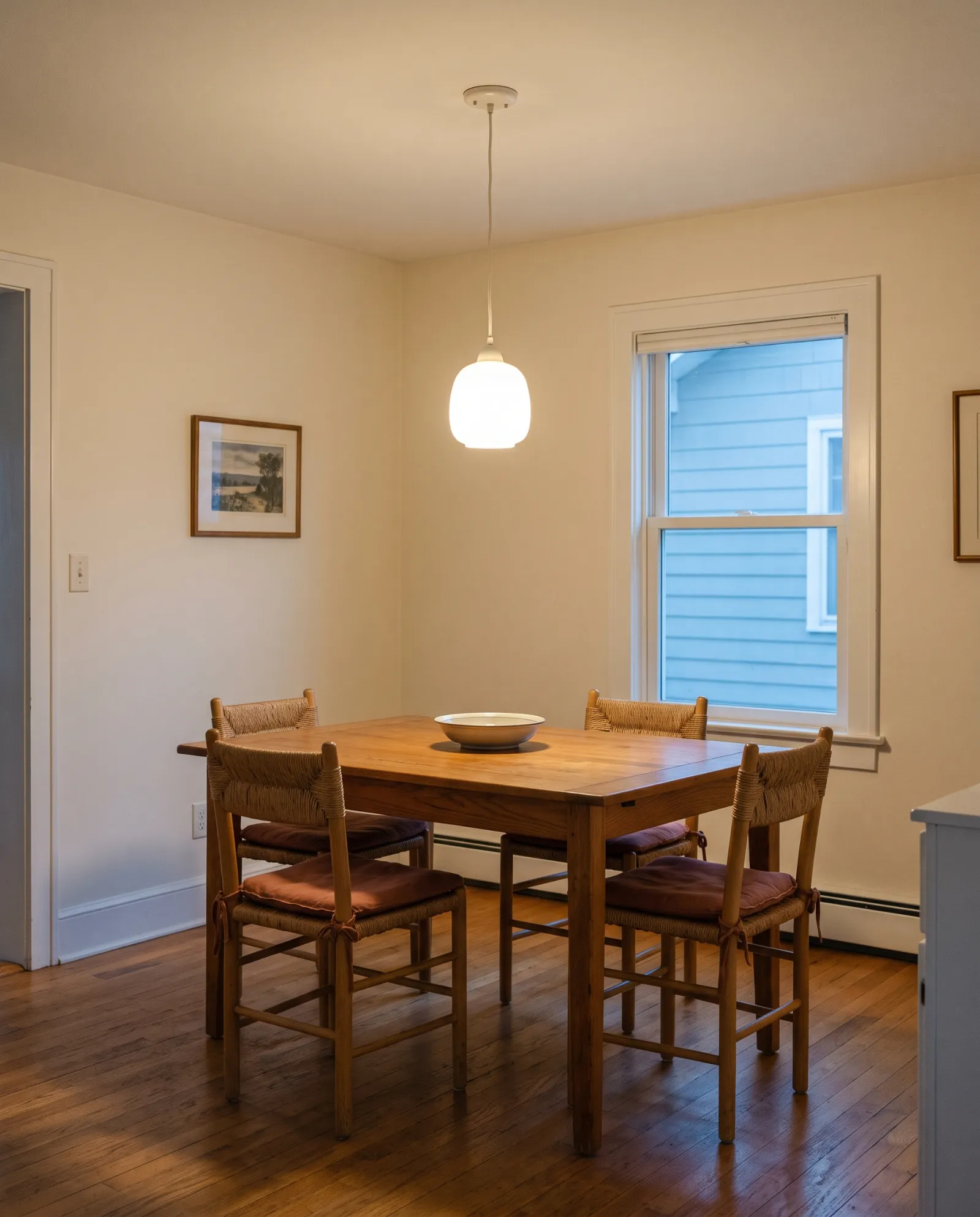
Bring Light Into the Rest of the Dining Room
A central ceiling fixture can light the table while leaving a sideboard, artwork, or adjacent corner in shadow. A second source doesn't need to be especially bright to help the room feel more balanced.
10. Let Existing Wall Sconces Light the Edges
Wall sconces can add gentle illumination to the areas beyond the dining table.
If your room already has them, use their position to your advantage. A pair beside a sideboard or one carefully placed near a framed print can make the wall feel less flat in the evening.
Choose shades that don't send a harsh beam directly toward seated guests or create distracting reflections.
There is no need to install matching sconces on every wall. One suitable existing fixture may provide enough background light.
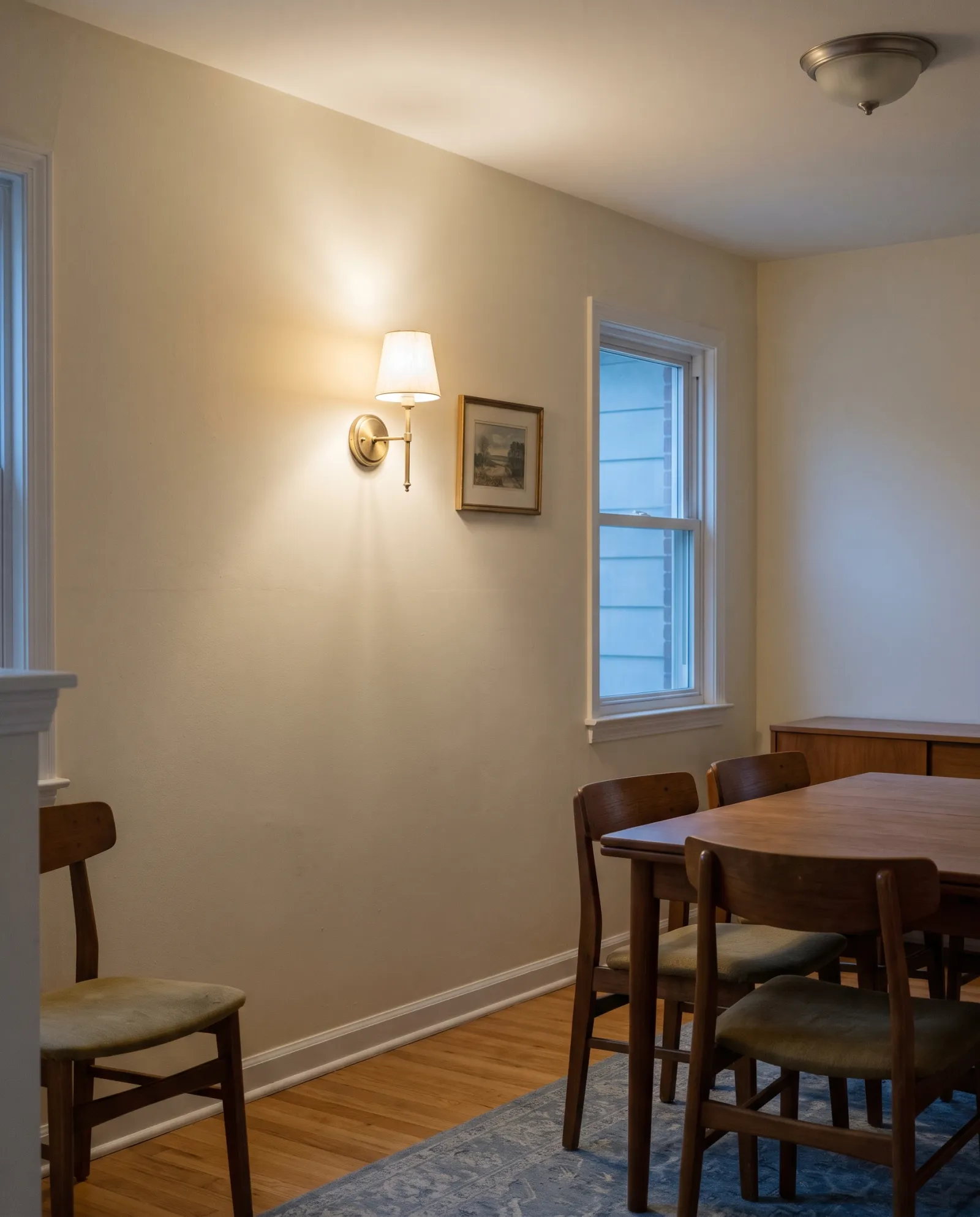
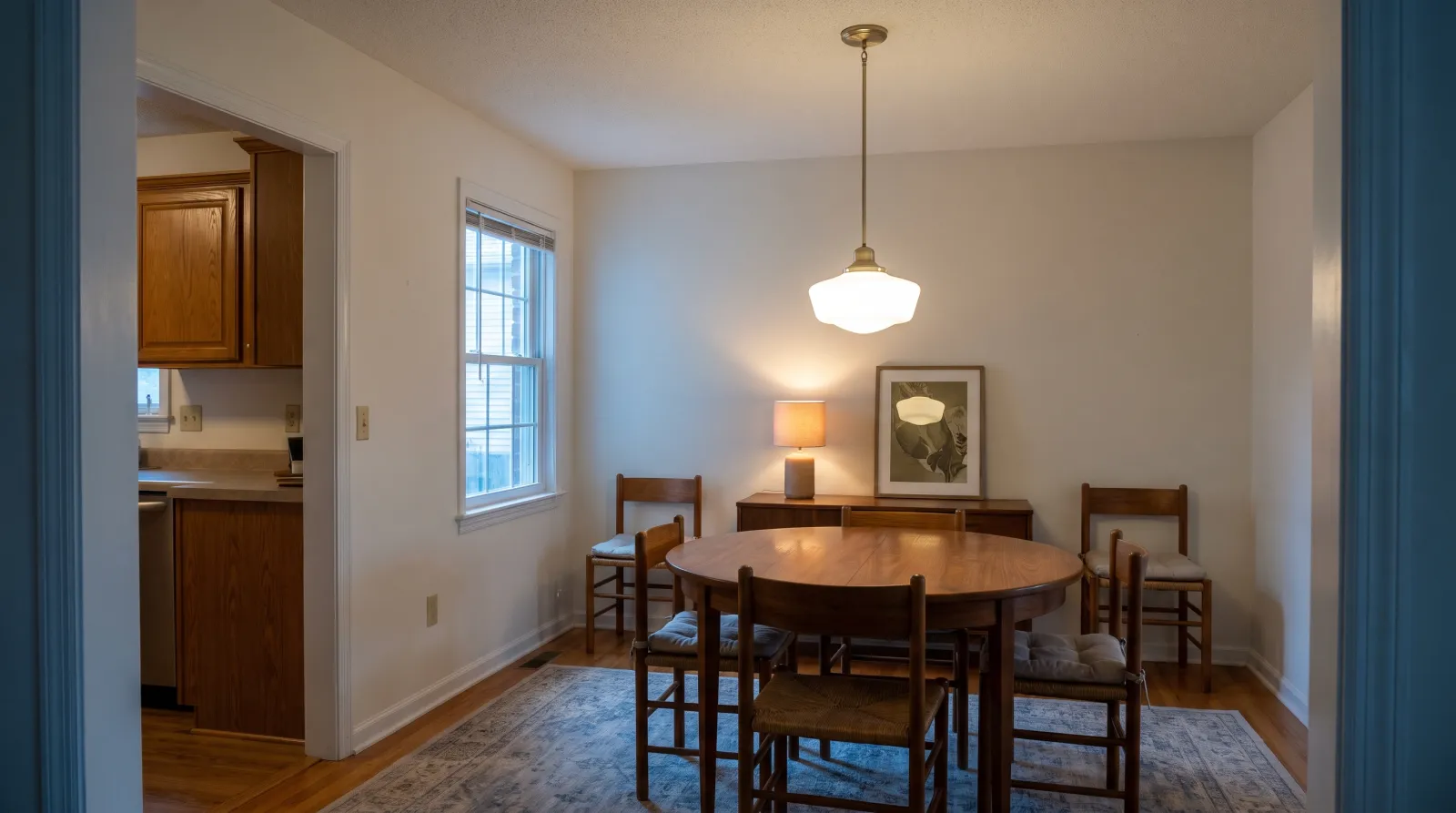
11. Add a Small Lamp to a Sideboard
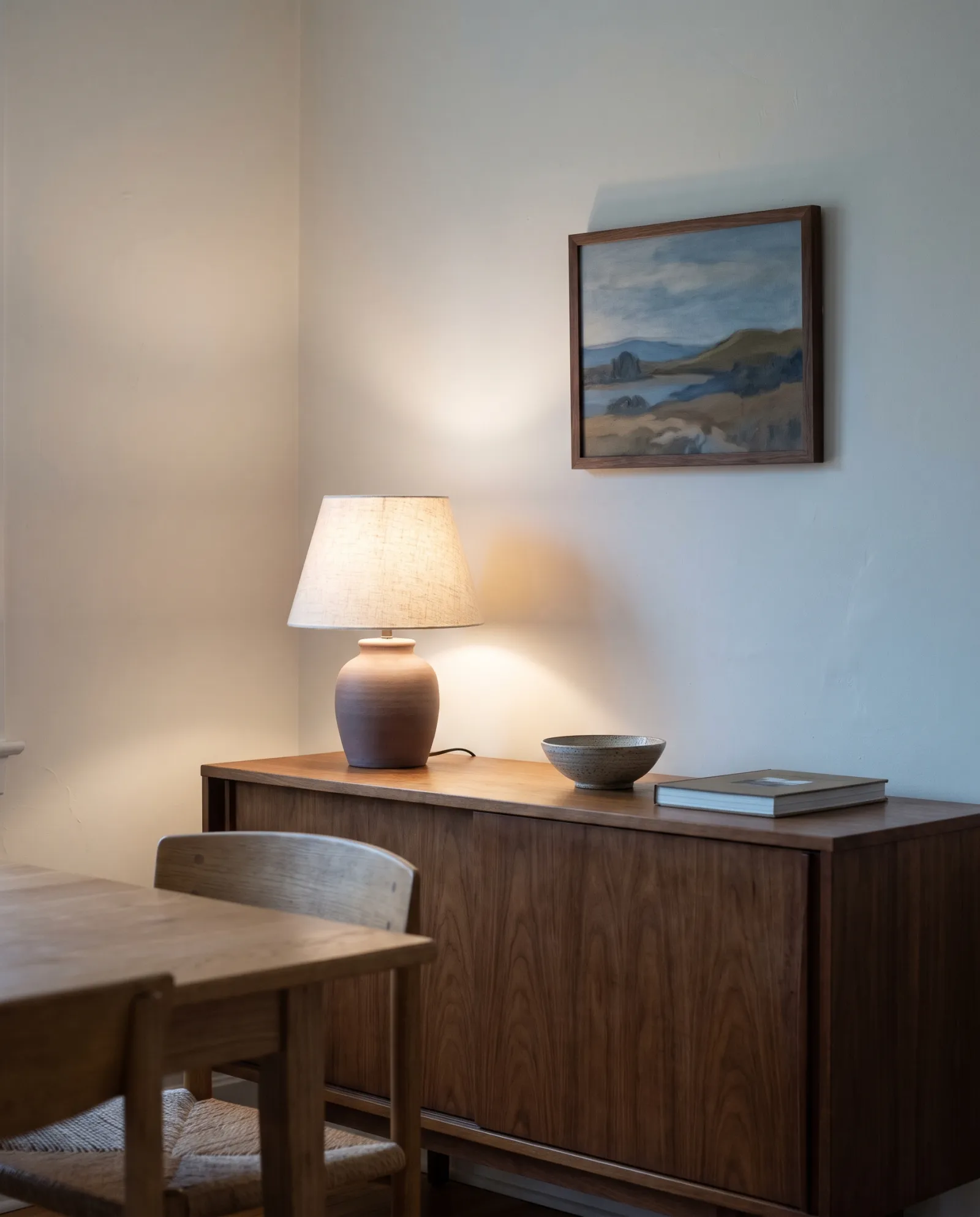
A table lamp can make a dining room feel less formal, especially when the main ceiling light is off or dimmed.
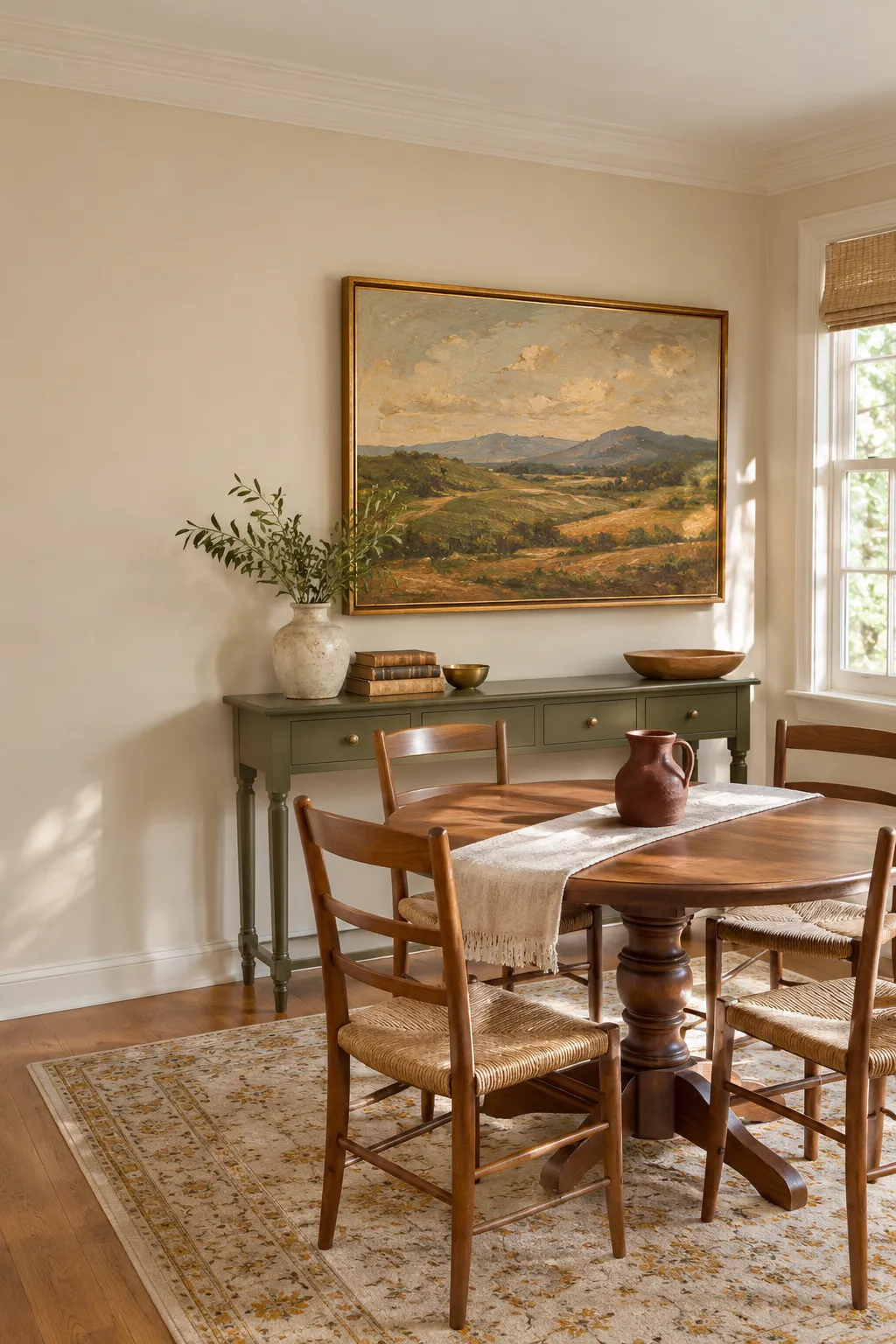
Try a compact ceramic lamp on a sturdy walnut sideboard, with a simple shade that spreads light softly across the wall.
Leave room for serving dishes and keep the lamp on a dry, stable surface away from spills and nearby heat sources. Power cords should not create a trip hazard or interfere with drawers and doors.
A muted clay lamp base or softly patterned shade can introduce a little color without adding more furniture.
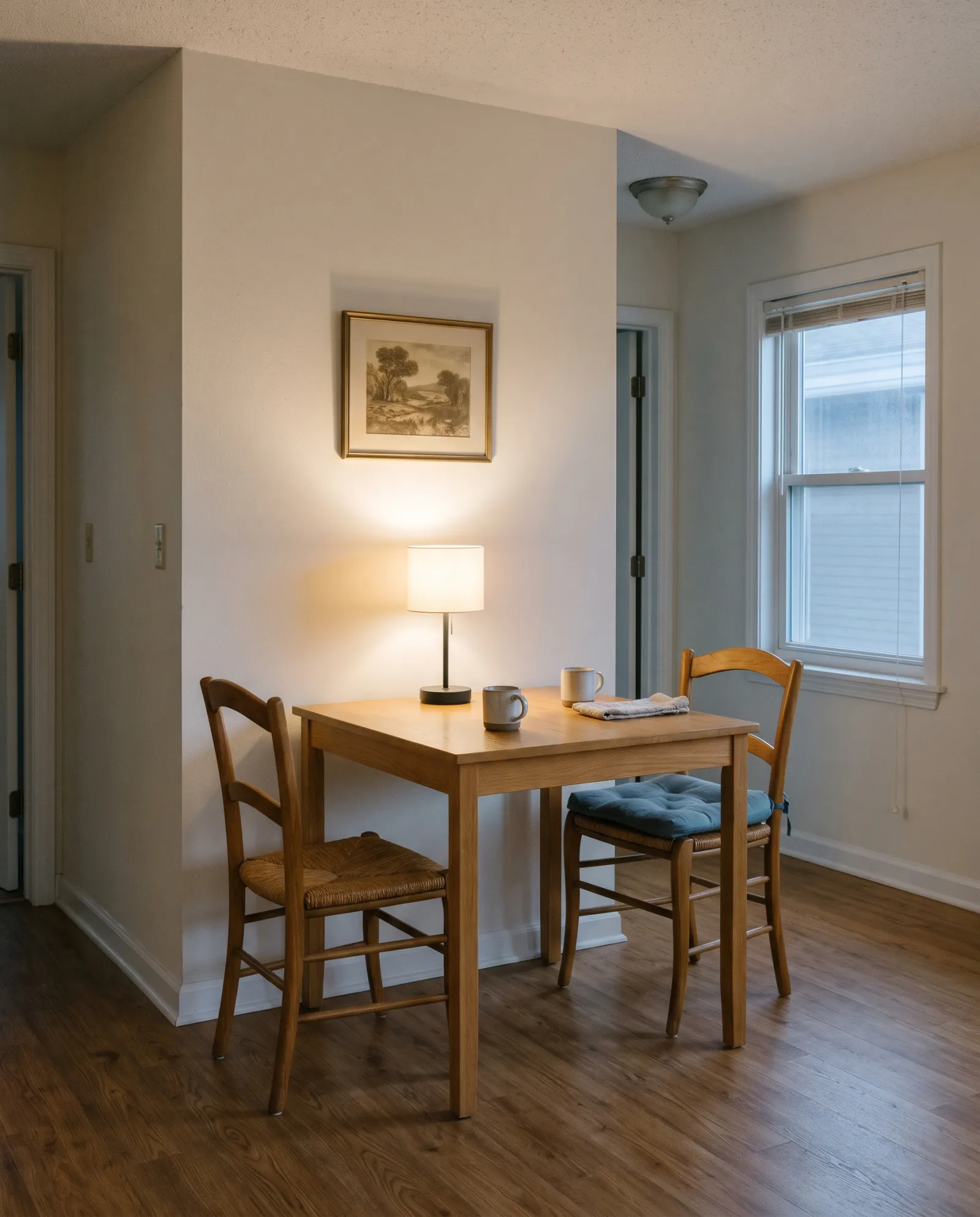
12. Use Portable Lighting in a Rental Dining Corner
Renters don't always have permission to replace ceiling fixtures, and some apartments have dining areas without dedicated overhead lighting.
A small rechargeable table lamp or an appropriately placed plug-in light may offer a practical alternative.
Choose a stable, purpose-made fixture that gives usable light, not just a decorative glow. Follow its installation and charging instructions, and keep cords away from walkways, water, and heat.
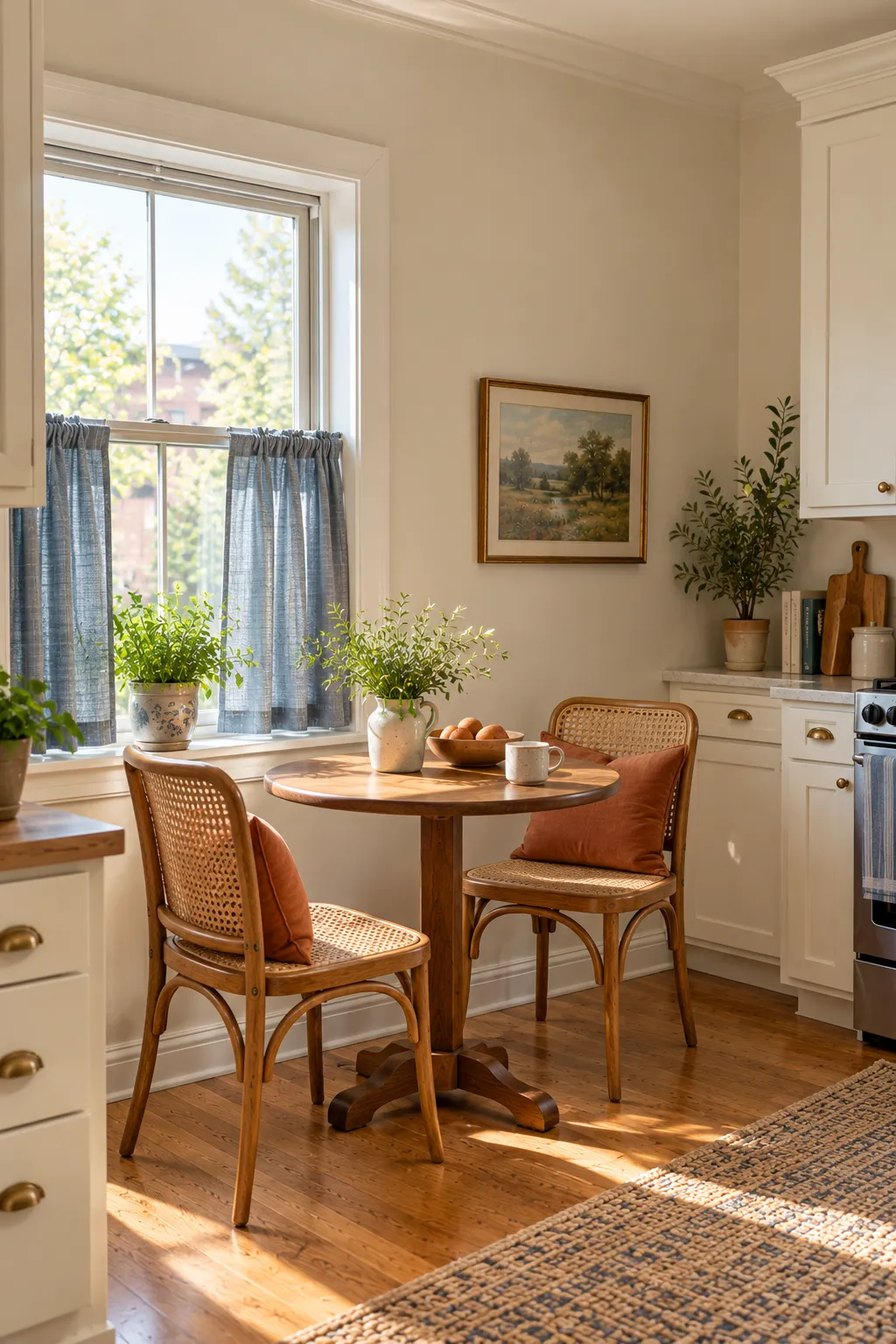
If your dining area is actually a compact kitchen corner, our breakfast nook ideas show several furniture arrangements where a modest portable light can complement existing kitchen lighting.
Make the Lighting Fit Your Layout and Daily Routine
The best position isn't always the geometric middle of the room. Think about where the table sits and what happens there throughout the day.
13. Center the Main Light Over the Dining Table
In a small room, the table sometimes needs to sit closer to a wall to keep the doorway clear. A ceiling light centered in the room may then look disconnected from the dining arrangement.
Visually relating the light to the table can help the area feel intentional, even when the furniture isn't perfectly centered between the walls.
If you are choosing a new ceiling fixture, discuss the table position and appropriate mounting with a qualified installer.
Don't move a functional table into an awkward position just to make it line up beneath an existing light. Our small dining room ideas cover furniture placement and walking space in more detail.
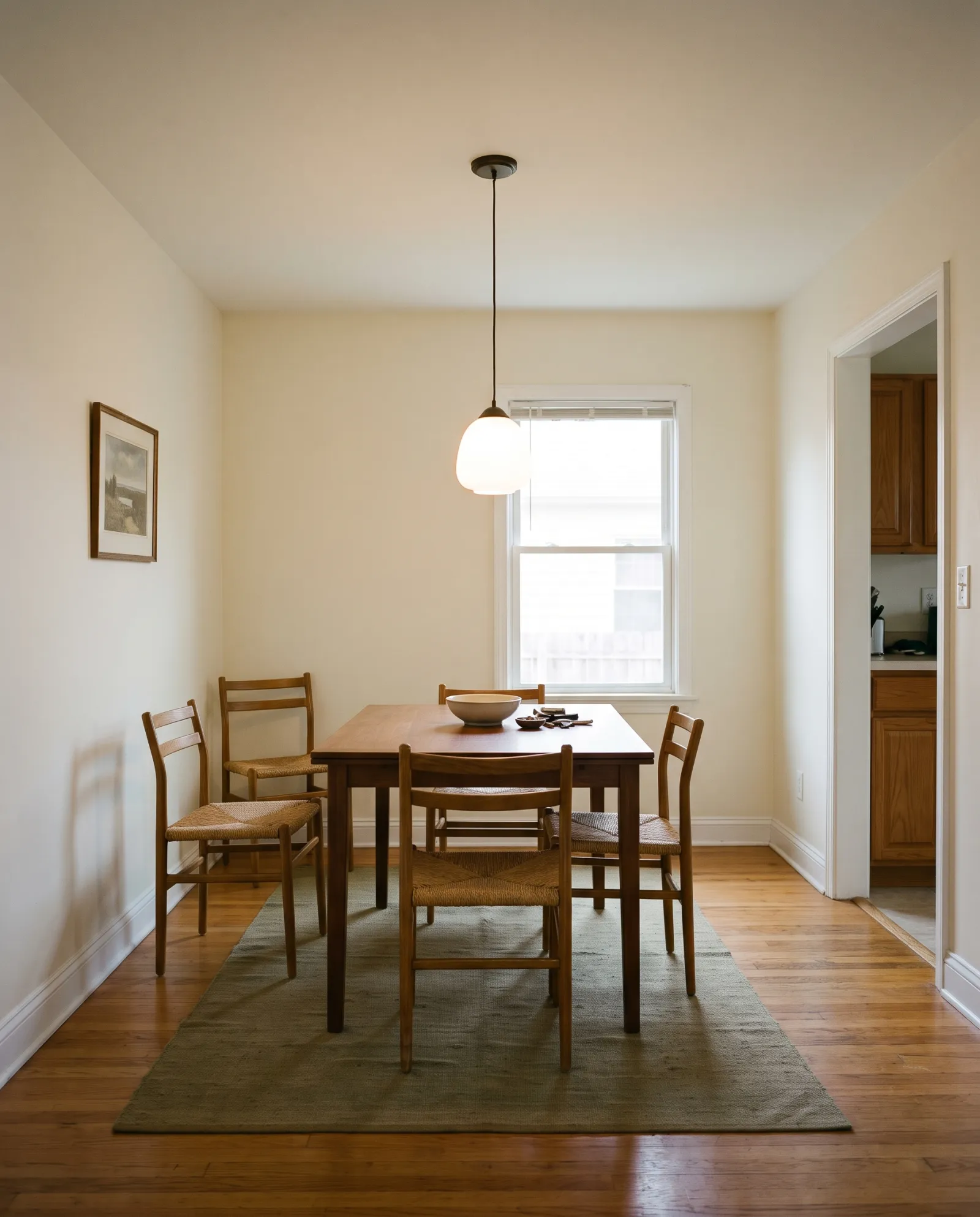
14. Choose Lighting That Works When the Table Becomes a Desk
A dining table may be used for meals in the evening and paperwork or homework during the afternoon.
That calls for lighting with more flexibility than a decorative fixture that barely illuminates the table.
Look for comfortable, even light across the working surface. When extra task light is needed, a suitable portable lamp can help without changing the room's main fixture.
Keep the fixture from reflecting directly into laptop screens or shining toward someone's face.
The useful test is simple: sit at the table at the times you normally use it. If you can read, eat, and talk comfortably without squinting or facing glare, the lighting is doing its job.