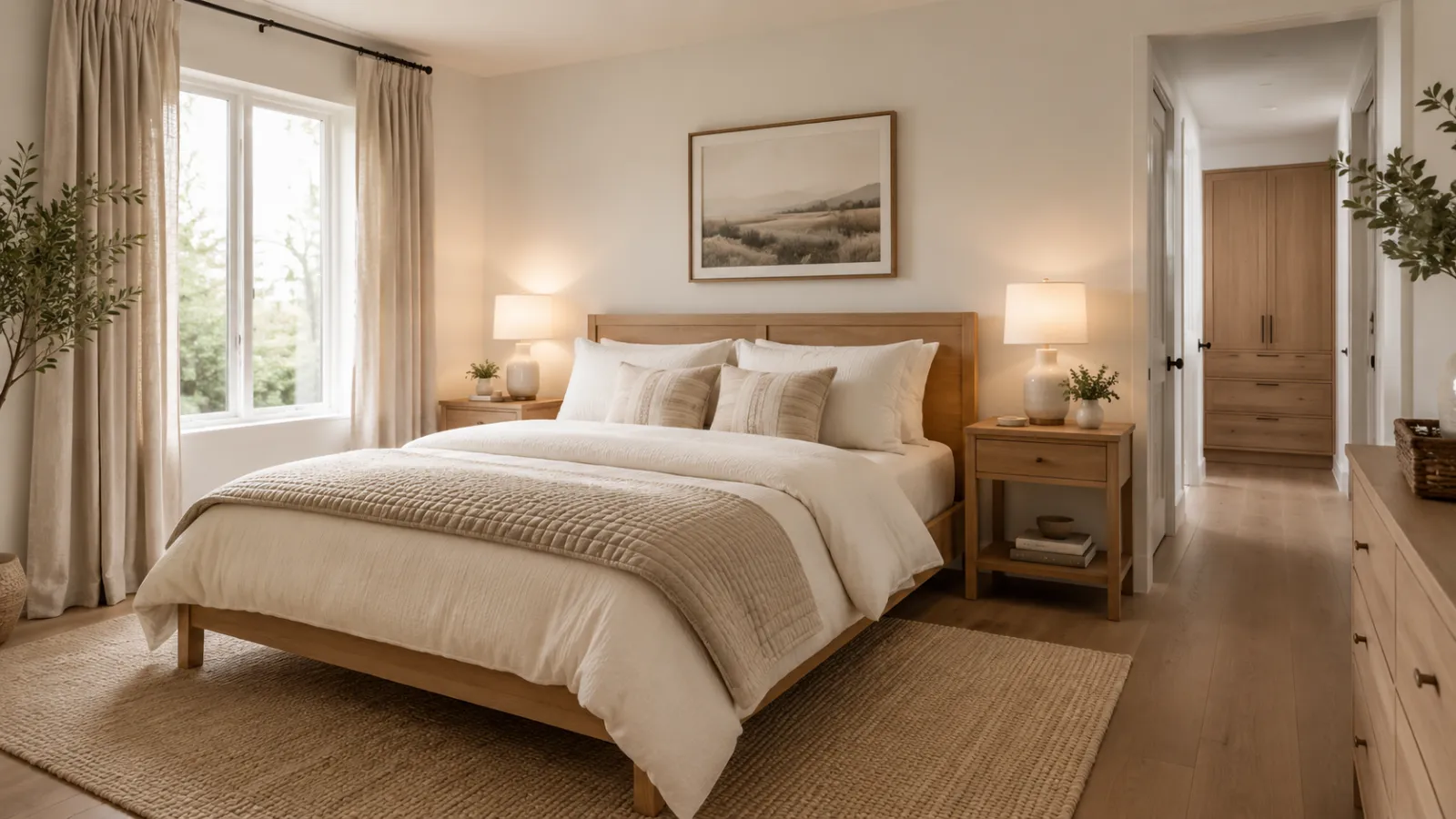
15 Bedroom Makeover Ideas for a Calm and Fresh Space
Bedroom makeover ideas do not need to begin with new furniture or a complete renovation. A calmer room often comes from improving the layout, removing visual clutter, updating the bed, and choosing lighting that feels softer at night.
The most successful makeovers solve practical problems before adding decorative details. A beautiful bedroom should still provide clear movement, useful storage, comfortable light, and an easy morning routine.
Begin by identifying what feels wrong now. Then choose a small number of changes that will make the greatest visual and functional difference.
For a complete foundation before planning the makeover, see our cozy bedroom ideas guide.
Bedroom Makeover Ideas at a Glance
A bedroom makeover feels more successful when layout, comfort, and storage are improved before decorative accessories are added. Start by clearing the room, measuring the main furniture, and choosing one calm visual direction.
Focus first on the changes with the greatest impact: better bed placement, fresh wall color, comfortable bedding, layered lighting, floor-length curtains, and one correctly scaled rug.
Smaller updates such as pillow covers, lampshades, artwork, hardware, and organized surfaces can finish the room without creating clutter. The final bedroom should feel fresher, easier to maintain, and more comfortable during both morning and evening routines.
1. Decide What the Bedroom Makeover Needs to Fix
A bedroom makeover should begin with a clear problem, not a shopping list.
Stand at the doorway and identify what makes the room feel unfinished or uncomfortable. The problem might be poor lighting, an awkward bed position, crowded surfaces, limited storage, mismatched colors, or bedding that no longer feels inviting.
Choose the three most important improvements.
For example:
- create a clearer walkway
- make the bed feel more comfortable
- reduce visible clutter
A focused makeover usually feels more complete than several unrelated decorative changes.
2. Photograph, Measure, and Plan Before Buying
Take photographs from the doorway, bed, window, and closet before moving anything.
Photos make it easier to notice visual clutter, uneven furniture placement, empty walls, and colors that interrupt the room’s mood.
Measure:
- the bed wall
- the main walkway
- the window
- the rug area
- nightstand space
- dresser and closet clearance
Mark new furniture dimensions on the floor with painter’s tape. Include the space needed to open drawers, doors, and under-bed storage.
This planning step can prevent purchases that technically fit but make the room harder to use.
3. Choose One Calm Makeover Direction
A makeover feels connected when the colors, materials, lighting, and furniture support one clear mood.
The direction might be:
- warm and neutral
- cozy minimalist
- soft cottage
- earthy and natural
- calm contemporary
- light and airy
Choose one main background color, one connected wood tone, and one or two restrained accents.
Cream, beige, soft taupe, muted green, clay, and dusty blue can create gentle contrast without making the room feel busy.
For complete palette inspiration, see our neutral bedroom ideas guide.
4. Improve the Layout Before Adding Decor
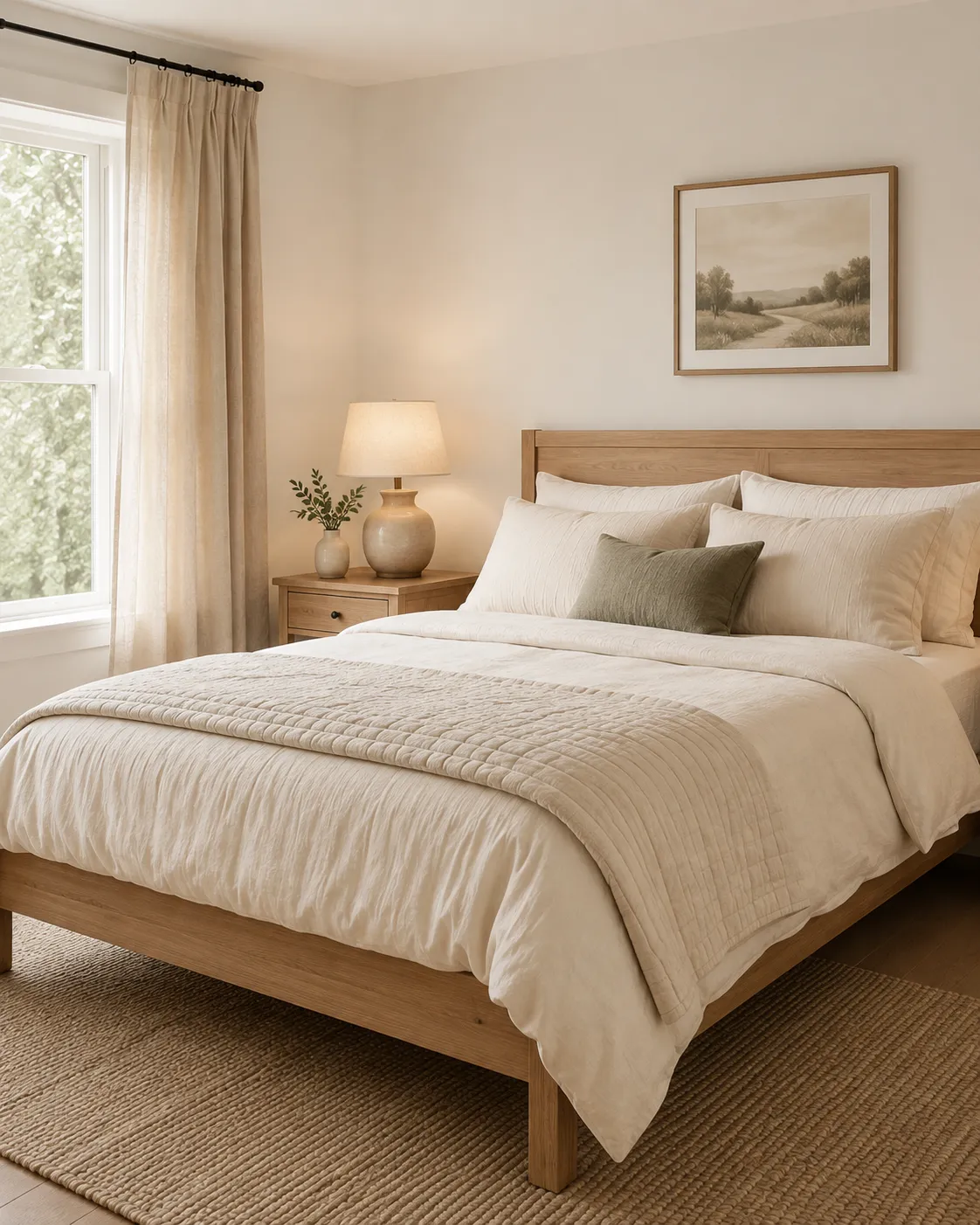
Moving the existing furniture may create a greater improvement than buying new accessories.
Begin with the bed because it usually controls the rest of the layout. Test it against the strongest uninterrupted wall, then check window access, closet doors, heating vents, outlets, and the main walking route.
Where space allows, preserve approximately 30–36 inches along the main route. A compact bedroom may provide less, but the path should remain clear and comfortable.
Remove furniture that blocks drawers, windows, or doors.
For more practical furniture-scaling and walkway guidance, see our small bedroom ideas guide.
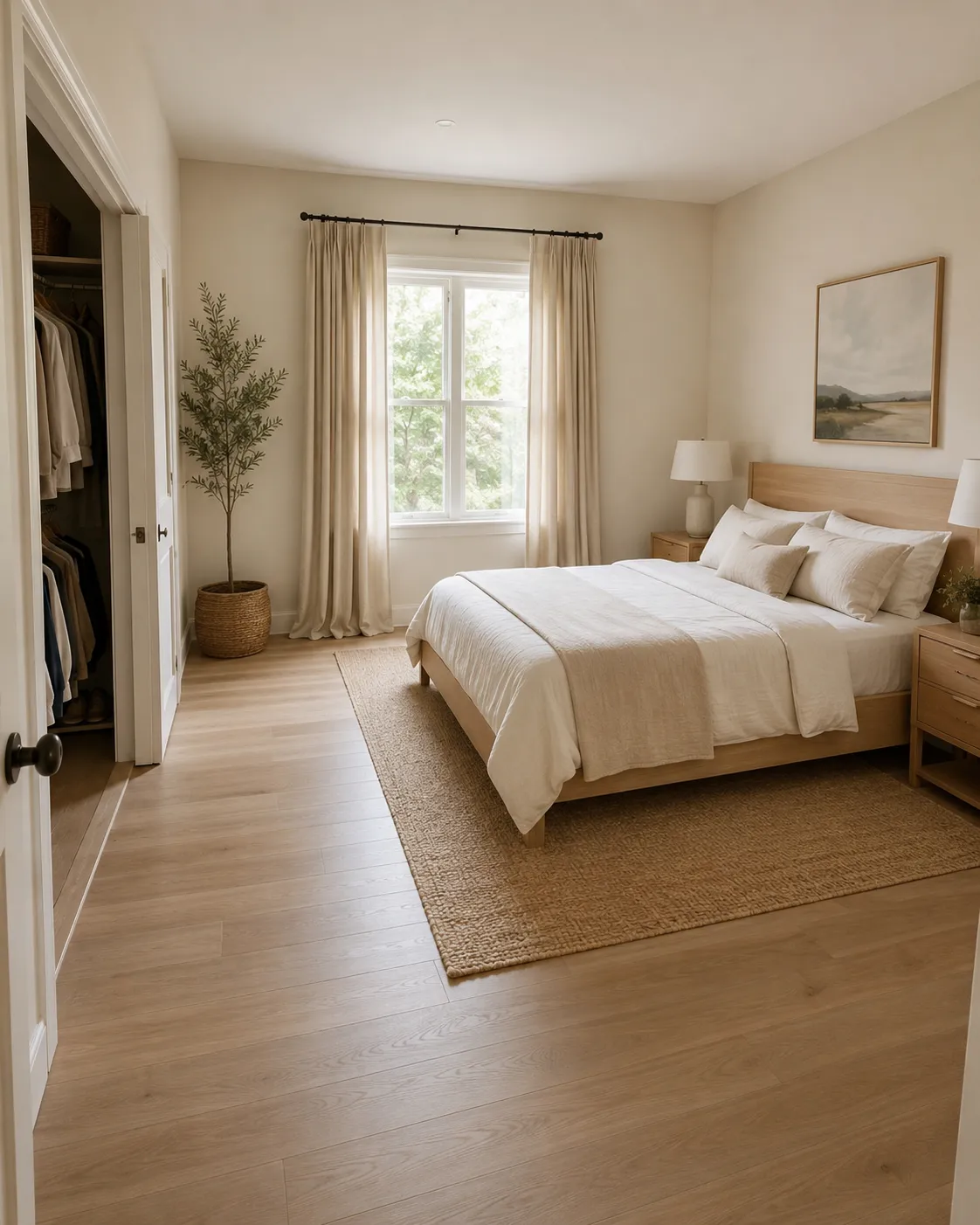
5. Refresh the Walls With a Softer Color
Fresh wall color can change the bedroom mood without replacing the main furniture.
Warm white, cream, pale beige, soft taupe, muted green, or a gentle blue can create a calm foundation. Test samples on more than one wall and view them during morning, afternoon, and evening light.
A full-room repaint is not always necessary. One carefully chosen focal wall or a refreshed headboard wall may be enough.
When painting, follow the product label and keep the room well ventilated. EPA guidance recommends increasing ventilation when using products that may release volatile organic compounds.
In U.S. homes built before 1978, disturbing old painted surfaces can also create lead-contaminated dust. If the project involves sanding, scraping, or other renovation work, review the EPA’s lead-safe renovation guidance before starting.
6. Make the Bed the Main Transformation
The bed creates the strongest before-and-after difference in most bedroom makeovers.
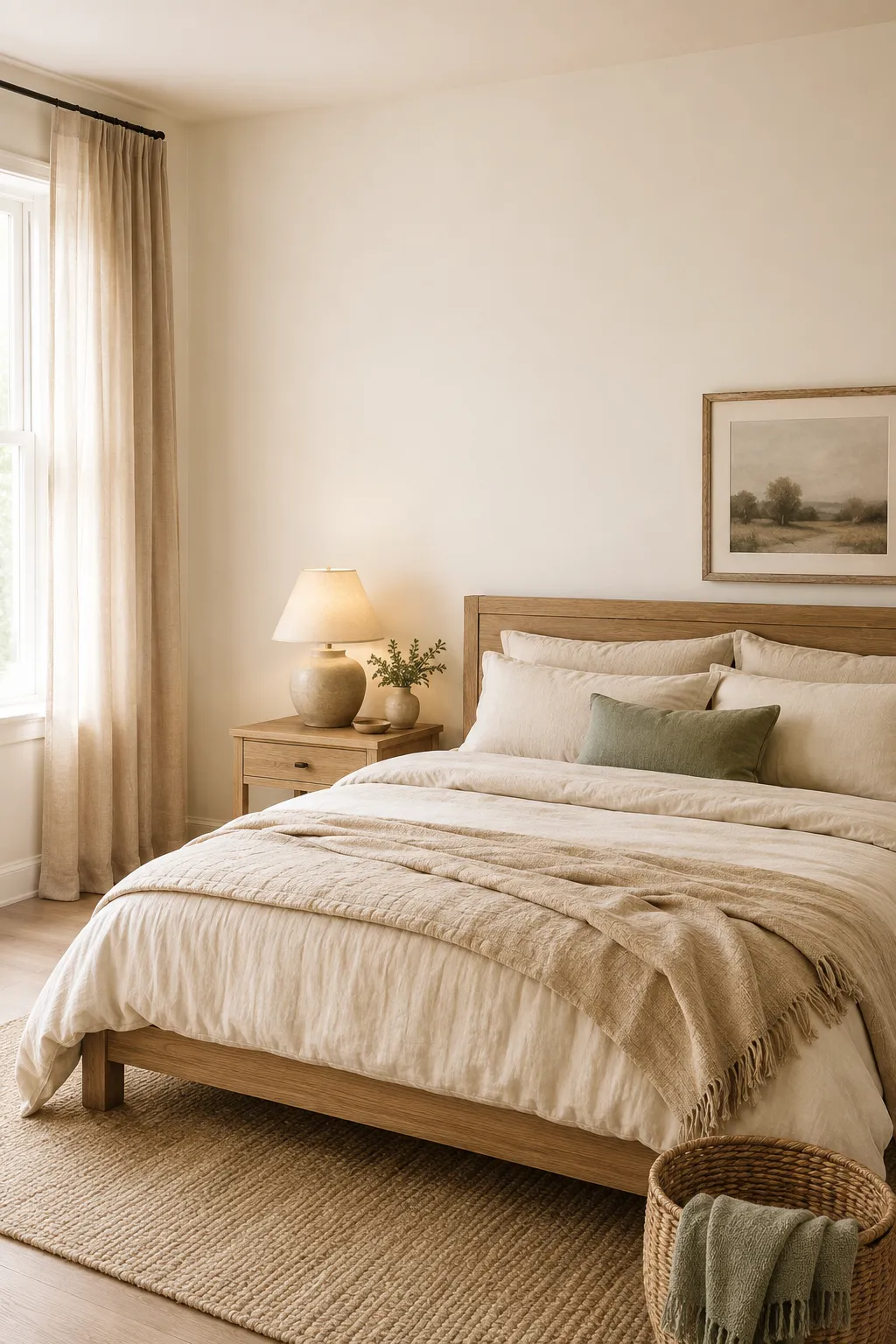
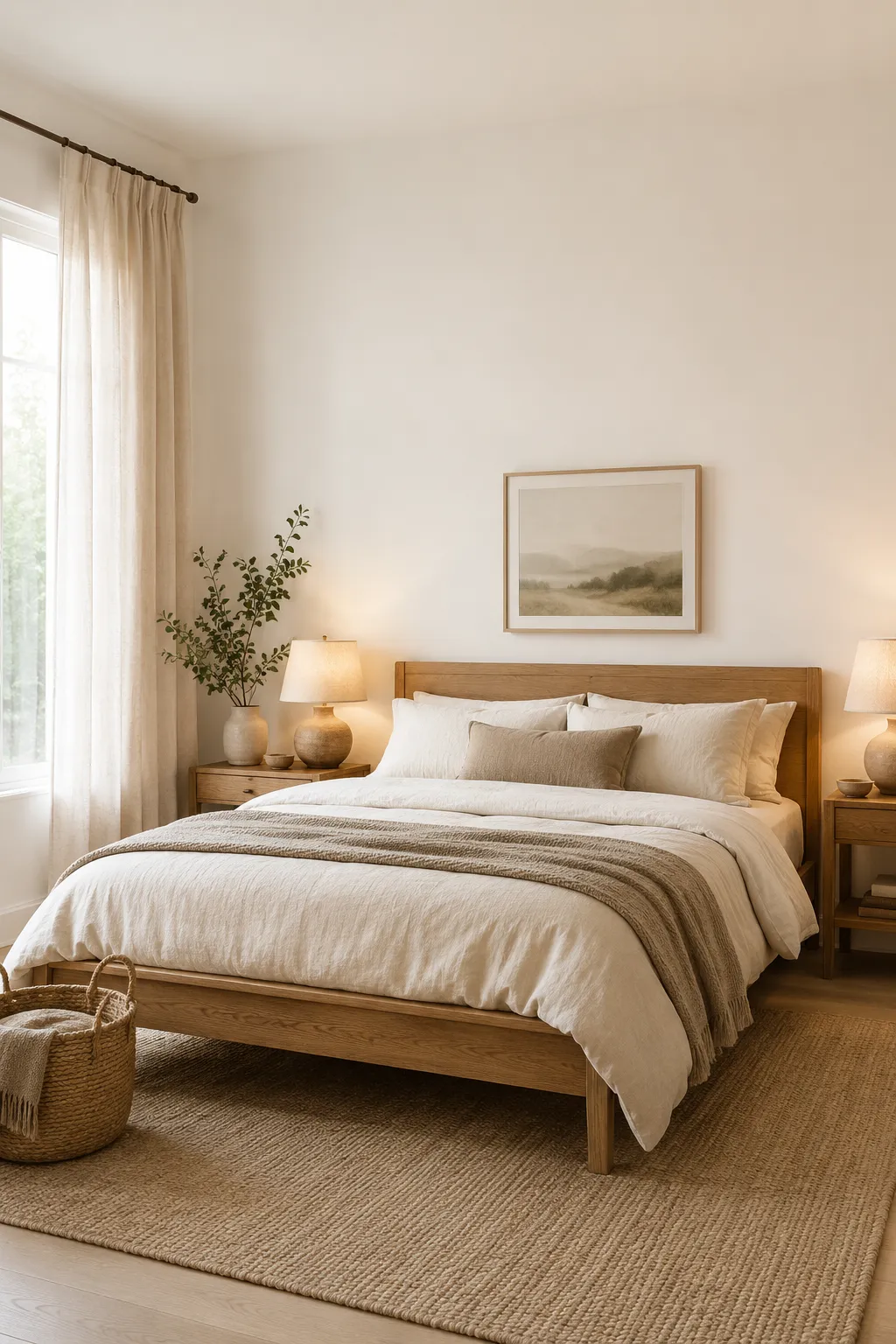
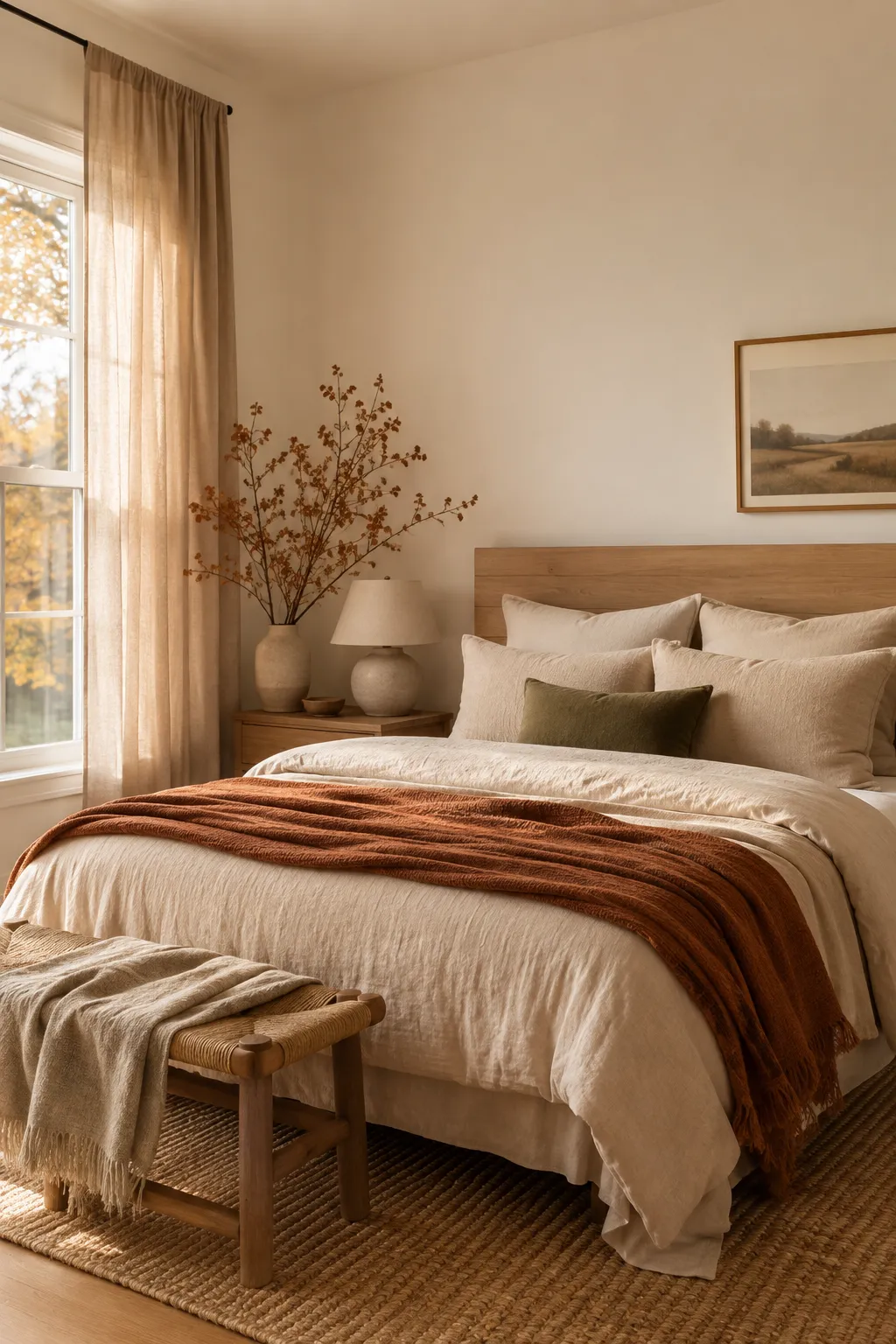
Begin with comfortable sheets, then add a duvet, quilt, or coverlet in a color that connects with the walls and rug. One folded throw and a small number of accent pillows can add texture without creating a complicated arrangement.
A new headboard is optional. An existing wood or upholstered bed may look completely different after the bedding and wall color are updated.
Keep the strongest visual layers near the bed and allow surrounding surfaces to remain quieter.
For more detailed bedding, rug, curtain, and nightstand styling, see our bedroom decor ideas guide.

7. Replace Harsh Lighting With Softer Layers
Lighting can change how every color and material appears.
Instead of depending on one ceiling fixture, combine it with bedside lamps, plug-in sconces, a compact floor lamp, or gentle accent lighting.
Warm-white bulbs around 2700K–3000K generally create a warmer appearance than higher Kelvin options. ENERGY STAR describes lower values in this range as producing warmer-toned white light. For a simple reference, see the ENERGY STAR guide to light color temperature.
For more lighting and texture inspiration, see our warm living room ideas guide.
8. Hang Curtains Higher and Wider
Curtains can make the window feel larger and the wall appear taller.
Mount the rod close to the ceiling or approximately 4–6 inches above the window frame where the room allows. Extend it beyond the frame so the open panels cover less of the glass.
Choose floor-length curtains rather than panels that stop awkwardly above the floor.
Linen or linen-look fabric can add movement and texture. Add blackout lining when nighttime light control is important, but keep the visible fabric connected to the room palette.
Before buying, measure the complete rod width and the distance from the mounting point to the floor.
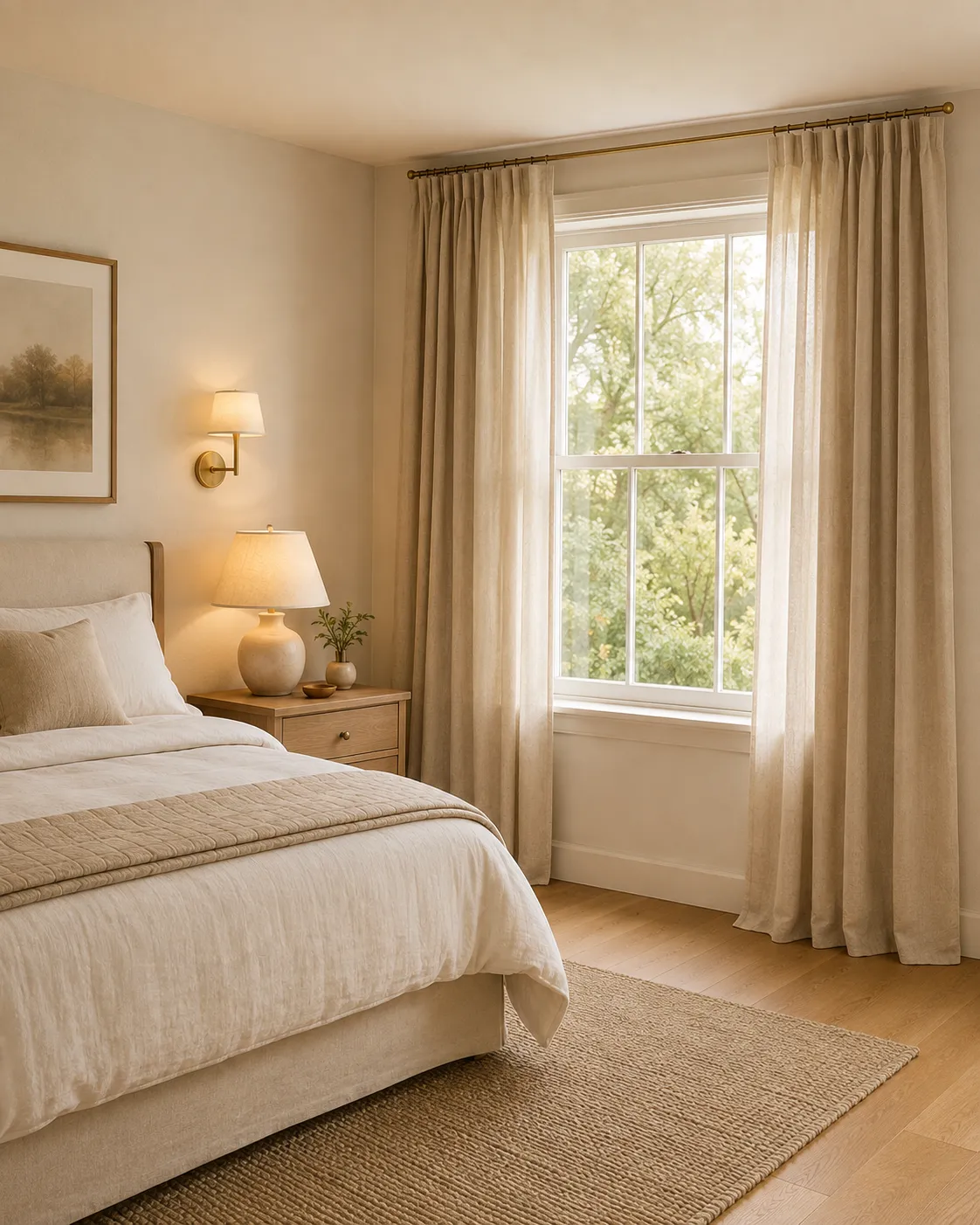
9. Add One Rug That Fits the New Layout
A rug can visually connect the bed, nightstands, and surrounding floor.
Choose a size that extends beyond the visible sides and foot of the bed. As a practical starting point, aim for approximately 18–24 inches of visible rug where the room allows.
In a narrow room, two coordinated bedside runners may provide warmth without covering the whole floor.
Do not choose the rug only from an online product image. Mark the dimensions on the floor first and view them from the doorway.
For more ways to create warmth without filling every surface, see our cozy bedroom decor ideas guide.
10. Update Nightstands Without Replacing Everything
Nightstands often need editing more than replacement.
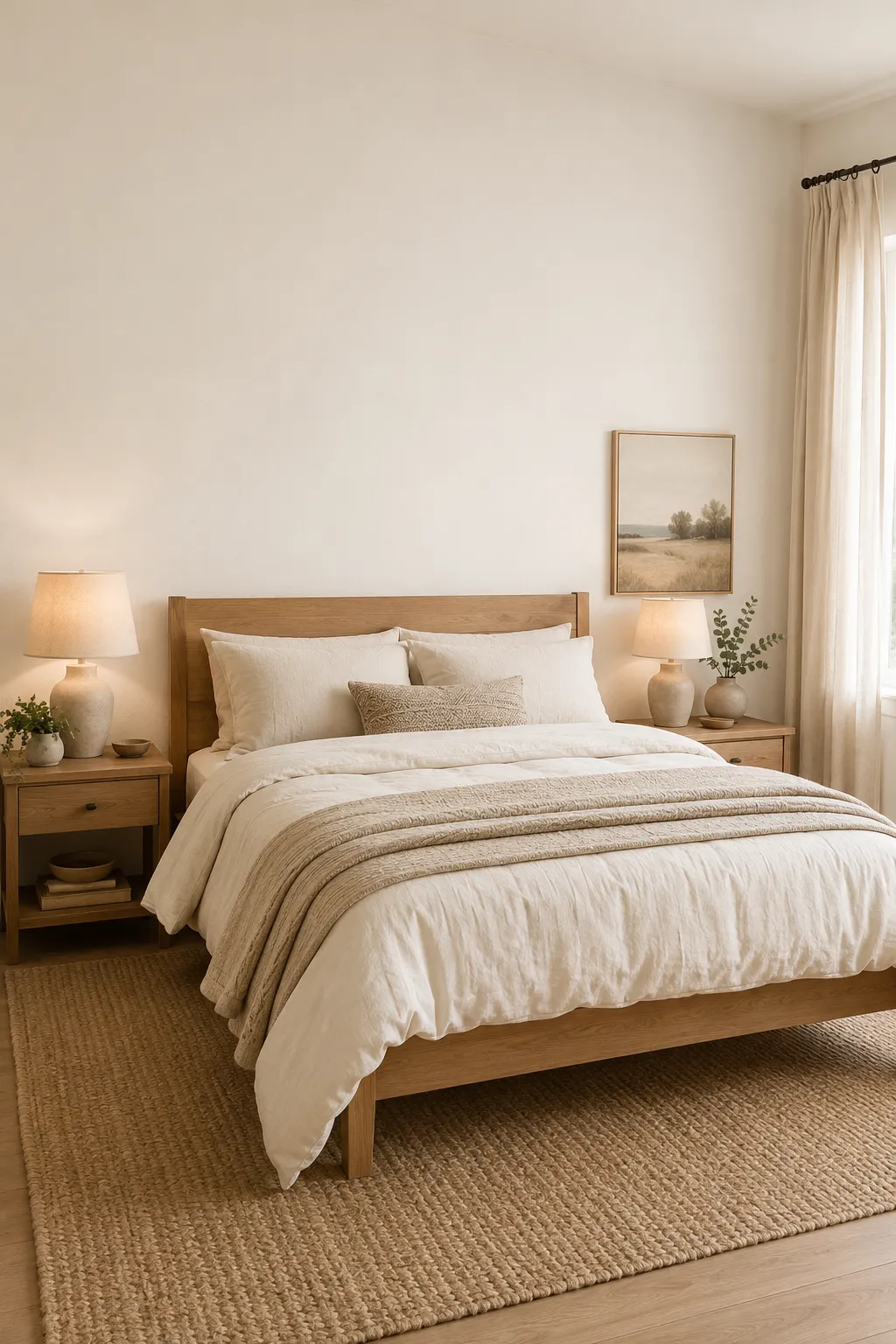
Remove unused objects and leave room for a lamp, water, phone, book, or another daily essential. A small tray or dish can contain loose items.
A simple nightstand formula is:
- one useful lamp
- one everyday item
- one personal detail
An existing piece may feel completely different after cleaning, minor repair, new hardware, or a carefully painted finish.
In a narrow bedroom, a floating drawer, slim cabinet, stool, or compact wall shelf can preserve more floor space.
11. Improve Storage Before Styling the Surfaces
A makeover will not remain calm if everyday belongings have nowhere to go.
Sort items into four groups:
- keep in the bedroom
- move elsewhere
- donate
- discard responsibly
Use closed drawers, under-bed containers, closet organizers, and baskets for items that are difficult to display neatly.
Frequently used belongings should remain easy to reach. Seasonal bedding and less-used clothing can be stored deeper inside the closet or under the bed.
Secure tall dressers and other unstable storage furniture appropriately. CPSC’s Anchor It program provides official guidance for reducing furniture and television tip-over risks.
For a more restrained storage direction, see our minimalist bedroom ideas guide.
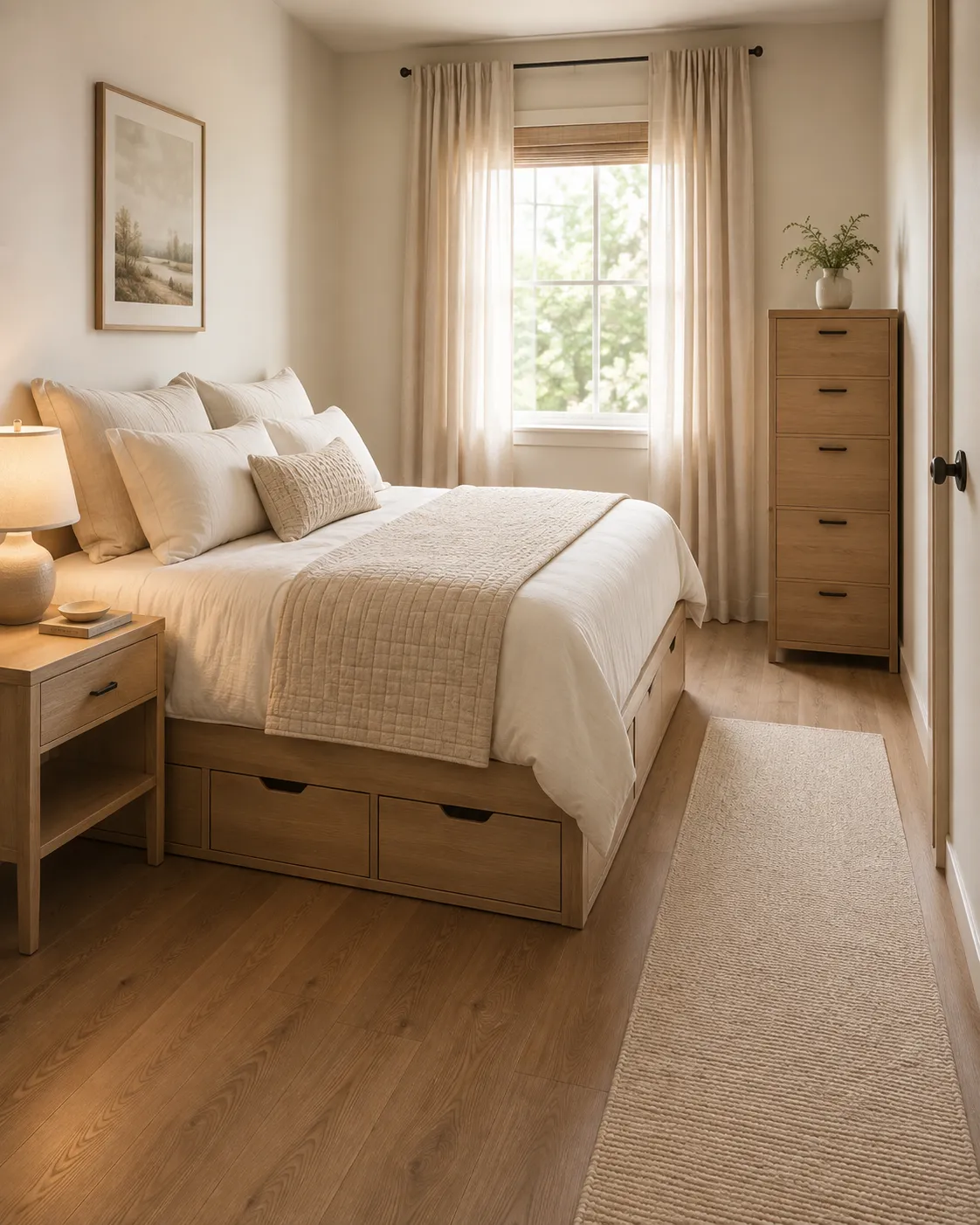
12. Create One Clear Focal Wall
A bedroom makeover does not need decorative treatment on every wall.
Choose one area to carry the strongest visual detail. This might be:
- the bed and headboard wall
- one large artwork
- a pair of related prints
- a restrained paint accent
- a textile wall piece
- a simple mirror arrangement
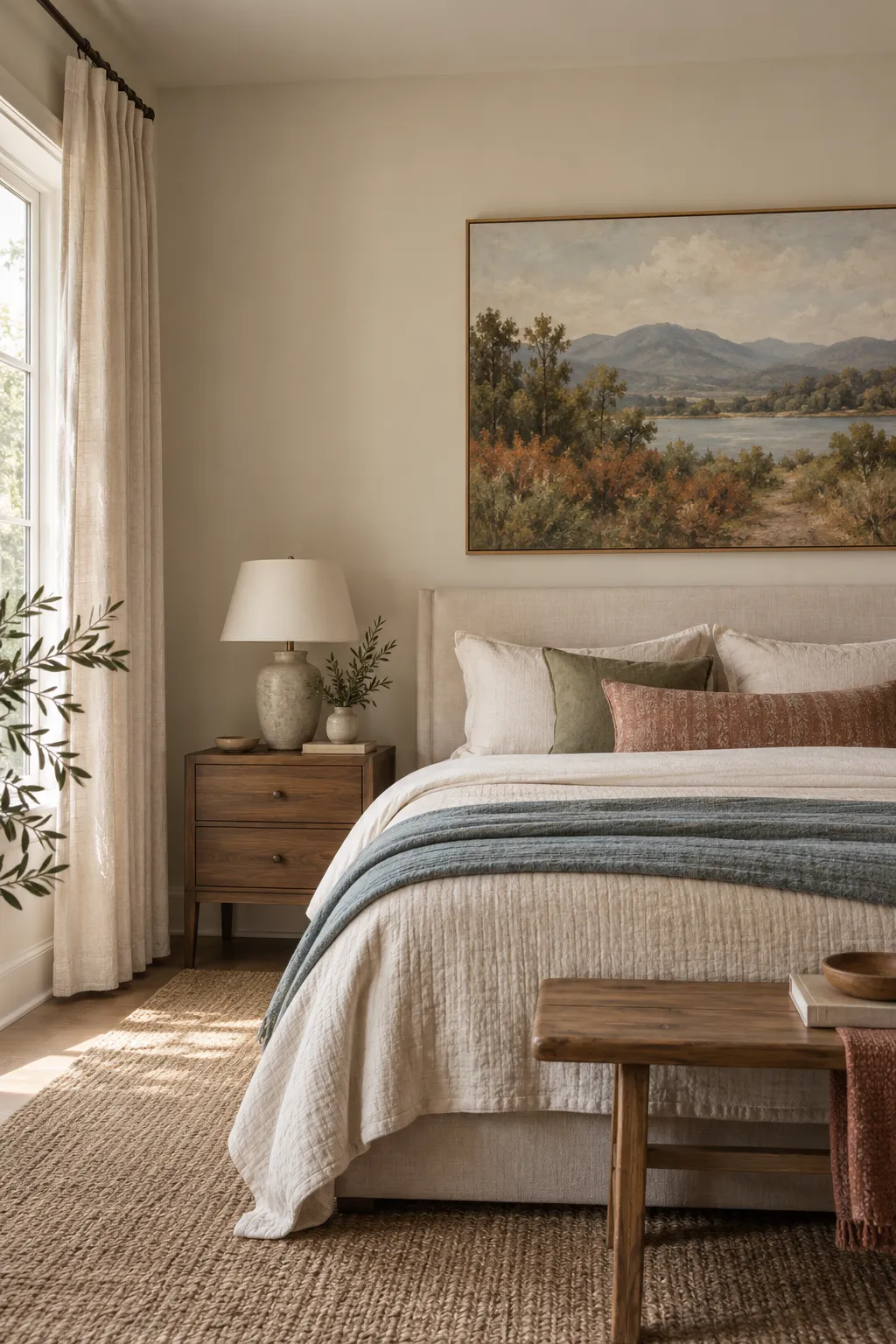
Artwork above the bed often feels connected when it sits approximately 6–10 inches above the headboard, depending on the frame and room proportions.
Keep the arrangement narrower than the bed or headboard so it feels visually supported.
For more balanced artwork and mirror arrangements, see our minimalist wall decor ideas guide.
13. Use Renter-Friendly Changes in an Apartment Bedroom
A rental bedroom can feel refreshed without permanent construction.
Use:
- plug-in sconces
- removable hooks
- leaning framed artwork
- washable rugs
- freestanding storage
- replaceable pillow covers
- renter-approved curtain hardware
Prioritize items that can move to another home later.
Changing bedding, curtains, lighting, and one large artwork often creates a stronger result than adding many temporary accessories.
For more rental-safe furniture, storage, and decor solutions, see our apartment bedroom ideas guide.
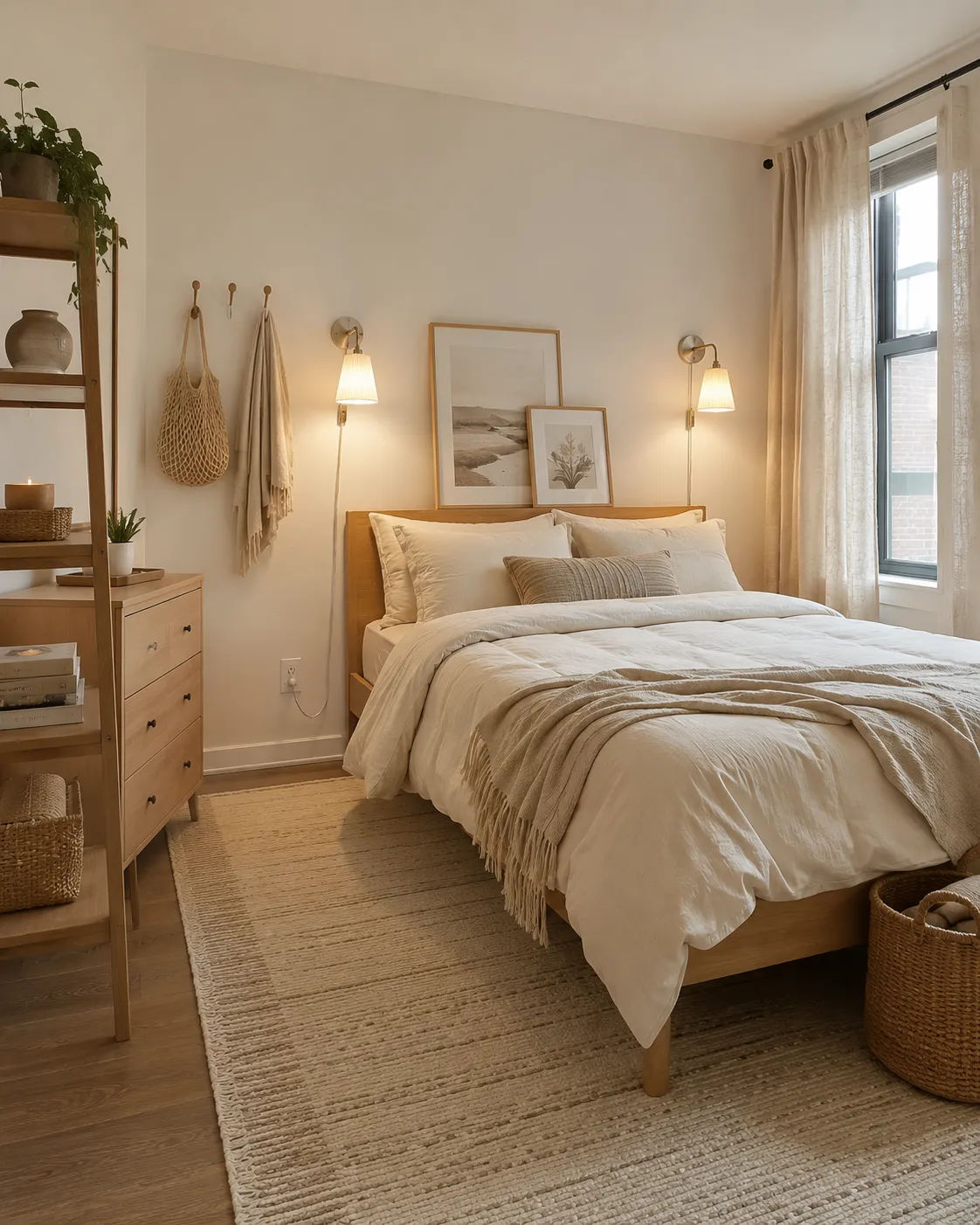
14. Plan a One-Day or Weekend Makeover
Not every bedroom refresh needs several weeks.
One-Day Refresh
Focus on:
- clearing visible clutter
- washing or replacing bedding
- rearranging furniture
- styling nightstands
- changing pillow covers
- cleaning windows and mirrors
Weekend Makeover
Add:
- repainting one or more walls
- installing curtains
- changing lighting
- organizing the closet
- adding a rug
- hanging artwork
Complete the practical work first. Styling becomes easier when painting, furniture movement, cleaning, and storage are finished.
Seasonal details can be added later without changing the main makeover. For more gentle updates throughout the year, browse our seasonal decor ideas.
15. Finish the Makeover With a Careful Edit
The final step is not adding more decor. It is deciding what the room no longer needs.
Stand at the doorway and look for:
- crowded surfaces
- blocked pathways
- unrelated colors
- artwork placed too high
- visible storage that feels messy
- accessories without a clear purpose
Remove a few items and photograph the room again. Compare the new images with the original photographs.
The bedroom should feel fresher because the strongest features are easier to notice.
For a more mood-focused finishing direction, see our cozy bedroom aesthetic ideas guide.
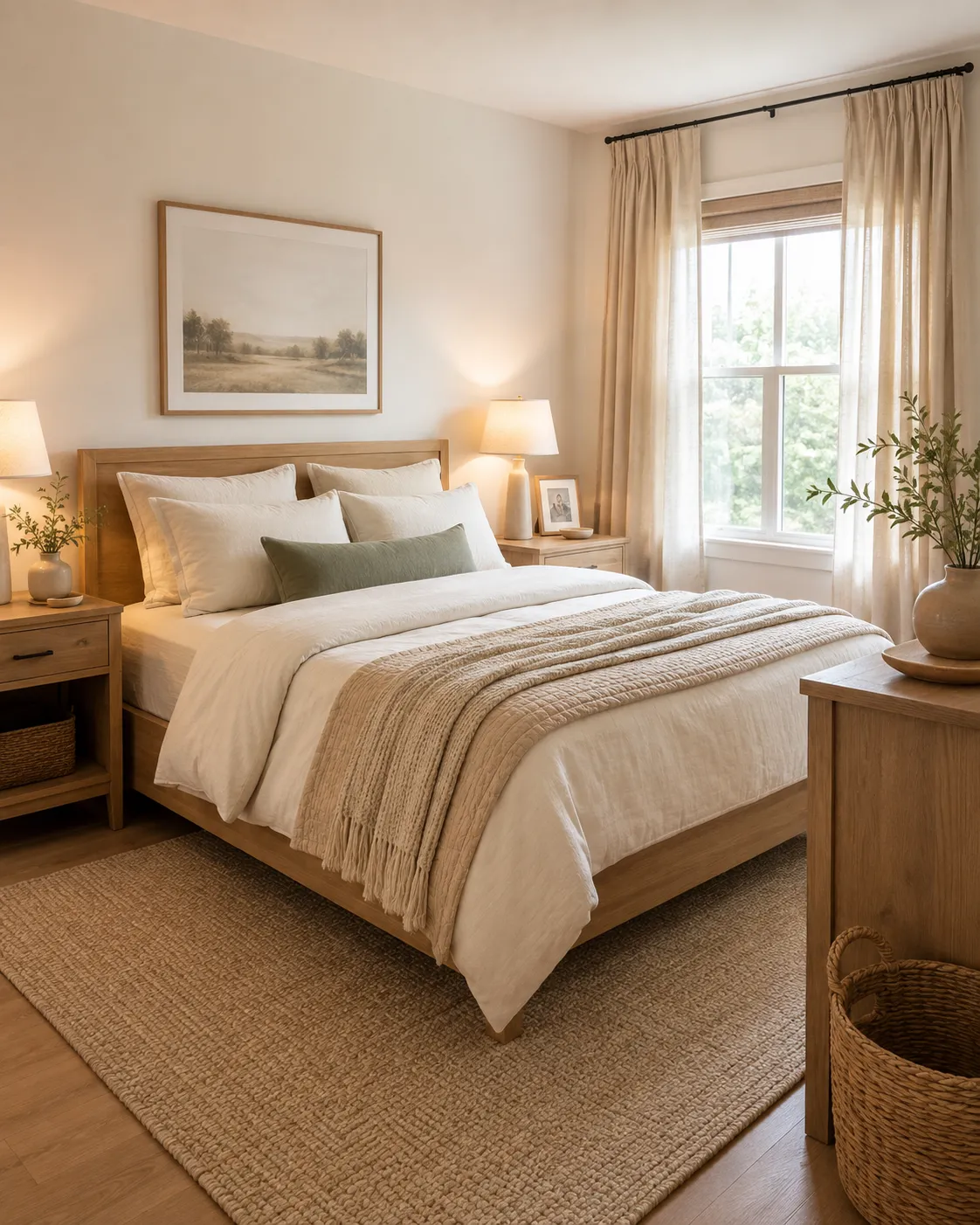
Common Bedroom Makeover Mistakes
Shopping Before Making a Plan
Unplanned purchases can create mismatched colors, incorrect sizes, and unnecessary clutter.
Measure the room and decide which problems the makeover needs to solve first.
Changing Decor but Ignoring the Layout
New pillows and artwork cannot fix a bed that blocks the main walkway or a dresser that interrupts the closet.
Improve furniture placement before styling.
Choosing Paint From a Small Screen
Digital colors can look different on an actual wall.
Test physical samples and view them under the bedroom’s real daylight and evening lighting.
Buying an Undersized Rug
A small rug may look separate from the bed rather than grounding it.
Mark the dimensions on the floor before choosing the final size.
Depending on One Ceiling Light
One overhead fixture can make a freshly decorated room feel flat.
Add lighting near the bed and other activity areas.
Replacing Furniture That Only Needs Editing
A dresser or nightstand may need new hardware, repair, cleaning, or better surface styling rather than replacement.
Reuse strong existing pieces when practical.
Creating Too Many Focal Points
Bold bedding, a busy rug, a dramatic wall, and several large artworks can compete for attention.
Choose one dominant feature and let the other elements support it.
Forgetting Everyday Storage
A room may look polished on the first day but quickly become cluttered when clothing and personal items lack practical storage.
Plan storage before arranging decorative accessories.
Completing Every Change at Once
A rushed makeover can lead to unnecessary purchases.
Finish the largest changes, live with the room briefly, and add final details only where they are still needed.
The Calm Bedroom Makeover Formula
A calm bedroom makeover brings together six practical steps:
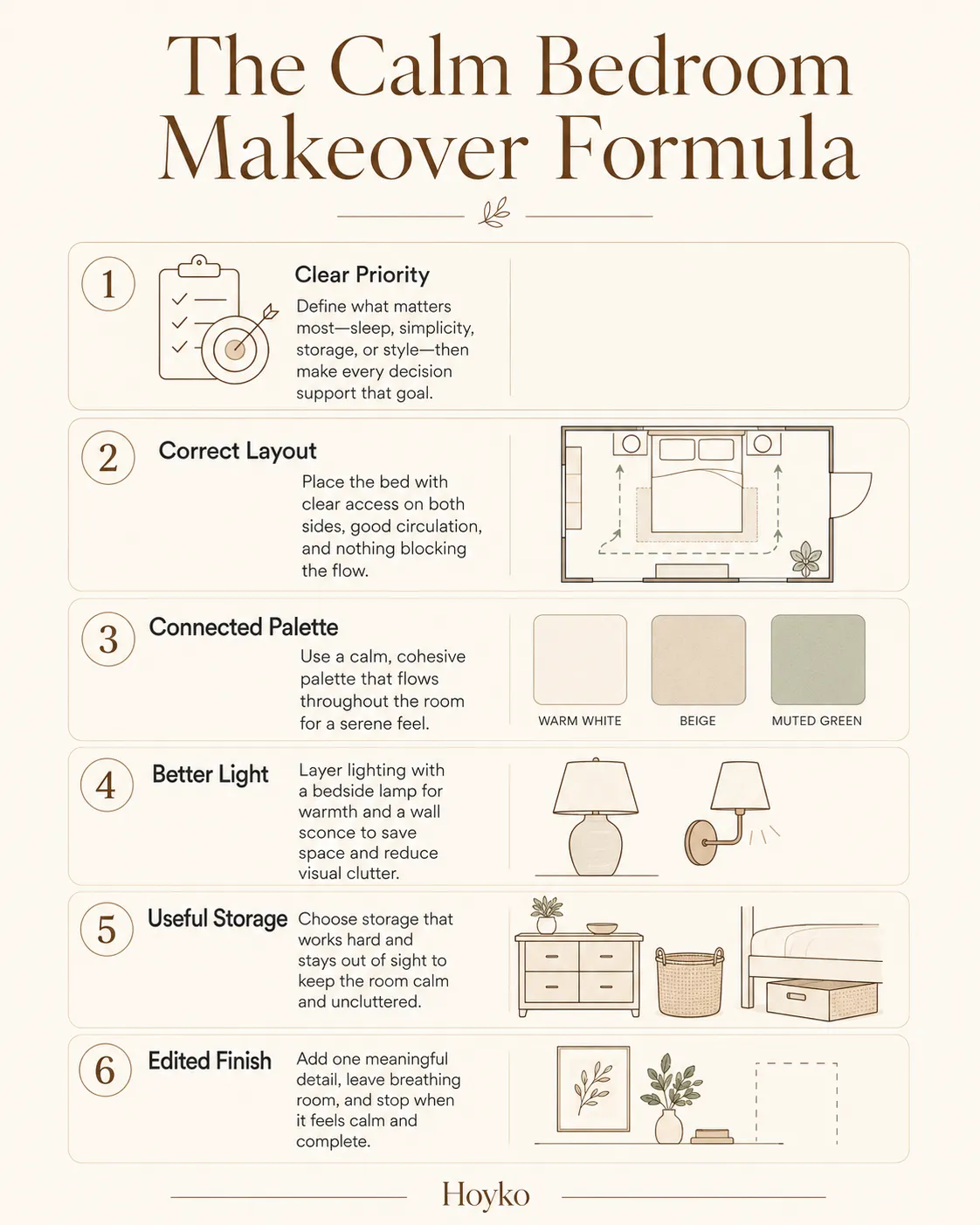
- Clear Priority
- Correct Layout
- Connected Palette
- Better Light
- Useful Storage
- Edited Finish
The formula keeps the makeover focused on comfort and function instead of filling the room with new objects.
Bedroom Makeover Checklist
- Photograph the existing room.
- Identify the three main problems.
- Measure the bed wall and walkway.
- Check door, drawer, and closet clearance.
- Choose one visual mood.
- Build a connected color palette.
- Test paint in different light.
- Improve furniture placement.
- Refresh the bed first.
- Add more than one light source.
- Hang curtains high and wide.
- Measure the rug area.
- Edit nightstand surfaces.
- Organize closed storage.
- Secure tall furniture appropriately.
- Choose one focal wall.
- Add renter-friendly changes when needed.
- Complete practical work before styling.
- Photograph the finished room.
- Remove anything that makes the space feel crowded.
A successful makeover should improve how the room works as clearly as it improves how the room looks.
FAQ About Bedroom Makeover Ideas
What should be changed first in a bedroom makeover?
Start with the room’s main functional problem. Improve the bed position, walkway, lighting, or storage before buying decorative accessories.
How can a bedroom be made over without buying new furniture?
Rearrange the layout, clean and repair existing furniture, update bedding, change lampshades or hardware, repaint the walls, and remove unnecessary objects.
Can a bedroom makeover be completed in one weekend?
A focused weekend makeover can include painting, furniture rearrangement, curtain installation, lighting changes, closet organization, and new bedding. Larger repairs or custom work may require more time.
What colors work well for a calm bedroom makeover?
Warm white, cream, beige, soft taupe, muted green, dusty blue, clay, and natural wood tones create a calm base. Use enough contrast to keep the room from appearing flat.
How can a bedroom makeover look more expensive on a budget?
Use fewer, better-scaled elements. Floor-length curtains, layered lighting, coordinated bedding, one substantial artwork, and a correctly sized rug often create more impact than several small accessories.
How can renters update a bedroom?
Use washable rugs, plug-in lighting, removable hooks, leaning artwork, freestanding storage, new bedding, pillow covers, and renter-approved curtain hardware.
Final Thoughts on Bedroom Makeover Ideas
The best bedroom makeover ideas improve comfort, function, and visual calm at the same time.
Begin with photographs, measurements, and one clear priority. Correct the layout, refresh the bed, improve the lighting, and organize storage before adding decorative details.
A successful transformation does not need to replace everything. Better scale, connected colors, thoughtful editing, and a few practical upgrades can make the room feel noticeably fresher.
The finished bedroom should look inviting, support everyday routines, and remain simple enough to reset without constant work.
Save this makeover checklist for your next bedroom refresh, then make the highest-impact changes first.