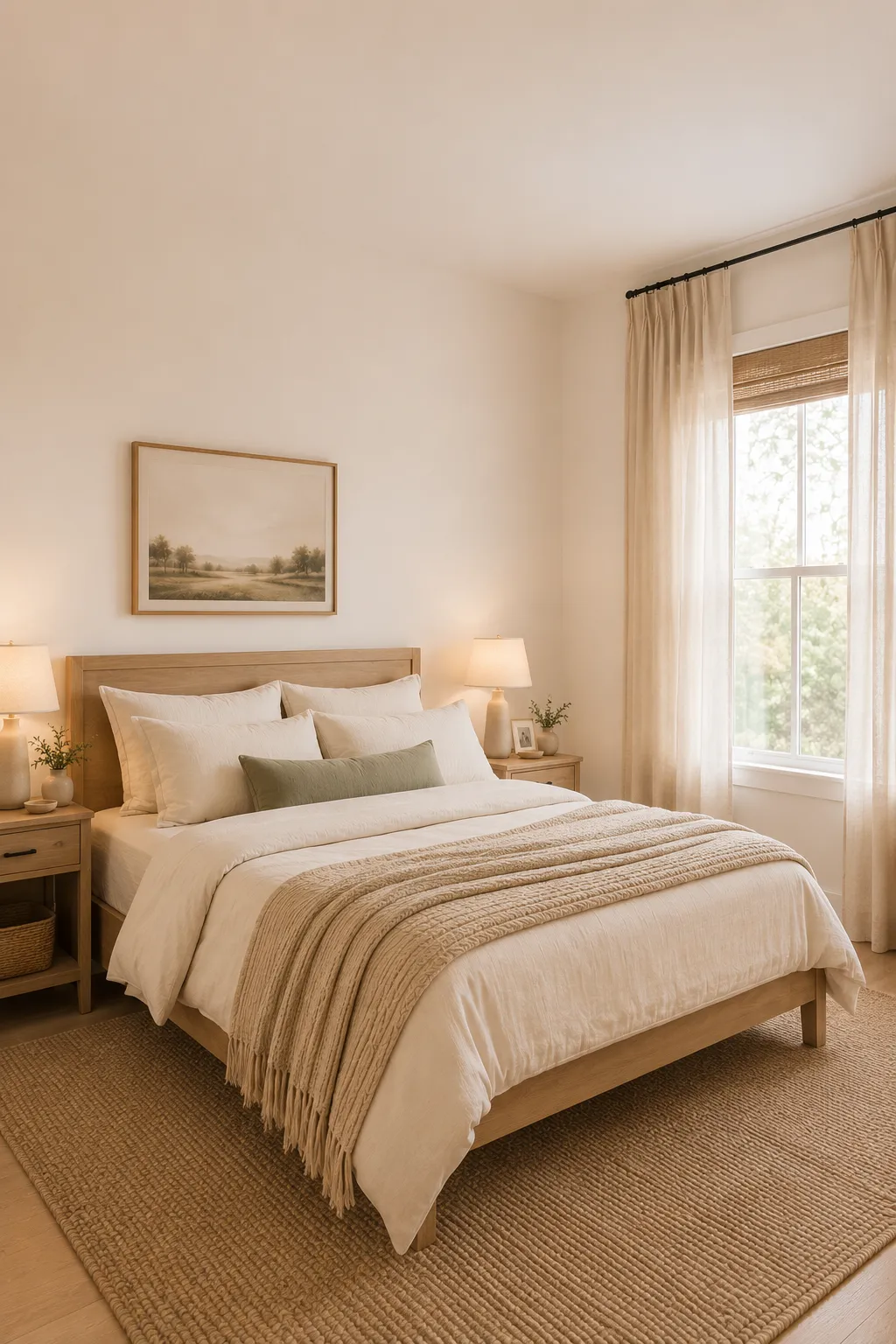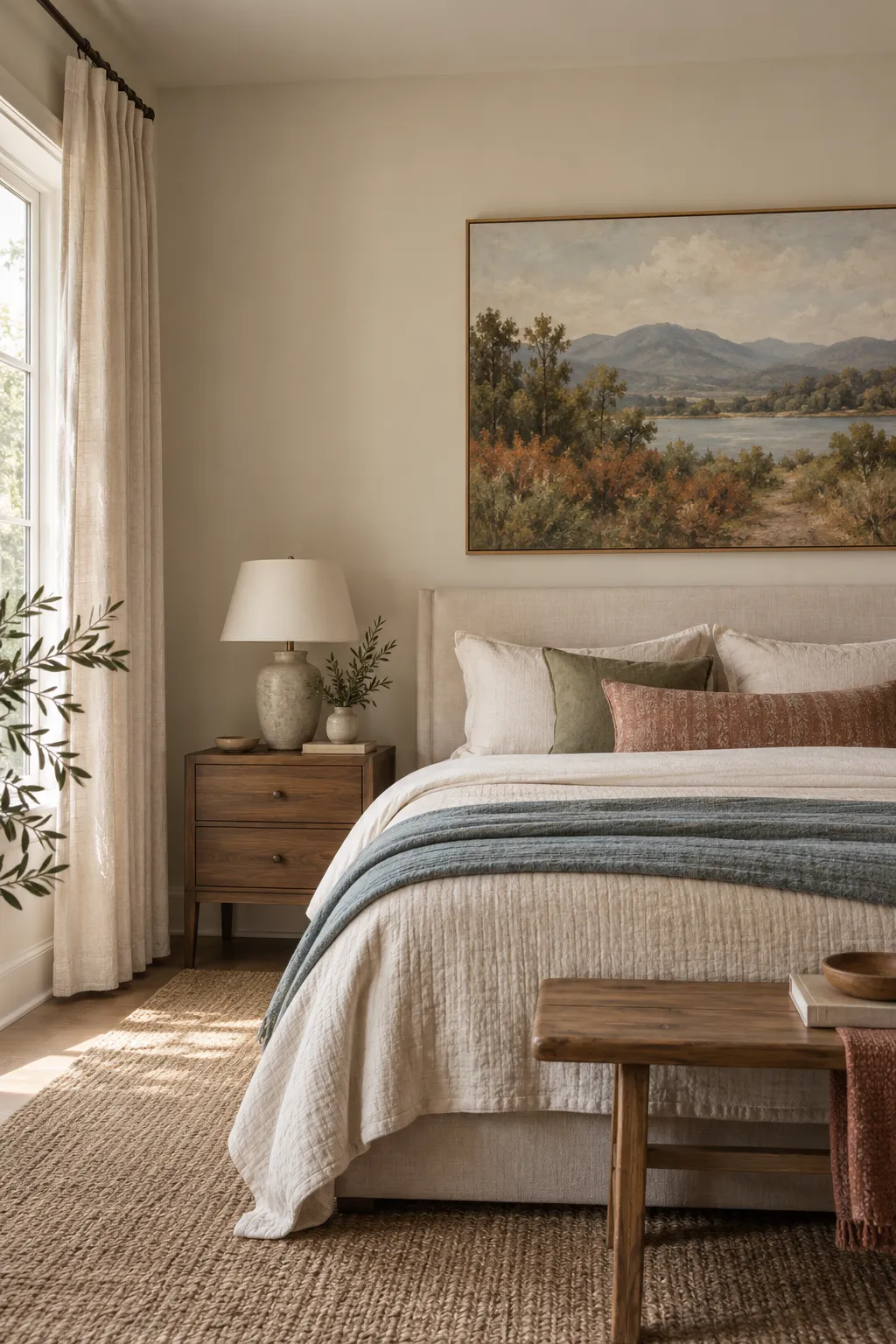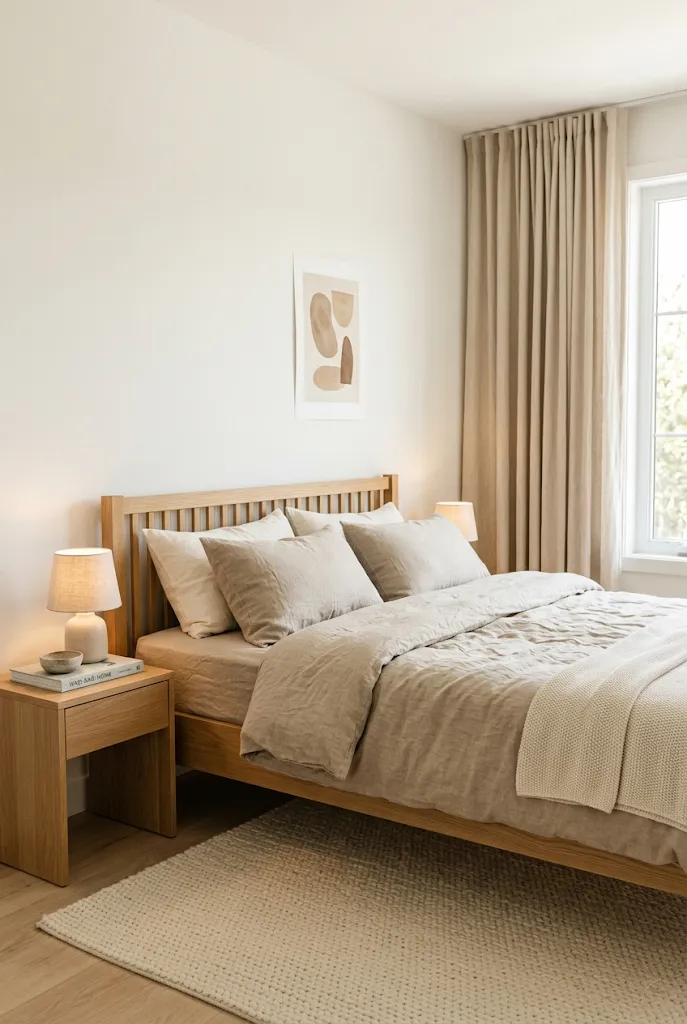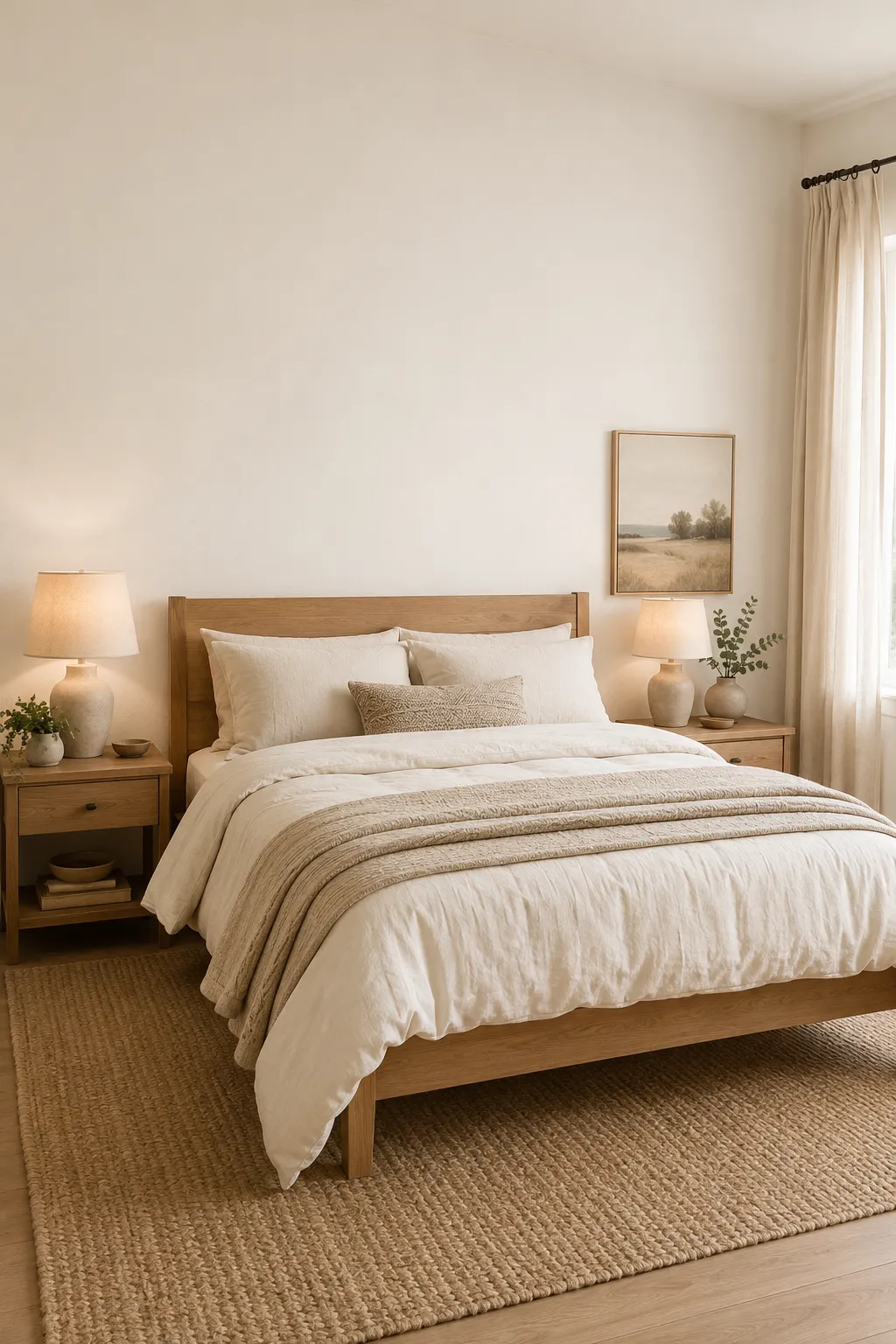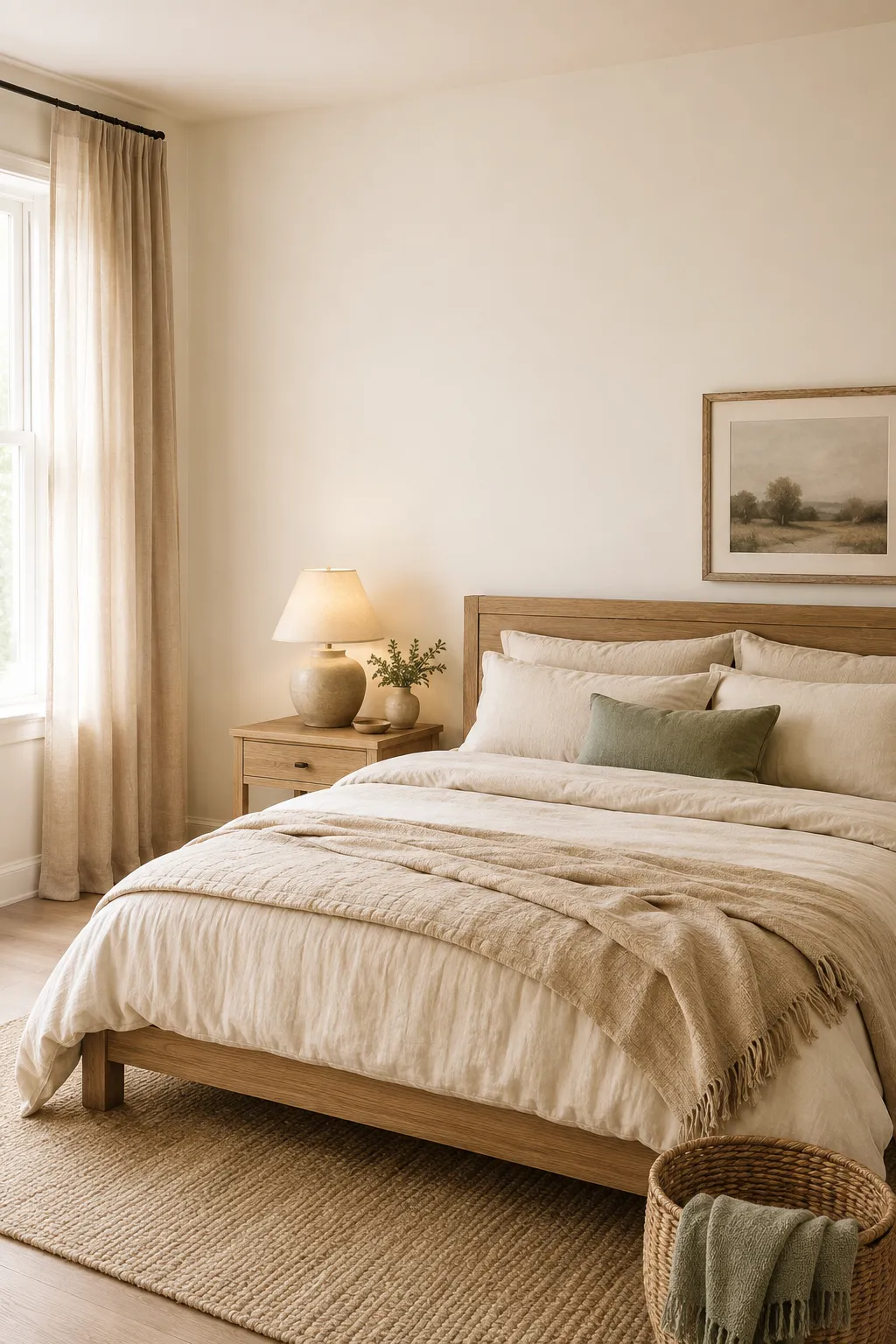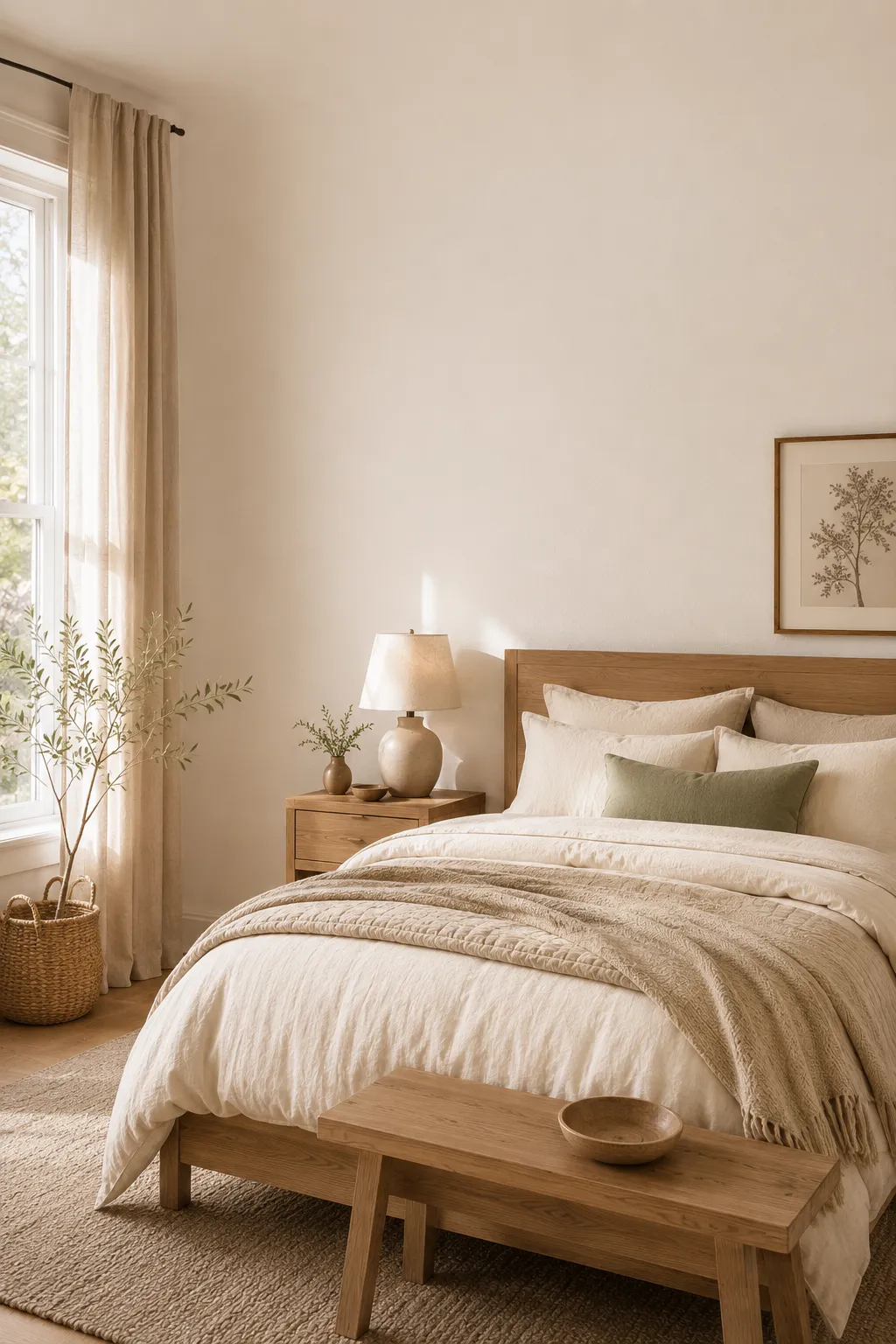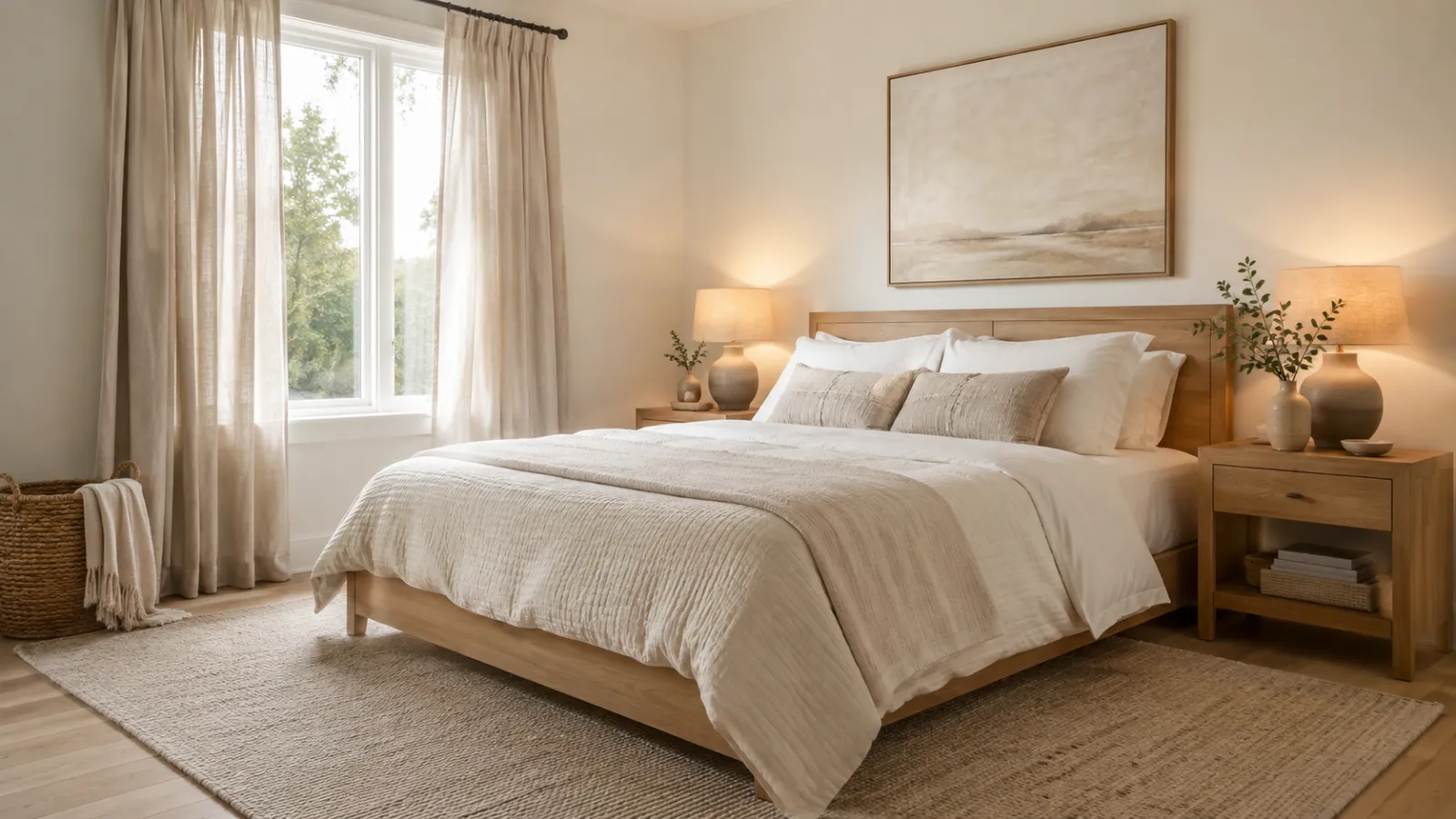
16 Bedroom Decor Ideas for a Soft and Cozy Look
Bedroom decor ideas work best when the room feels comfortable before it looks perfectly styled. Soft bedding, warm light, natural materials, and a small number of meaningful details can create a finished space without making every surface feel busy.
The prettiest bedrooms usually have a clear mood. Their colors connect, their textures repeat, and their decorative pieces support everyday routines instead of getting in the way.
Begin with the bed and the largest surfaces. Then add lighting, rugs, curtains, artwork, and personal details slowly.
For a complete room-planning foundation, see our cozy bedroom ideas guide.
Bedroom Decor Ideas at a Glance
A bedroom feels soft and finished when the bed, rug, curtains, lighting, artwork, and furniture follow one connected visual direction. Start with a calm color palette, then add depth through linen, cotton, wood, woven texture, and warm light.
Keep decorative pillows limited, nightstands useful, and walls lightly styled. One substantial artwork or mirror often creates more impact than several small accessories.
The goal is not to decorate every available surface. A successful bedroom should feel personal, comfortable, easy to maintain, and restful at the end of the day.
1. Start With One Clear Bedroom Decor Mood
Bedroom decor feels more connected when the colors, materials, lighting, and accessories follow one clear mood.
The direction might be soft and neutral, warm minimalist, modern cottage, earthy, gently traditional, or relaxed contemporary.
Choose a few words that describe the intended atmosphere before shopping. For example:
-
calm and natural
-
soft and layered
-
light and simple
-
warm and collected
These words become a filter for later choices. A decorative item may look beautiful by itself but still feel wrong if it does not support the room’s main direction.
2. Build a Soft, Connected Color Base
A bedroom palette needs enough variation to feel layered, but not so many colors that the room becomes restless.
Begin with one light foundation such as warm white, cream, pale beige, or soft taupe. Add one connected wood tone and one gentle accent such as muted green, dusty blue, clay, or soft brown.
Repeat the accent color in two or three small places instead of spreading it everywhere.
For a complete bedroom-focused palette using cream, beige, warm white, muted green, and natural wood, see our neutral bedroom ideas guide.
3. Make the Bed the Main Decor Feature
The bed is usually the largest visual element in the room, so decorate it before styling smaller surfaces.
Choose a headboard and bedding that relate to the wall color, rug, curtains, and nearby furniture. A simple bed can still feel complete when the proportions and materials are right.
Keep the strongest contrast near the bed. This might come from a wood headboard, darker throw, textured quilt, or one piece of artwork above it.
The rest of the room can remain quieter.
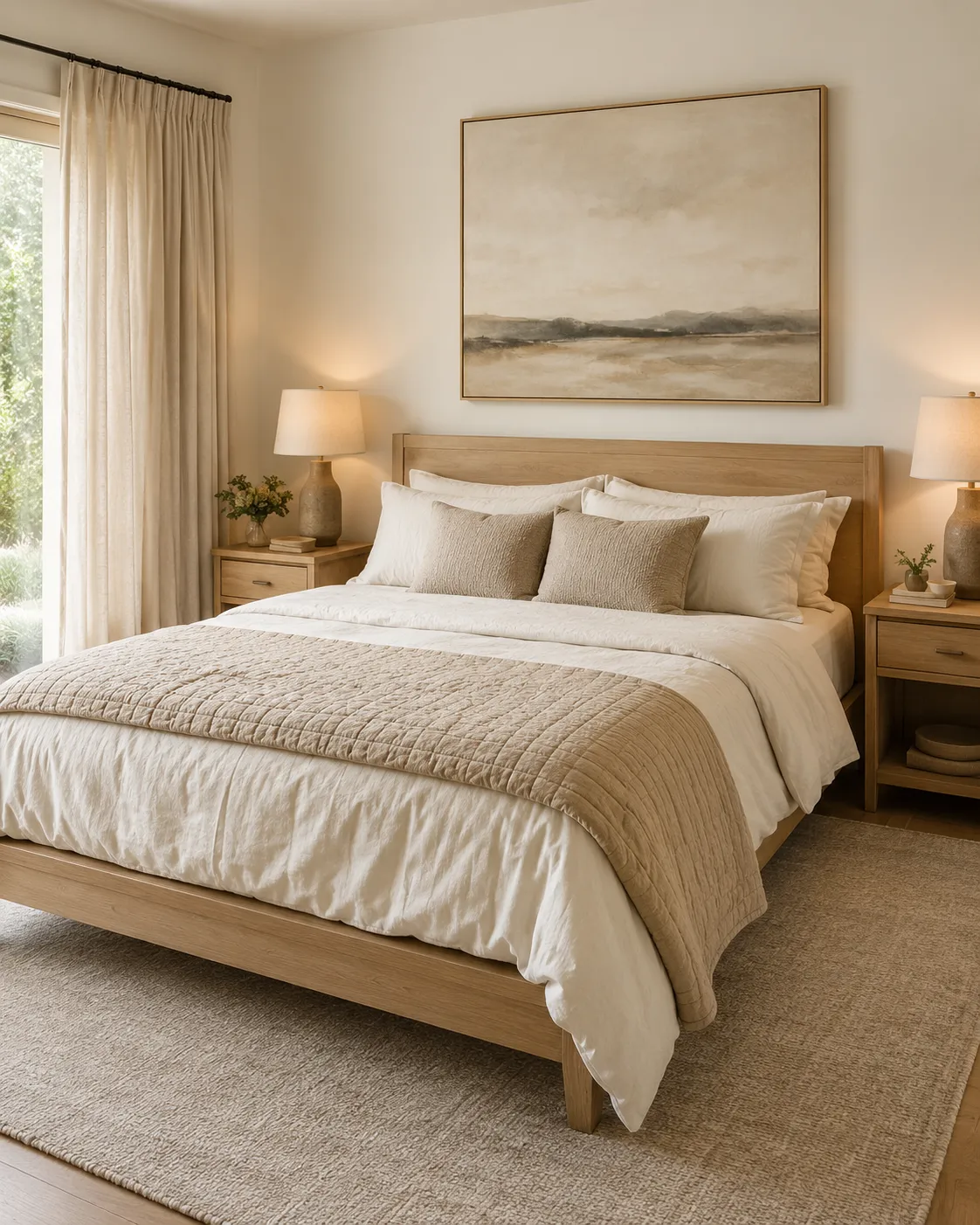
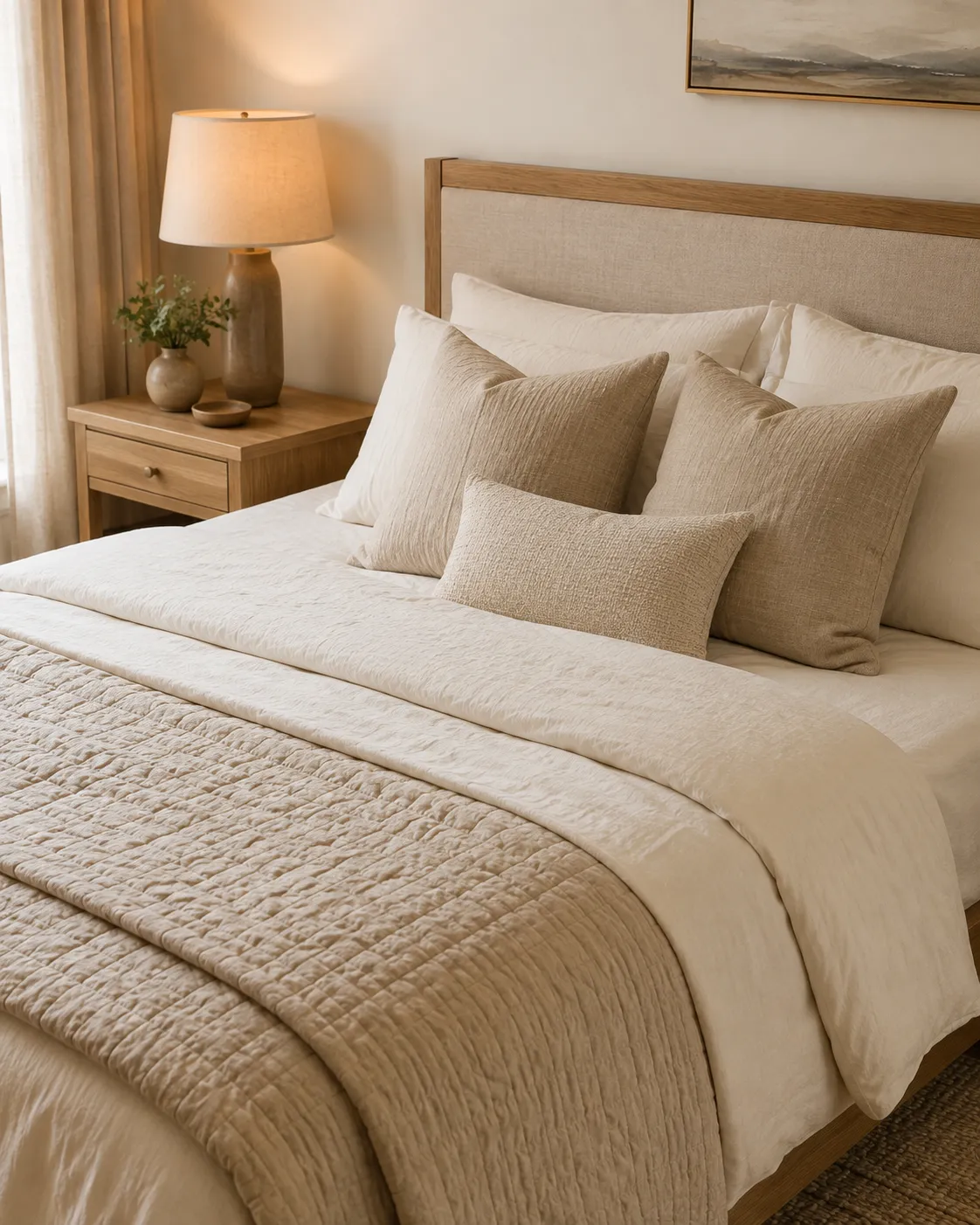
4. Layer Bedding With Texture, Not Excess
Soft bedding does not require several heavy blankets or a large pile of pillows.
Begin with comfortable sheets and a duvet, coverlet, or quilt. Add one folded throw near the foot of the bed and a limited number of accent pillows.
Combine materials such as washed linen, cotton, knit, or lightly quilted fabric while keeping the colors connected.
The bed should look welcoming but remain easy to make each morning.
For more ways to layer bedding, texture, and accessories without creating clutter, see our cozy bedroom decor ideas guide.
5. Choose Decorative Pillows That Stay Practical
Decorative pillows can add shape and texture, but too many quickly become inconvenient.
For a queen or king bed, two or three accent pillows are often enough. A twin or full bed may need only one or two.
Mix sizes carefully. A pair of square pillows with one smaller lumbar pillow creates a finished look without covering the sleeping area.
Use removable pillow covers when possible. They are easier to wash, store, and refresh seasonally than complete pillows.
6. Add One Rug That Grounds the Bed
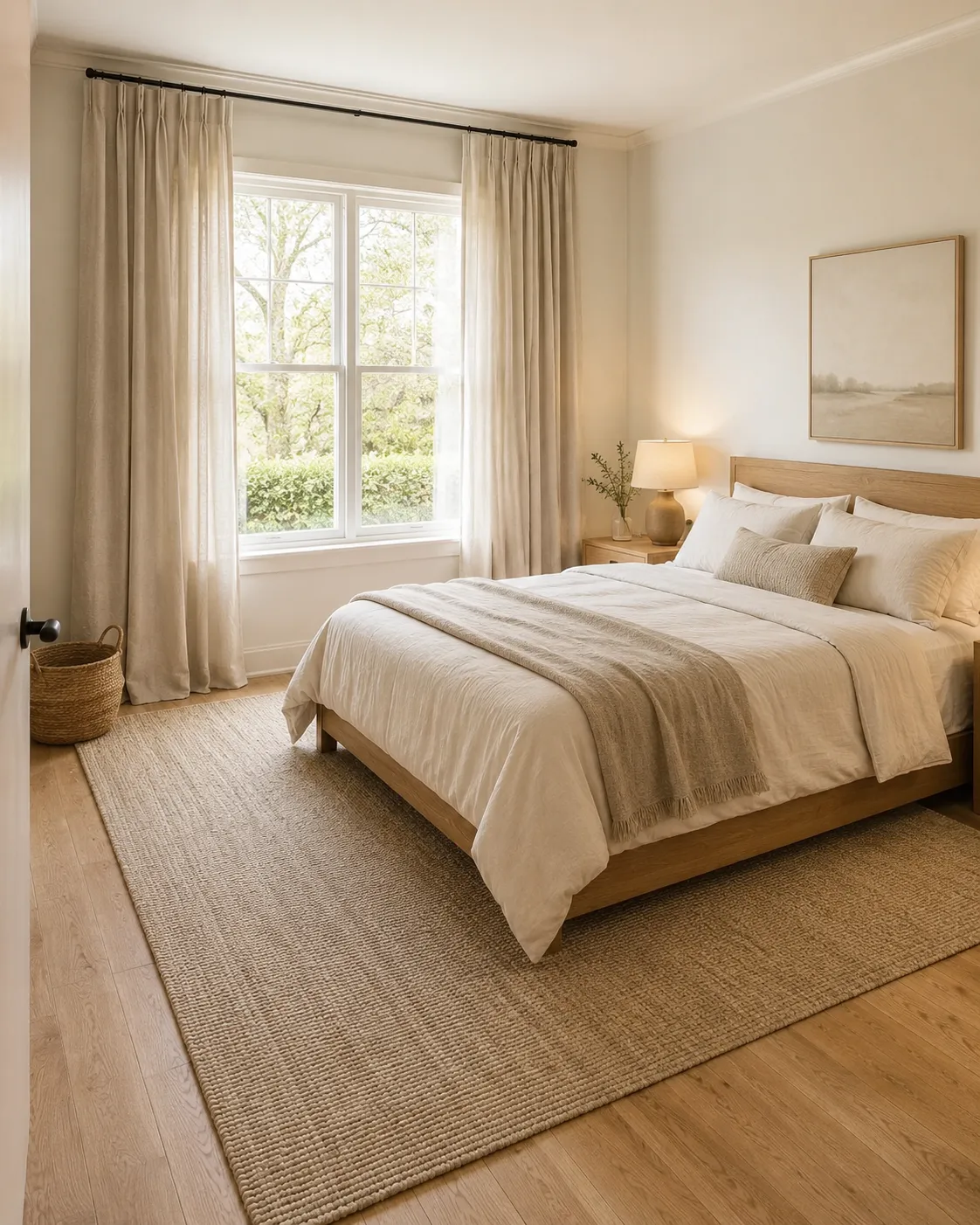
A well-scaled rug can make the sleeping area feel softer and more complete.
Place the rug so it extends beyond the visible sides and foot of the bed. As a practical starting point, aim for approximately 18–24 inches of visible rug where the room allows.
In a narrow bedroom, two coordinated runners may work better than one large rug.
Avoid a tiny rug floating at the foot of the bed. It can make the room feel visually disconnected.
For more practical rug placement, furniture scaling, and storage guidance, see our small bedroom ideas guide.
7. Use Curtains to Add Height and Movement
Curtains soften hard wall and window lines while making the room feel more finished.
Hang the rod close to the ceiling or roughly 4–6 inches above the window frame when the room allows. Extend it beyond the window so the panels can open without covering much of the glass.
Floor-length linen or linen-look curtains create a relaxed appearance.
Blackout lining can improve light control while the visible fabric remains light and soft. CDC sleep guidance also recommends keeping the bedroom quiet, relaxing, and comfortably cool.
8. Style Nightstands for Real Life
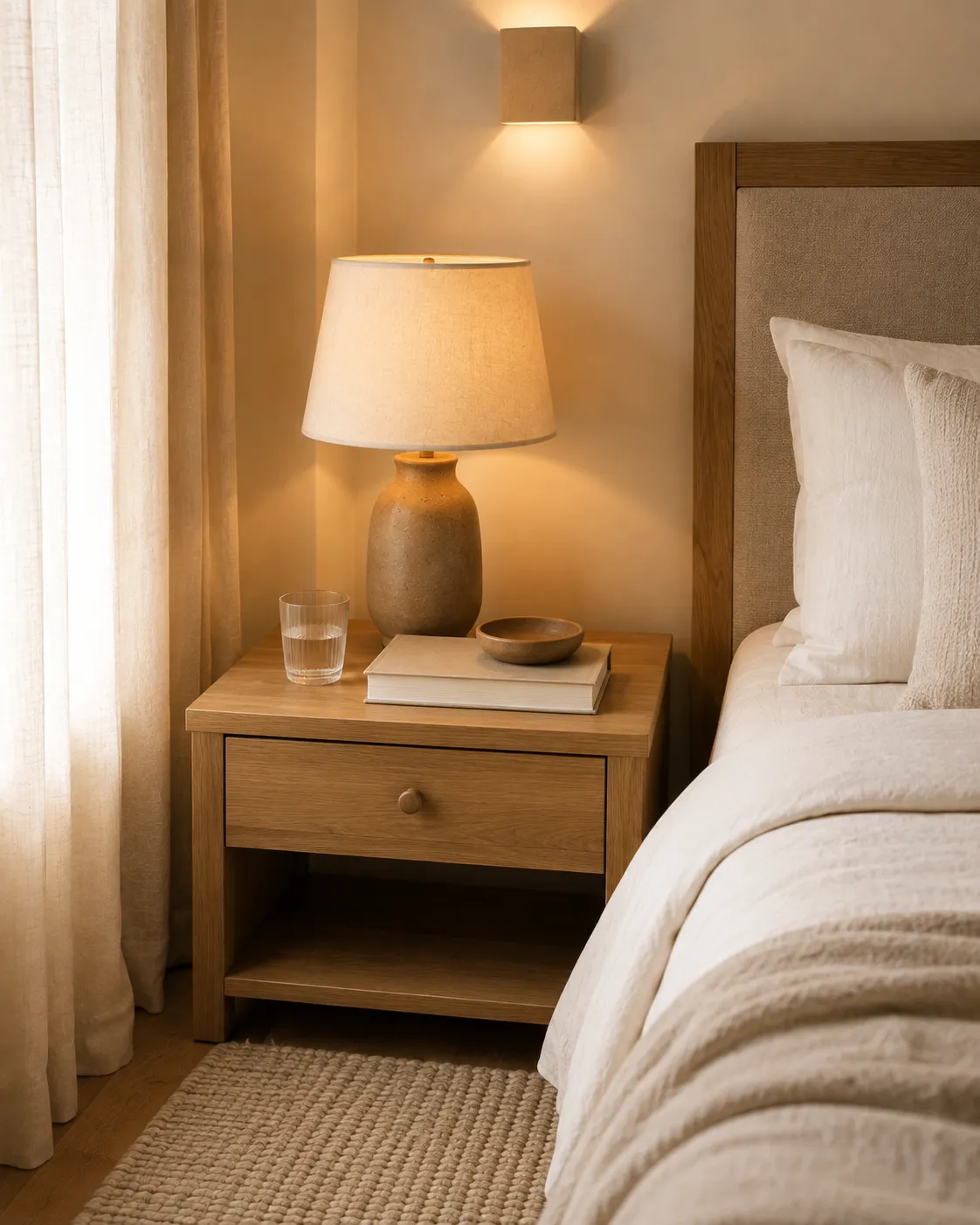
A nightstand should support bedtime routines before serving as a decorative display.
Leave enough room for a lamp, water, phone, book, or other frequently used item. Use a small dish or tray to keep loose objects together.
A useful styling formula is:
-
one lamp
-
one everyday item
-
one small personal detail
The nightstand should sit reasonably close to the top of the mattress so everything remains comfortable to reach.
Avoid filling both sides with identical decorative objects simply for symmetry.
9. Layer Warm Lighting Around the Room
A soft bedroom needs more than one ceiling fixture.
Combine ambient lighting with bedside lamps, plug-in sconces, a compact floor lamp, or a small accent light. Each source should support a real activity such as reading, dressing, or settling down at night.
Warm-white lighting around 2700K–3000K generally creates a gentler tone beside cream fabric, natural wood, and woven materials. ENERGY STAR describes this lower Kelvin range as warmer in appearance.
Place switches within easy reach and use dimmable lighting where practical.
For more ways to combine lamps, sconces, and gentle evening light, see our warm living room ideas guide.
10. Decorate Bedroom Walls With Restraint
Bedroom walls should add character without demanding constant attention.
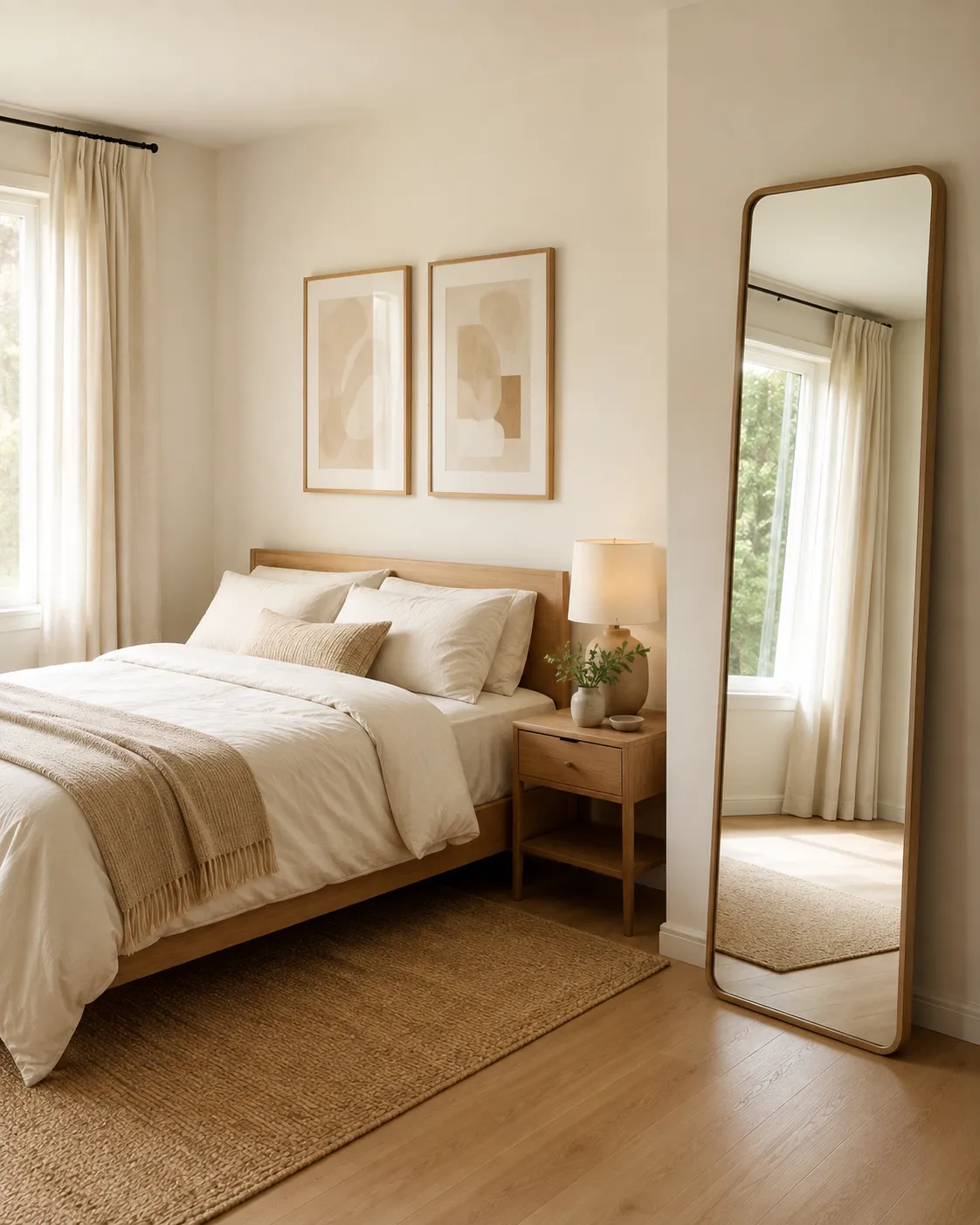
Choose one larger artwork, a pair of related prints, a textile piece, or a simple mirror. One substantial arrangement often looks calmer than several unrelated frames.
As a practical starting point, artwork above the bed often feels connected when the lower edge sits roughly 6–10 inches above the headboard, depending on the frame size and room proportions.
For more restrained artwork, mirror, and shelf arrangements, see our minimalist wall decor ideas guide.
11. Add Natural Texture Through Simple Materials
Texture makes neutral bedroom decor feel warm rather than flat.
Use a small group of materials such as:
-
linen bedding
-
cotton curtains
-
wood furniture
-
woven baskets
-
wool or jute-blend rugs
-
ceramic lamps
-
simple stone details
12. Position Mirrors to Reflect Light and Calm Views
A mirror can brighten the room and provide a useful finishing element.
Place it where it can reflect daylight, a clean wall, artwork, or part of the bed. Check the reflection from both the doorway and the sleeping position.
Use one well-scaled mirror rather than several small decorative mirrors.
A full-length mirror can be mounted vertically or positioned securely according to its size, weight, and manufacturer guidance.
13. Bring in Greenery Without Blocking Daylight
A small amount of greenery can add color and movement to a neutral room.
Use one floor plant, a small bedside plant, fresh branches, or dried stems according to the available light and maintenance level.
Keep the window area open. Several plants placed directly in front of the glass may reduce daylight and make the room feel crowded.
When live plants are not practical, natural wood, linen, stone, and woven fiber can create a similarly grounded mood.
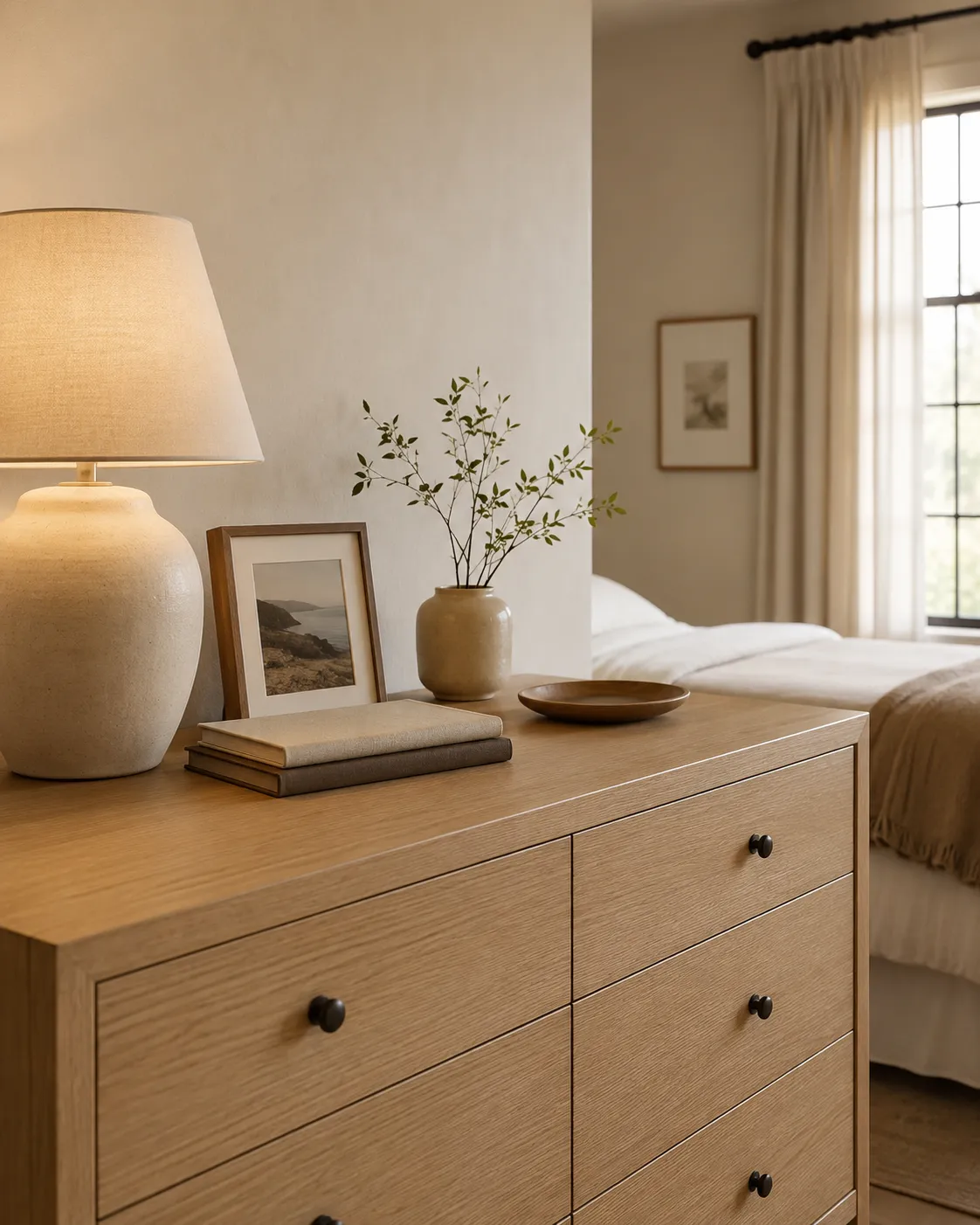
14. Keep Dressers and Shelves Lightly Styled
A dresser does not need a decorative object across its entire surface.
Group pieces into one simple arrangement. A mirror, lamp, tray, vase, or framed photograph may be enough.
Leave part of the surface open for practical use. Empty space helps the selected objects feel intentional.
Tall dressers and other top-heavy storage furniture should be secured appropriately. The U.S. Consumer Product Safety Commission’s Anchor It program provides guidance on reducing furniture tip-over risks.
For renter-friendly storage and furniture ideas, see our apartment bedroom ideas guide.
15. Add Personal Details That Do Not Feel Random
Personal objects keep a bedroom from looking like a showroom.
Use framed memories, meaningful books, handmade pieces, small vintage finds, travel objects, or art that connects with the room’s colors.
Group smaller items rather than scattering them across different surfaces.
One personal detail can carry more visual weight when the area around it remains quiet.
For more ideas built around color, texture, artwork, and personal details, browse our aesthetic home decor collection.
16. Finish the Room by Removing What It Does Not Need
The final decorating step is editing.
Stand at the doorway and notice which surfaces feel crowded, which colors interrupt the mood, and which objects do not support a routine or personal story.
Remove a few pieces, then live with the room before adding anything back.
The bedroom should still have open areas on nightstands, dressers, walls, and the floor. These quiet spaces help the softer details feel more noticeable.
A finished bedroom does not need to look full. It needs to feel balanced.
For a softer, more mood-focused approach to color, light, texture, and composition, see our cozy bedroom aesthetic ideas guide.
Common Bedroom Decor Mistakes
Nightstands, dressers, shelves, and window ledges do not all need decorative displays. Choose a few intentional areas and leave the rest open.
- Too many decorative pillows
- Every surface
- Undersized rug
- One ceiling light
- Artwork too high
- Unrelated finishes
- Blocking natural light
- Buying decor before measuring
The Soft Bedroom Decor Formula
The soft bedroom decor formula brings together six choices that make a room feel layered, comfortable, and visually calm:
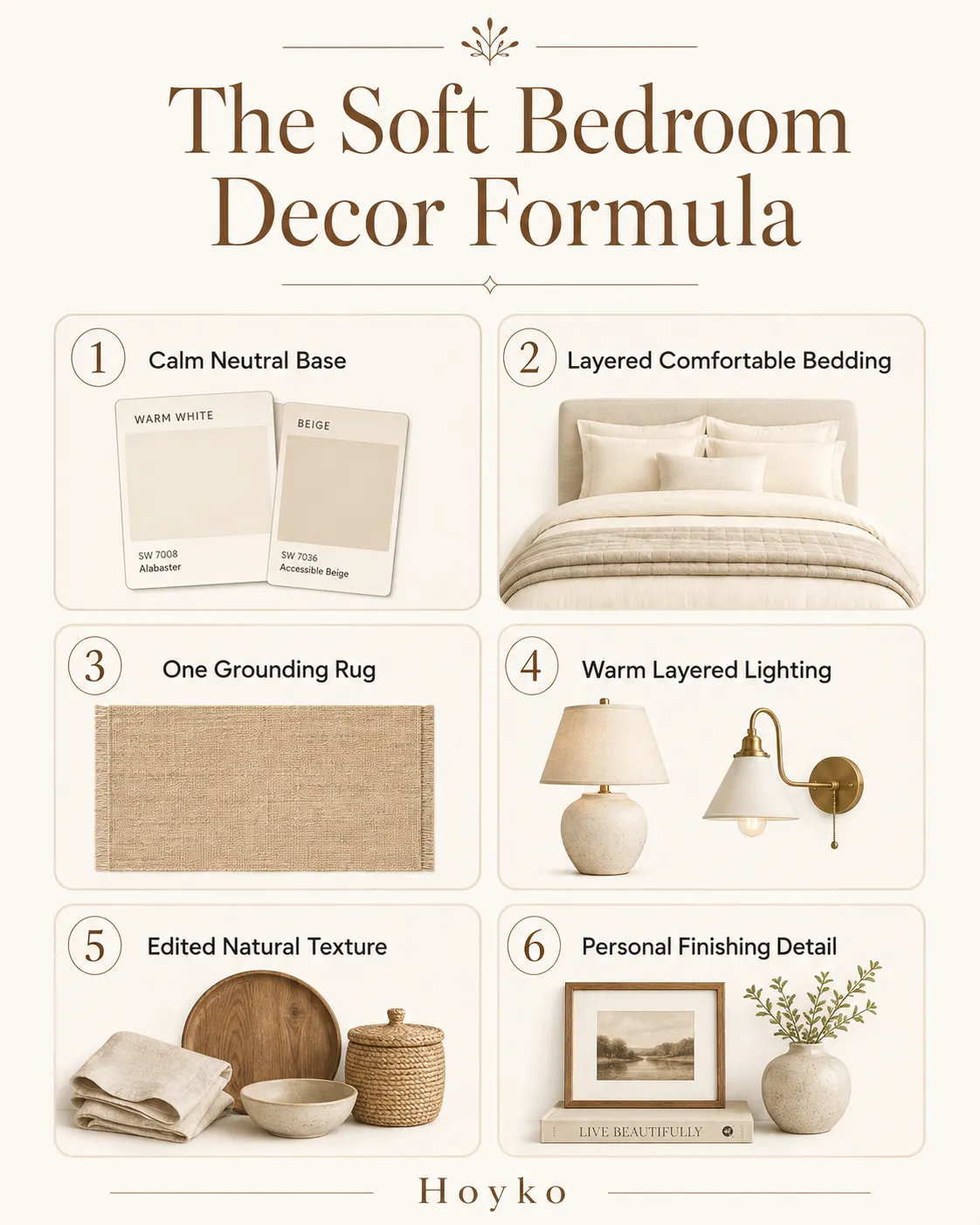
-
Calm Neutral Base
-
Layered Comfortable Bedding
-
One Grounding Rug
-
Warm Layered Lighting
-
Edited Natural Texture
-
Personal Finishing Detail
Together, these elements create softness without requiring every wall or surface to be decorated.
Bedroom Decor Checklist
-
Choose one clear bedroom mood.
-
Build a connected color palette.
-
Make the bed the main visual feature.
-
Layer bedding without excessive volume.
-
Keep decorative pillows practical.
-
Use one correctly scaled rug.
-
Hang curtains high and wide.
-
Keep nightstands useful.
-
Layer more than one light source.
-
Choose one restrained wall arrangement.
-
Repeat natural materials.
-
Position mirrors to reflect a calm view.
-
Add greenery according to available light.
-
Leave part of the dresser open.
-
Group personal objects together.
-
Remove decor that does not support the room.
-
Check the room from the doorway.
-
Keep the finished space easy to maintain.
A well-decorated bedroom should feel soft, personal, and comfortable without requiring constant rearranging.
FAQ About Bedroom Decor Ideas
How can a bedroom look cozy without becoming cluttered?
Add softness through bedding, curtains, rugs, warm lighting, and natural texture rather than many decorative objects. Keep surfaces partly open and use closed storage for everyday items.
How many decorative pillows should a bed have?
There is no required number. Two or three accent pillows are often enough for a queen or king bed, while a smaller bed may need only one or two.
What colors work best for soft bedroom decor?
Warm white, cream, beige, taupe, muted green, dusty blue, clay, and natural wood tones create a gentle base. Use small amounts of contrast so the room does not look flat.
How should bedroom nightstands be decorated?
Start with a useful lamp, then leave room for everyday items such as water, a phone, or a book. Add only one small personal or decorative object.
What size artwork looks best above a bed?
Choose artwork or an arrangement that is narrower than the bed or headboard so it feels visually supported by the furniture below. Exact dimensions depend on the available wall space, headboard width, and frame proportions.
How can bedroom decor look more expensive on a budget?
Use fewer, better-scaled pieces. Coordinated pillow covers, floor-length curtains, warm lighting, one large artwork, and a correctly sized rug often create more impact than several small accessories.
If the room needs a larger refresh rather than a styling edit, see our bedroom makeover ideas guide.
Final Thoughts on Bedroom Decor Ideas
The best bedroom decor ideas begin with comfort and end with careful editing.
Start with a connected palette, a well-styled bed, one grounding rug, soft curtains, and layered lighting. Add natural texture and personal details slowly so each piece has room to stand out.
The finished bedroom should feel warm when the lights are on, calm in daylight, and practical enough for everyday routines. A room that is easy to reset will usually feel more restful than one filled with decorative objects.
Save these ideas for your next bedroom refresh, and begin with the one area that feels least finished today.